24-year-old PhD student spotted a strange signal from space and uncovered one of astronomy's greatest discoveries
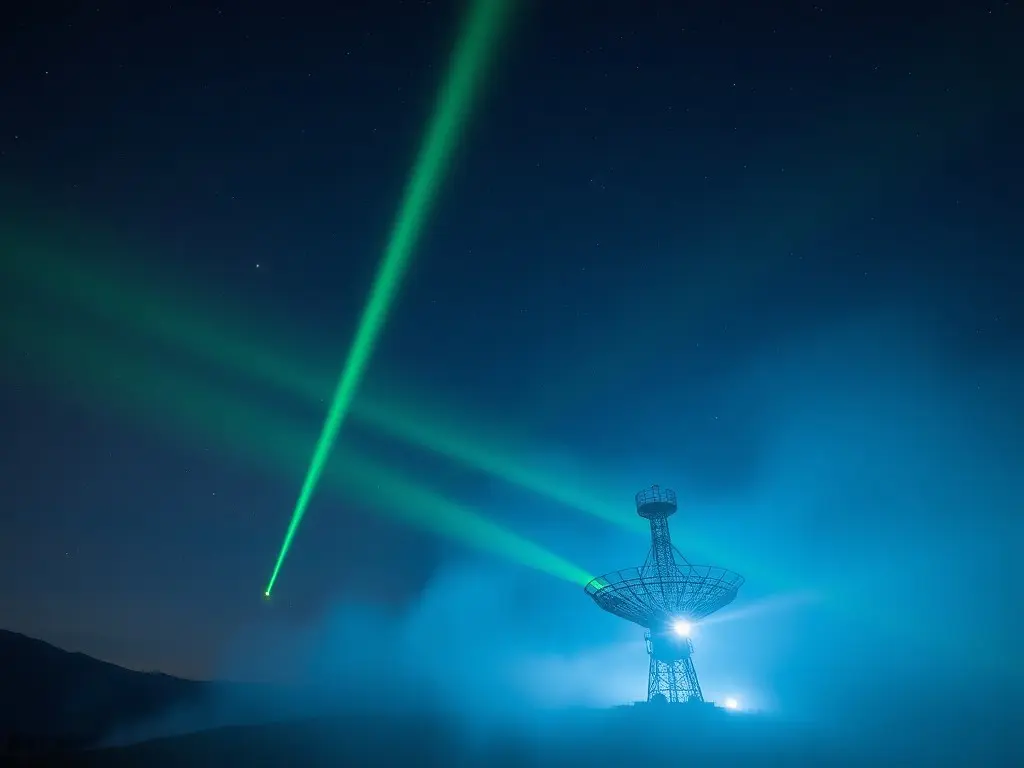
In 1967, 24-year-old PhD student Jocelyn Bell Burnell discovered a mysterious, repeating radio signal while analyzing data from the University of Cambridge’s Interplanetary Scintillation Array, later identifying it as a pulsar—rapidly spinning neutron stars. The discovery transformed astrophysics but sparked controversy when Bell Burnell was excluded from the 1974 Nobel Prize in Physics awarded to her supervisor and another researcher.
In June 1967, Jocelyn Bell Burnell, a 24-year-old PhD student at the University of Cambridge, detected an unusual signal while reviewing data from the Interplanetary Scintillation Array, a radio telescope designed to study distant celestial objects. The signal appeared as a precise, repeating pulse every 1.337 seconds—a pattern no known astronomical phenomenon could explain. Initially, the team jokingly dubbed it 'LGM-1' (Little Green Men 1), but further observations revealed multiple similar signals across the sky, ruling out an artificial or extraterrestrial origin. Bell Burnell’s discovery led scientists to identify the source as pulsars, rapidly rotating neutron stars—the dense remnants of supernova explosions. These objects emit beams of radiation that sweep past Earth like a lighthouse, creating the observed pulses. The confirmation of pulsars provided the first direct evidence of neutron stars, which had previously been theoretical. The breakthrough opened new avenues in astrophysics, allowing researchers to study extreme conditions of matter, test Einstein’s Theory of Relativity, and refine models of stellar evolution. Some pulsars exhibit such precise timing that they rival atomic clocks, becoming valuable tools for scientific experiments. When the discovery was published in *Nature* in 1968, Bell Burnell’s supervisor, Antony Hewish, received significant credit for his role in the project. In 1974, Hewish and Martin Ryle were awarded the Nobel Prize in Physics for the discovery, while Bell Burnell—who made the initial observation—was excluded, sparking ongoing debate about recognition in scientific achievements.
This content was automatically generated and/or translated by AI. It may contain inaccuracies. Please refer to the original sources for verification.