32,000 people displaced by the Philippine earthquake that killed at least 37
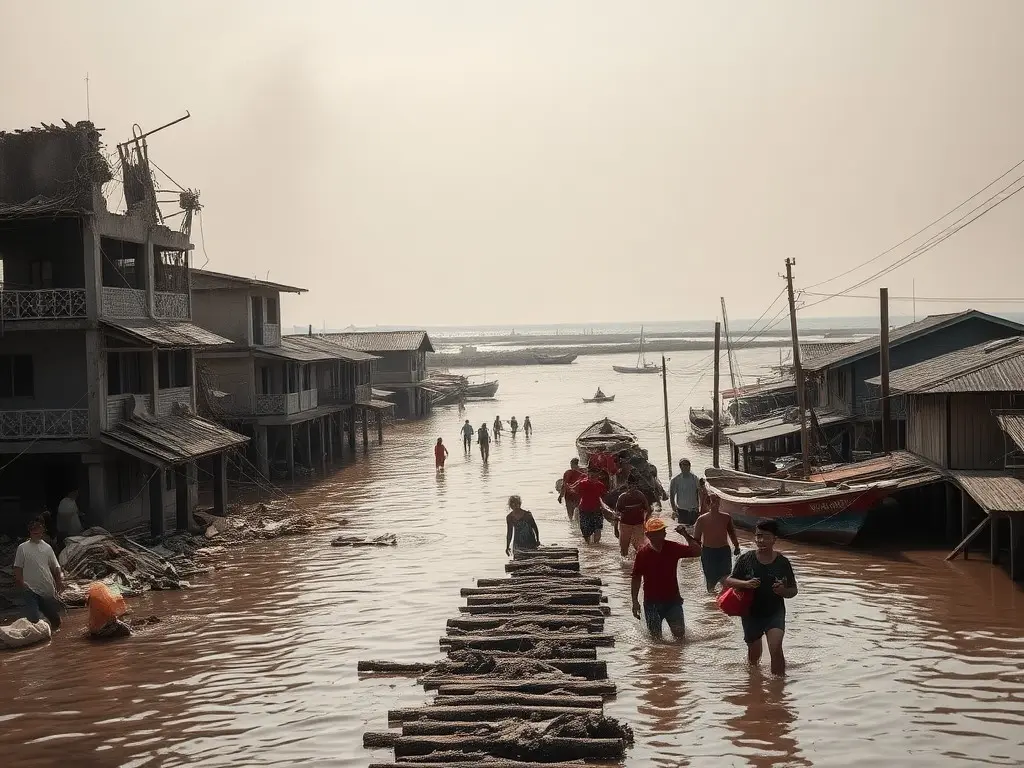
A 7.8-magnitude earthquake struck southern Philippines on Monday, killing at least 37 people, injuring nearly 500, and displacing over 32,000. The quake caused widespread building collapses, landslides, and tsunami waves up to 1.4 meters, with significant damage reported in General Santos and nearby provinces.
A 7.8-magnitude earthquake hit southern Philippines on Monday, killing at least 37 people and displacing over 32,000. The quake centered off Mindanao, the country’s second-most populous island, with four people officially listed as missing. Rescuers searched collapsed buildings in General Santos, where 13 deaths were reported, and Sarangani province, where 18 died in a landslide. Tsunami waves reached 1.4 meters (4.6 feet) in some coastal areas, though damage was limited to six shanties in a village. Waves also washed ashore in Indonesia, Palau, and southern Japan. The quake damaged about 2,500 homes and 117 government buildings, while General Santos International Airport remained closed for a second day, canceling 63 flights except for humanitarian missions. The earthquake struck on the first day of classes, injuring many students during morning flag-raising ceremonies. Authorities warned that aftershocks could trigger further collapses, delaying school reopenings until buildings are assessed. The Philippine Institute of Volcanology and Seismology confirmed this was the strongest quake since a deadly 8.1-magnitude tremor in 1976, which killed 8,000 people. The quake, caused by movement in the Cotabato Trench, occurred at a depth of 33 kilometers (20 miles). Officials emphasized safety concerns, with the Office of Civil Defense urging caution in damaged structures. Recovery efforts continue as authorities assess infrastructure and prepare for potential aftershocks.
This content was automatically generated and/or translated by AI. It may contain inaccuracies. Please refer to the original sources for verification.