4 Dead, 200+ Injured As 7.8-Magnitude Earthquake Hits Philippines; Tsunami Alerts Trigger Evacuations
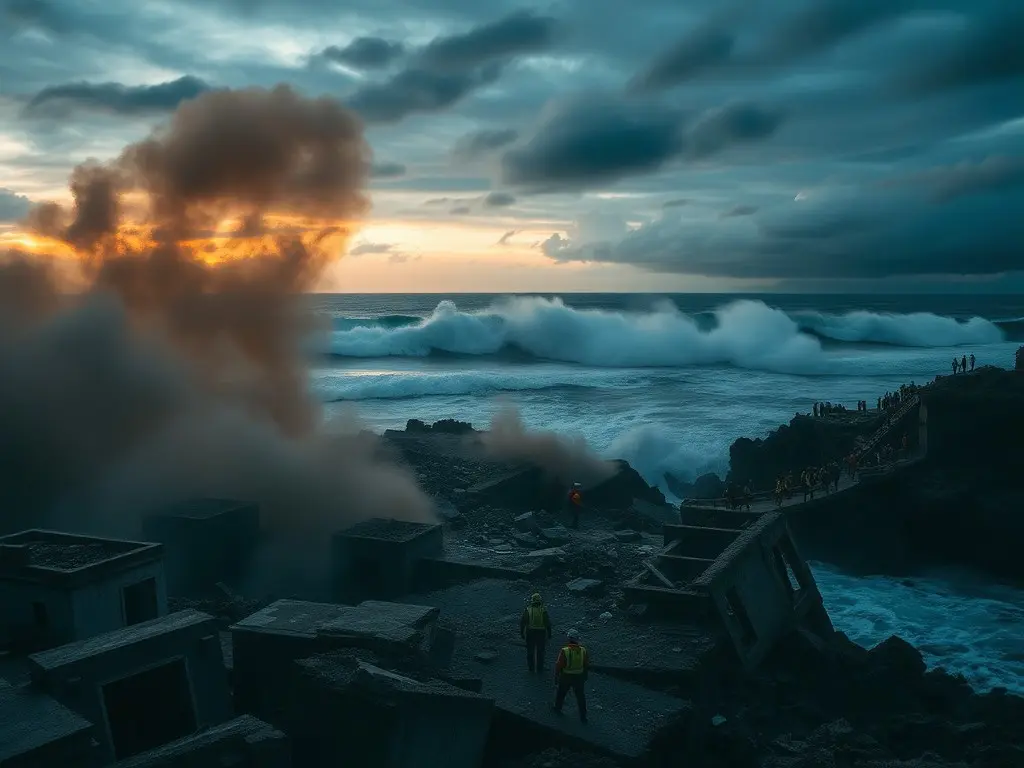
A 7.8-magnitude earthquake struck south of General Santos City in the Philippines on June 8, 2026, killing at least four people and injuring over 200, while triggering tsunami alerts across the Asia-Pacific region. The quake caused widespread building collapses, including a shopping center and a school, and prompted large-scale evacuations in coastal areas, including Kiamba, where nearly 80% of the population relocated to higher ground.
A 7.8-magnitude earthquake struck the Philippines on June 8, 2026, south of General Santos City, killing at least four people and injuring more than 200. The quake occurred offshore, prompting tsunami warnings for coastal regions in the Philippines, Indonesia, Palau, Taiwan, and Papua New Guinea, leading to mass evacuations. The disaster triggered immediate safety measures, with thousands of residents in coastal towns like Kiamba—nearly 80% of its 50,000 population—relocating to higher ground. Philippine President Ferdinand Marcos suspended classes in affected areas of Mindanao and urged residents to prioritize safety, warning, 'Move to higher ground now. Do not wait. Your life is more important than anything left behind.' Strong aftershocks followed the main quake, including a 6.5-magnitude tremor two hours later, causing further damage. Videos showed buildings collapsing in General Santos City, including a shopping center housing a Jollibee restaurant and a school reduced to rubble—though no students were inside at the time. Emergency responders worked around the clock to rescue trapped residents and provide medical aid, with officials cautioning that casualty figures could rise. The Pacific Tsunami Warning Center issued alerts for vulnerable coastlines, with waves potentially reaching affected areas within hours. Evacuation centers were opened to accommodate displaced residents, while authorities assessed ongoing risks from aftershocks and potential tsunami impacts. Rescue teams continue searching affected regions, including Alabel, where two deaths were confirmed after a wall collapse. Police stations and government buildings also sustained structural damage, forcing evacuations. The situation remains fluid as officials monitor seismic activity and coordinate relief efforts across the region.
This content was automatically generated and/or translated by AI. It may contain inaccuracies. Please refer to the original sources for verification.