6,000 Cubic Kilometers of Magma Hiding Beneath Tuscany Revealed with New Ambient Noise Tomography Technique
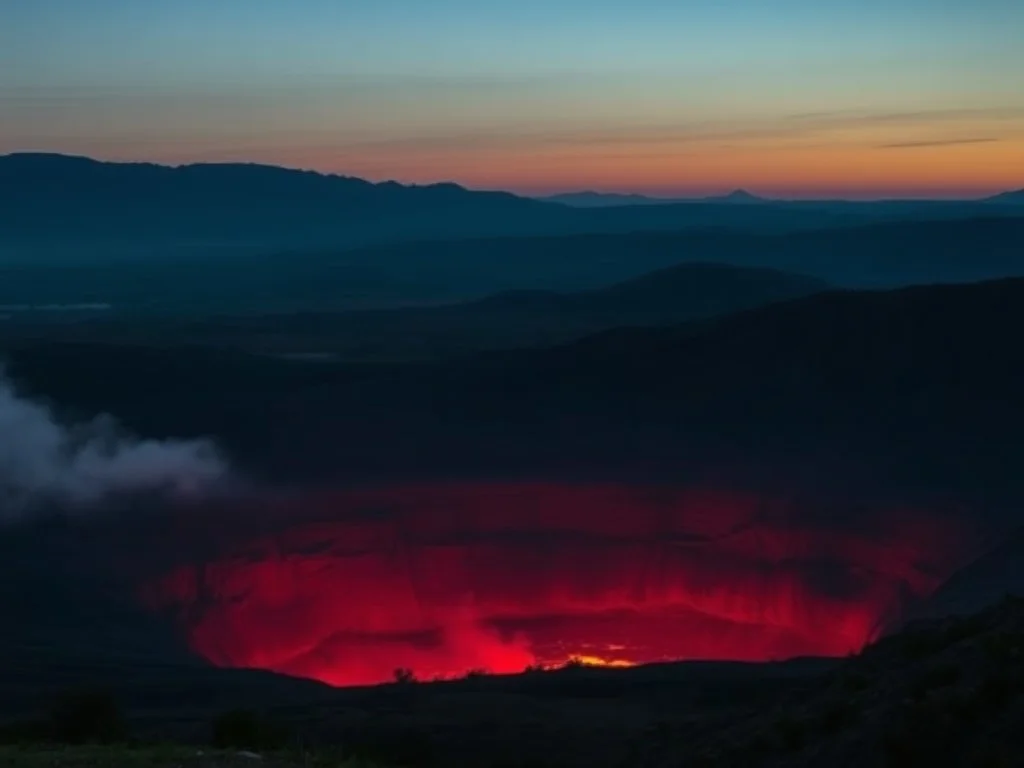
Researchers have discovered a massive 6,000 cubic kilometer magma reservoir beneath Tuscany, Italy, using a new ambient noise tomography technique. The hidden magma poses no immediate danger but could potentially form a supervolcano over geological timescales.
A team of researchers from the University of Geneva, the Institute of Geosciences and Earth Resources, and the National Institute of Geophysics and Volcanology have identified a large magma reservoir beneath Tuscany, Italy. Using ambient noise tomography, they detected 6,000 cubic kilometers of magma 8-15 kilometers below the surface. The technique uses ground vibrations from natural sources to create 3D models of the subterranean environment. This discovery is significant as it reveals a hidden reservoir without obvious surface indicators. The magma is currently not a threat but could potentially form a supervolcano in the future. The new technique can be used to identify subterranean resources such as geothermal reservoirs and rare earth elements.
This content was automatically generated and/or translated by AI. It may contain inaccuracies. Please refer to the original sources for verification.