A de-extinction company has hatched live chicks from an artificial eggshell
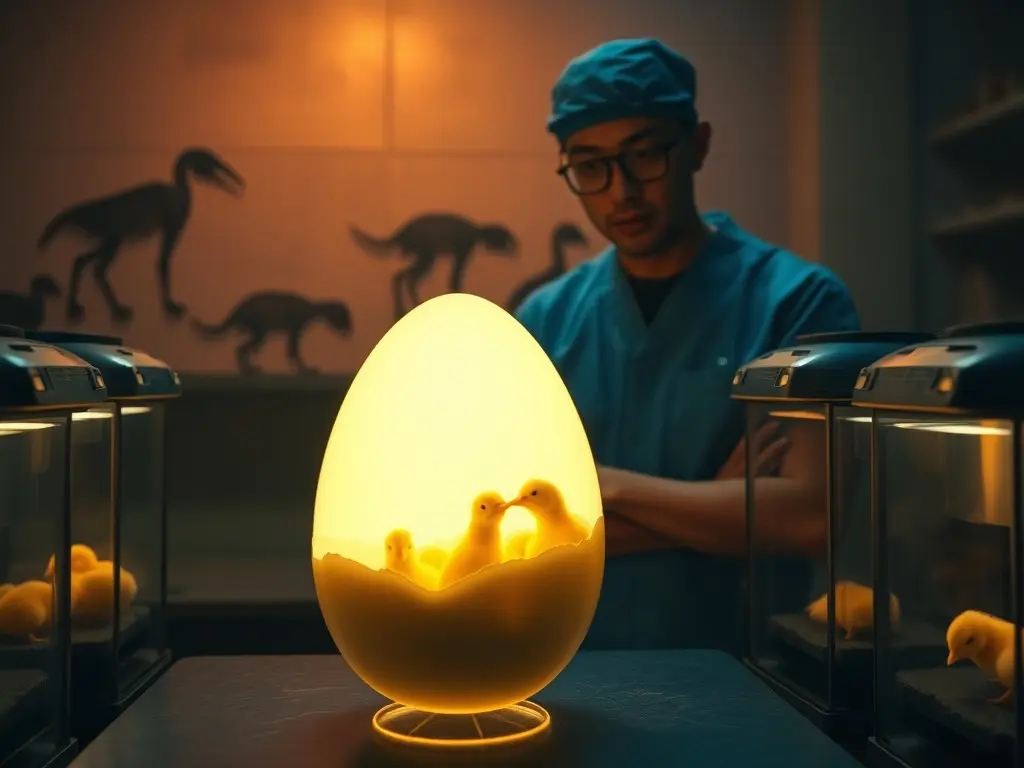
Colossal Biosciences announced it hatched 26 live chicks using a 3D-printed artificial eggshell, mimicking natural incubation but lacking key biological components. Critics argue the technology falls short of true de-extinction, while the company aims to eventually engineer birds resembling extinct species like New Zealand’s giant moa.
A biotech firm specializing in reviving extinct species, Colossal Biosciences, reported Tuesday it successfully hatched 26 live chicks from an artificial eggshell structure. The company used a 3D-printed lattice designed to replicate an eggshell, combined with fertilized chicken eggs and added calcium to support embryonic development. The chicks, aged from days to months, emerged after incubation in the artificial system, which allows controlled oxygen flow like a natural egg. The technology marks progress toward Colossal’s long-term goal of genetically modifying birds to resemble extinct species, such as the South Island giant moa of New Zealand. CEO Ben Lamm stated the artificial egg system could eventually scale to accommodate the massive moa eggs, which are 80 times larger than a chicken’s. However, scientists note the current design lacks critical biological features, such as temporary organs that nourish and stabilize embryos, classifying it as an artificial eggshell rather than a full artificial egg. Independent researchers, including evolutionary biologist Vincent Lynch from the University at Buffalo, argue the technology cannot yet revive extinct species. Lynch emphasized that even if genetically altered birds resembling moas were created, they would not be true de-extinction successes. Nicola Hemmings, a reproductive biologist at the University of Sheffield, added that while the approach offers insights into bird development, it remains far from achieving functional resurrection. Colossal’s method builds on decades-old research using transparent plastic films to hatch chicks, but the company claims its 3D-printed lattice improves scalability and efficiency. Lamm explained the artificial system was developed to address engineering challenges before attempting to birth larger, extinct species. Scientists, however, warn about ecological feasibility, questioning how revived creatures would survive in modern environments vastly different from their prehistoric habitats. Ethical concerns also persist, with bioethicist Arthur Caplan from New York University suggesting resources might be better spent preserving endangered species rather than reviving extinct ones. Hemmings echoed this, noting that preserving living species through genetic conservation could be more practical. Despite skepticism, Colossal continues its work, aiming to refine the artificial egg technology before pursuing more ambitious de-extinction projects.
This content was automatically generated and/or translated by AI. It may contain inaccuracies. Please refer to the original sources for verification.