A de-extinction company has hatched live chicks from an artificial eggshell
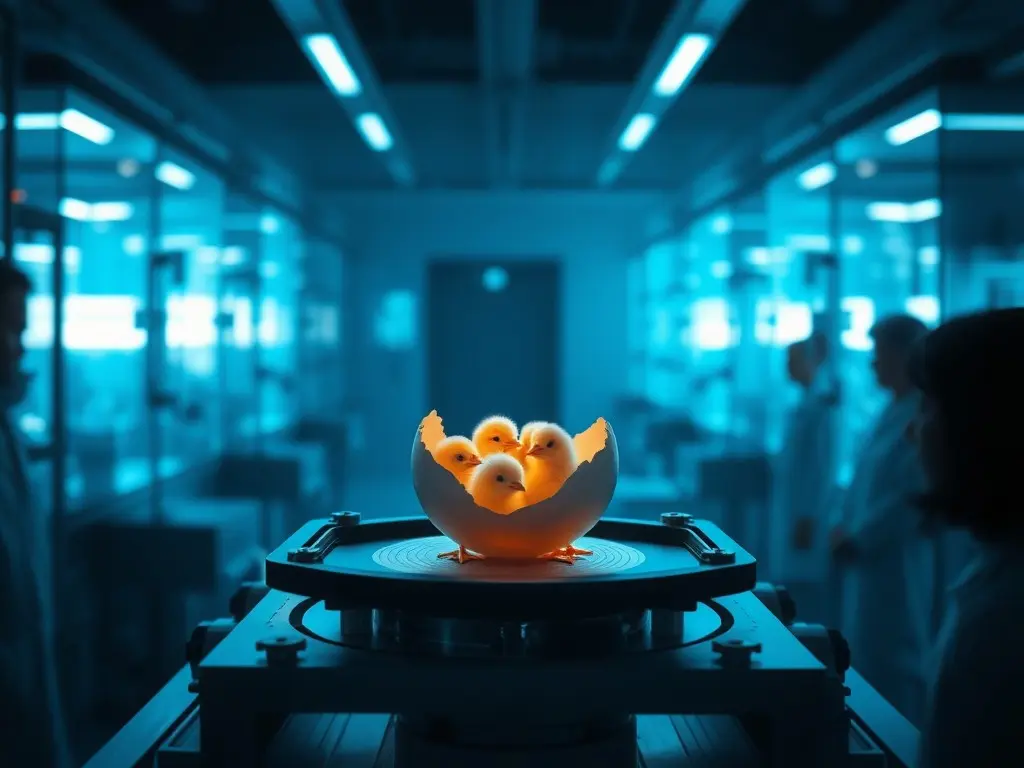
Colossal Biosciences hatched 26 live chicks using a 3D-printed artificial eggshell structure in New York, marking progress in its mission to revive extinct species like the New Zealand giant moa. Critics argue the technology lacks key biological components of a real egg and question the feasibility of resurrecting extinct creatures, despite the company’s claims of scalability for future projects.
Colossal Biosciences, a biotech company focused on de-extinction, announced it successfully hatched 26 live chicks from a 3D-printed lattice structure designed to mimic an eggshell. The chicks, aged from days to months, were incubated in an artificial environment that included calcium to replicate natural absorption from a real eggshell. The company’s CEO, Ben Lamm, stated the technology could eventually be scaled to genetically modify birds resembling extinct species, such as New Zealand’s South Island giant moa, whose eggs are 80 times larger than a chicken’s. The artificial eggshell allows controlled oxygen flow, similar to a natural egg, but lacks additional biological components like temporary organs that nourish and stabilize the embryo. Evolutionary biologist Vincent Lynch from the University at Buffalo criticized the approach, calling it an ‘artificial eggshell’ rather than a true artificial egg, as it relies on external elements like fertilized eggs and calcium. Nicola Hemmings, a bird reproductive biologist at the University of Sheffield, noted that producing chicks from artificial vessels is not new, with earlier research using plastic films or sacks for developmental studies. Colossal’s long-term goal involves comparing ancient moa DNA with living bird genomes to engineer a surrogate bird, though challenges remain in creating a viable environment for such a resurrected species. Bioethicist Arthur Caplan from New York University’s Grossman School of Medicine raised concerns about the ecological feasibility, questioning where a revived moa would survive in a modern landscape. Critics also argue that resources might be better spent preserving endangered species rather than attempting to bring back extinct ones. The company emphasized starting with smaller-scale engineering challenges to prepare for larger projects, such as birthing a giant moa. While the technology demonstrates progress in biotech innovation, skepticism persists among scientists about its practicality and ethical implications for de-extinction efforts.
This content was automatically generated and/or translated by AI. It may contain inaccuracies. Please refer to the original sources for verification.