A diet of royal jelly isn’t the only thing that makes a queen bee
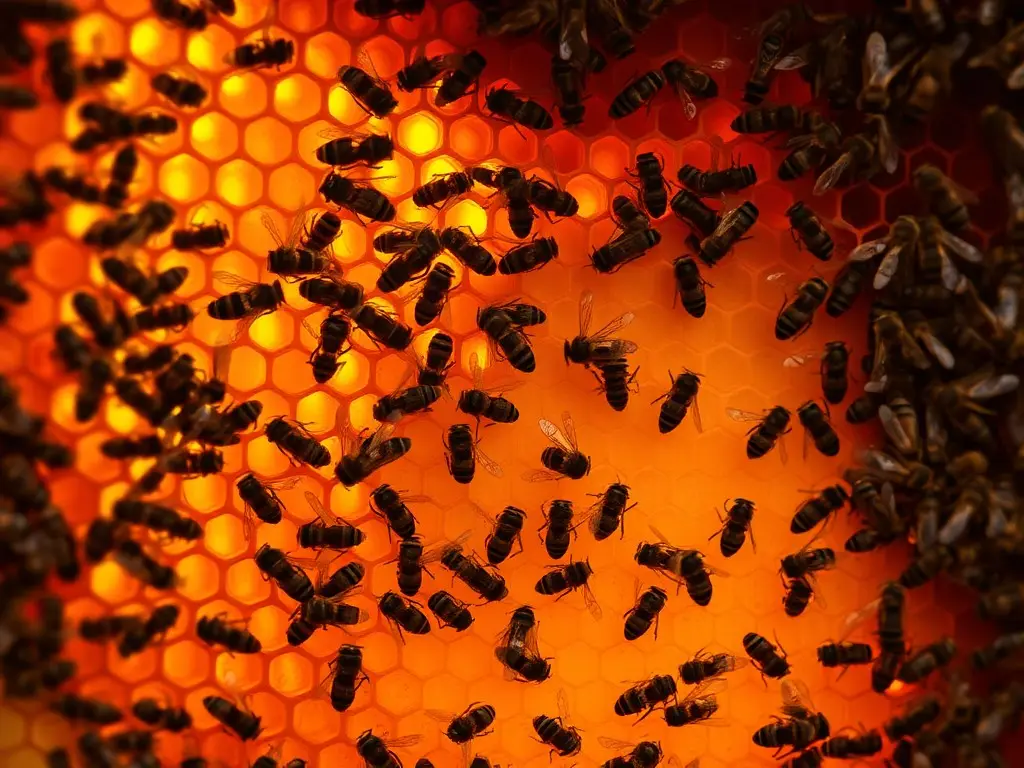
Researchers discovered a specialized group of worker honeybees that build queen cells using a fever-like process to shape softer wax, challenging the long-held belief that diet alone determines a queen bee’s development. A study published in *Nature* found that queens raised in worker wax with royal jelly were smaller and less viable, suggesting environmental factors like wax composition also play a critical role in queen bee formation.
Scientists have identified a distinct group of worker honeybees responsible for constructing the queen’s waxy cells within the hive. These bees, younger than others and genetically adapted, generate heat to melt and blend special chemicals into the wax, creating a softer, higher-melting-point material compared to worker bee cells. The study, published Wednesday in *Nature*, challenges the assumption that royal jelly alone determines a queen’s development, as queens raised in worker wax—despite consuming royal jelly—were smaller and less likely to survive. Researchers tested the theory by raising baby queens in cups lined with either queen or worker wax. Despite identical diets, queens in worker wax exhibited stunted growth and lower survival rates, suggesting the queen’s environment—specifically the wax composition—significantly influences her development. ‘For centuries, we believed *you are what you eat* was the only rule for making a queen bee,’ said co-author Kai Wang of the Chinese Academy of Agricultural Sciences. ‘Our study rewrites that rule to say *you are where you live, too*.’ The findings highlight a previously unknown specialization among worker bees, where younger individuals with distinct gene expression patterns perform the queen cell-building task. These cells are peanut-shaped and structurally different from those housing worker bees. Bee researcher Julia Bowsher of North Dakota State University, who was not involved in the study, expressed interest in further analyzing the chemical composition of queen wax to understand its direct effects on queen growth. Honeybees play a vital role in pollinating crops like blueberries, squash, watermelon, and almonds, but their survival remains threatened. The study offers new insights into the hive’s inner workings but leaves questions about the exact chemical factors driving queen development. Researchers emphasize the need for further investigation to uncover the full complexity of how queens are nurtured and shaped within the colony.
This content was automatically generated and/or translated by AI. It may contain inaccuracies. Please refer to the original sources for verification.