'A pretty significant setback': How Blue Origin's rocket explosion affects NASA's moon plans
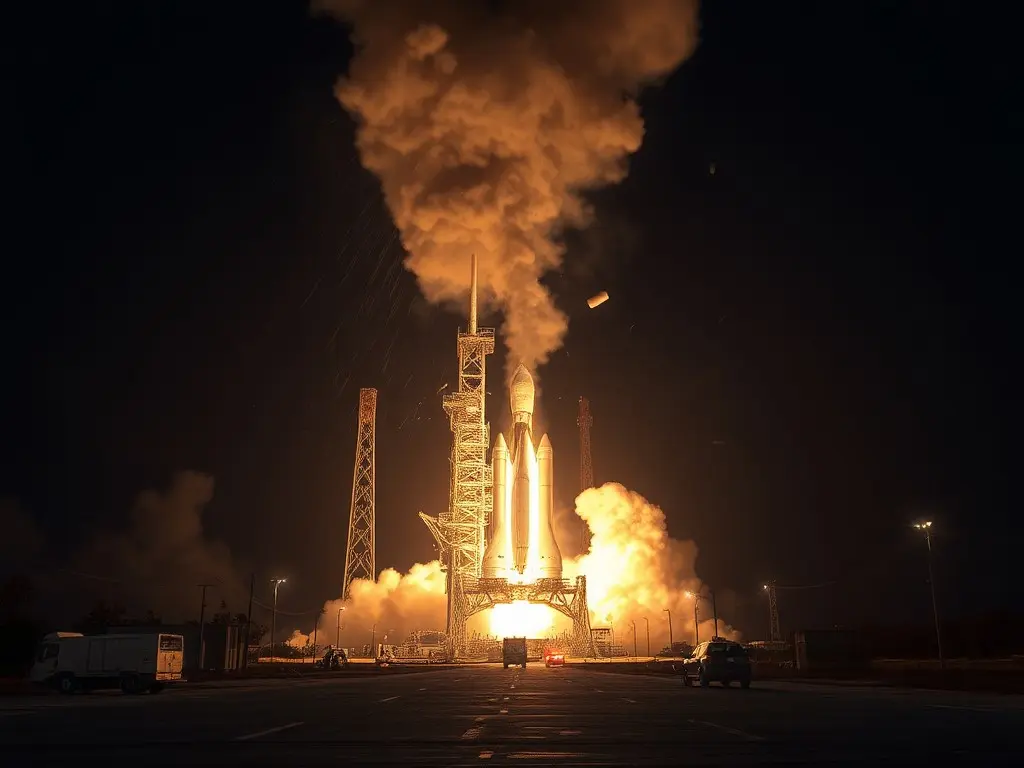
Blue Origin's New Glenn rocket exploded during a prelaunch engine test at Cape Canaveral Space Force Station on May 28, destroying the vehicle and damaging launch infrastructure, with no injuries reported. The incident delays the rocket's upcoming flight, complicates NASA's Artemis program timeline, and may force adjustments to Blue Origin's role in supporting Artemis missions after a prior FAA investigation grounded the rocket in April.
Blue Origin’s New Glenn rocket suffered a catastrophic explosion during a static fire test on May 28 at Launch Complex-36 in Cape Canaveral Space Force Station, Florida. The incident occurred as the rocket prepared for its fourth launch attempt, scheduled for June 4, but destroyed the vehicle and severely damaged ground infrastructure. No injuries were reported, though the payload—48 Amazon Kuiper internet satellites—was not aboard at the time. The explosion marks a major setback for Blue Origin, which had only received clearance for the upcoming flight a week prior. The company’s New Glenn rocket had already faced delays after the NG-3 mission in April, when a second-stage failure stranded a payload in an unstable orbit. The Federal Aviation Administration (FAA) had grounded New Glenn pending an investigation, and now another probe will likely follow, further delaying operations. New Glenn is Blue Origin’s heavy-lift launch vehicle, designed to compete with SpaceX’s Falcon 9 and Starship. While it successfully reached orbit on its first launch in January 2025, the May 28 incident threatens progress, particularly for NASA’s Artemis program. The rocket was expected to play a role in supporting lunar missions, and the delay could force NASA to reconsider its reliance on Blue Origin for critical payloads. The explosion also highlights infrastructure vulnerabilities at LC-36, which will require extensive repairs before operations can resume. With New Glenn grounded and investigations underway, Blue Origin’s timeline for future launches remains uncertain. Analysts, including Kathleen Curlee of Georgetown University’s Center for Security and Emerging Technology, have called the incident a ‘pretty significant setback’ for the company’s ambitions in spaceflight.
This content was automatically generated and/or translated by AI. It may contain inaccuracies. Please refer to the original sources for verification.