A woolly solution to NI's peatland problems?
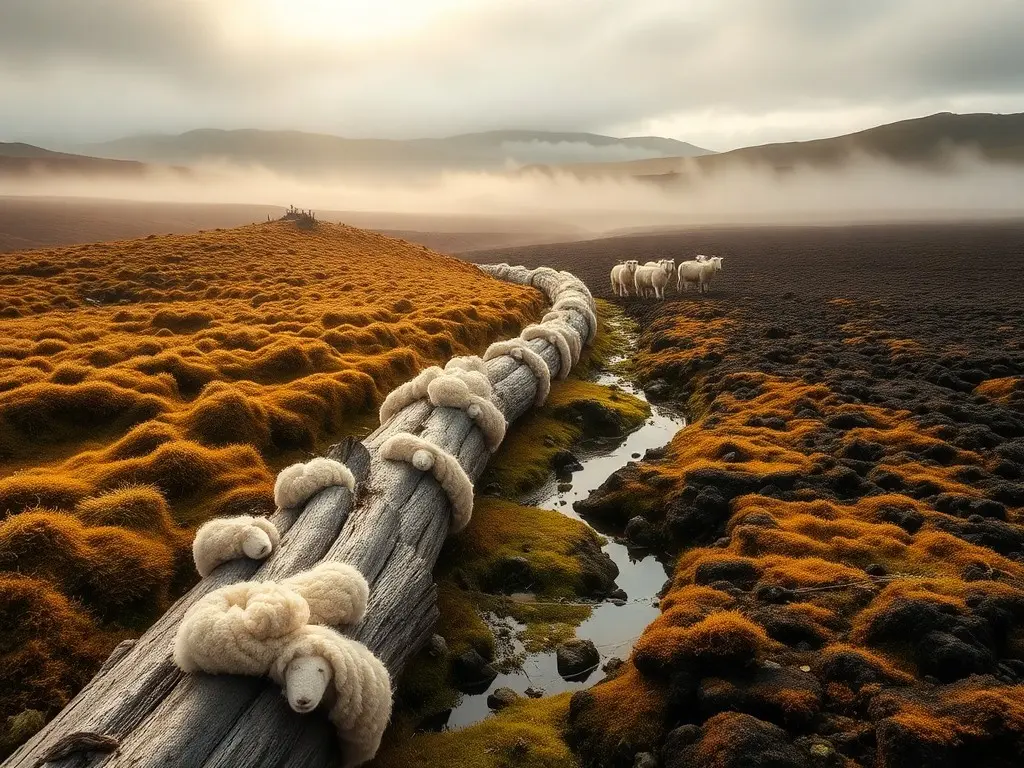
A pilot project in Northern Ireland’s Antrim Hills is testing wool logs—made from local sheep fleece—as a sustainable alternative to imported coir logs for peatland erosion control and carbon storage. The initiative, led by the Ulster Farmers’ Union and Ulster Wildlife, aims to reduce costs, carbon footprints, and create a new market for wool while restoring degraded peatlands critical to climate change mitigation.
A pilot project in Northern Ireland’s Antrim Hills is exploring wool logs as an eco-friendly solution to restore degraded peatlands. Traditionally, coir logs—imported from Southeast Asia—have been used to reduce erosion and rewet peatlands, but their high carbon footprint and cost prompted the search for a local alternative. The logs, weighing around 9-10kg each, are made from woven wool textiles filled with sheep fleece and reinforced with a solid wool rope to maintain structure. Nearly 60 wool logs were installed on Slievenanee in February, with support from local farmers and landowners. Ulster Wildlife and the Ulster Farmers’ Union (UFU) are leading the initiative, which they describe as a ‘win-win’ for both farmers and conservation. Stephanie Clokey, the UFU’s peatlands officer, noted that low wool prices have left farmers struggling, and the project could create a new market for the material, repurposing what was once considered a waste product. James Devenney of Ulster Wildlife emphasized the need for a sustainable, locally sourced option, as coir logs contribute to a significant carbon footprint due to their import from Asia. Northern Ireland’s peatlands cover 12% of the land but are 86% degraded, emitting carbon instead of storing it—a critical issue given their role in climate change mitigation. The project aligns with the Department of Agriculture, Environment and Rural Affairs’ 2023 peatland strategy, which aims to restore these ecosystems by 2040 but requires substantial financial resources. Wool logs could help achieve restoration goals while protecting endangered species like hen harriers, curlews, and priority butterflies that rely on healthy peatlands. The logs were designed to be lightweight yet durable, weighing far less than the 45kg coir logs they replace. Farmers and conservationists involved in the project expressed excitement about its potential, with Clokey highlighting the collaboration between agricultural and environmental sectors. If successful, the initiative could set a precedent for other regions facing similar challenges in peatland conservation and sustainable resource use.
This content was automatically generated and/or translated by AI. It may contain inaccuracies. Please refer to the original sources for verification.