ABB links up with prosthetics pioneer to revolutionise robotic dexterity
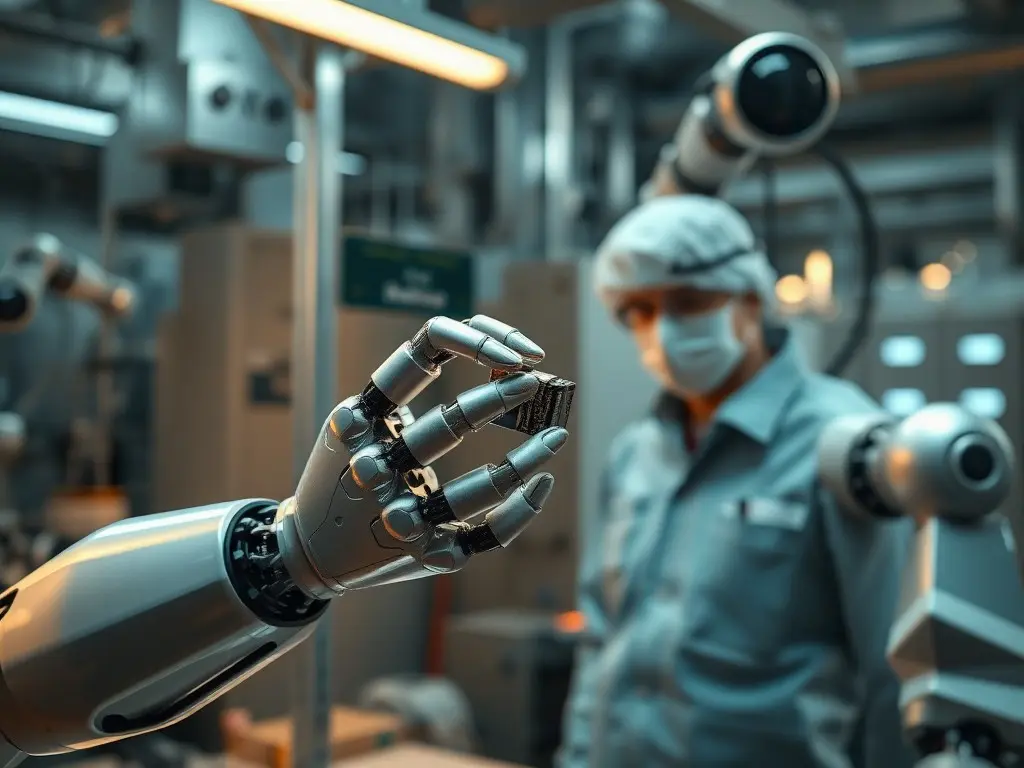
ABB Robotics and Psyonic are collaborating to integrate human prosthetic touch and motion data into robotic systems, aiming to revolutionize robotic dexterity for industrial tasks. The partnership combines Psyonic’s Ability Hand prosthetic with ABB’s GoFa cobot to train robots for delicate, variable automation challenges across multiple industries.
Swiss industrial automation leader ABB Robotics has partnered with California-based Psyonic, a developer of advanced bionic prosthetics, to advance robotic dexterity using real-world human manipulation data. The collaboration merges Psyonic’s Ability Hand—a lightweight, multi-articulating prosthetic with touch sensing and myoelectric control—with ABB’s GoFa collaborative robot to improve robotic gripping in dynamic industrial environments. The Ability Hand, designed for prosthetic users, features pressure sensors and vibration feedback to detect contact, grip force, and object release, enabling intuitive interaction with irregular or deformable objects. This data, collected from human use, will train robotic systems to perform complex tasks with precision, addressing a long-standing gap between human and machine dexterity. ABB’s GoFa cobot provides the necessary accuracy and repeatability for industrial applications, ensuring subtle variations in grip force and finger positioning can be reliably executed. The partnership aims to apply this technology to industries where traditional gripping methods struggle, such as handling delicate or irregular objects. Psyonic’s founder and CEO, Dr. Aadeel Akhtar, emphasized that dexterous manipulation relies heavily on high-fidelity data, and integrating the Ability Hand with ABB’s platform expands its potential for automation. ABB Robotics president Marc Segura noted that this collaboration aligns with their vision for Autonomous Versatile Robotics (AVR), where robots learn from real-world interactions to improve productivity, flexibility, and safety in industrial settings. The project will evaluate applications across sectors where repetitive or ergonomically challenging tasks currently limit automation efficiency. Early insights suggest advanced gripping and digital integration could reduce engineering time by up to 30%, according to the International Federation of Robotics.
This content was automatically generated and/or translated by AI. It may contain inaccuracies. Please refer to the original sources for verification.