Agentic AI driving redesign of all computing platforms: Nvidia’s Huang
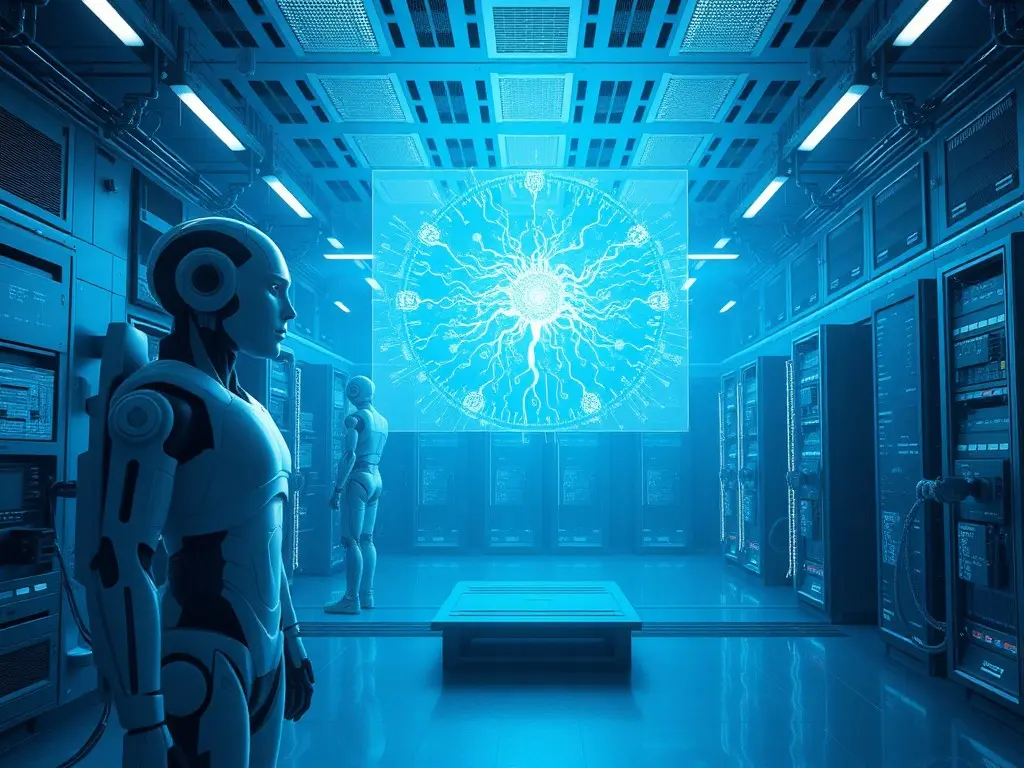
Nvidia CEO Jensen Huang announced agentic AI will reshape computing architecture across PCs, robots, and data centers, enabling autonomous systems that reason and use tools independently. He highlighted Nvidia’s RTX Spark platform as an example of local AI agent deployment, signaling a shift from cloud-dependent models to distributed computing across edge and cloud environments.
Nvidia CEO Jensen Huang stated agentic AI—systems capable of reasoning, using tools, and operating autonomously—will drive a fundamental redesign of computing platforms, from personal computers to robots and data centers. Speaking in Taipei after Nvidia GTC Taipei, Huang described this as a new computing pattern, where AI agents replace traditional software by understanding context, accessing memory, and leveraging external tools. The architecture can be applied universally, including self-driving vehicles, humanoid robots, and personal computers, Huang said. He emphasized that every edge device will eventually integrate agentic systems, transforming how devices operate even when inactive. For example, future PCs could function as proactive assistants rather than passive tools. Nvidia’s RTX Spark, developed with MediaTek and Microsoft, exemplifies this shift, using the N1X chip to run AI agents locally instead of relying solely on cloud services. Huang suggested households may adopt dedicated systems for AI tasks, similar to how home theater equipment is used today. These systems would operate within a distributed model, balancing tasks between local devices, home servers, and cloud infrastructure for efficiency. Beyond PCs, Huang predicted agentic AI will extend to autonomous vehicles and industrial robots, marking the next phase of ‘physical AI.’ This involves reasoning-based AI systems interacting with real-world environments to perform physical tasks, such as self-driving cars and humanoid robots. The transition would require reinventing existing computing infrastructure to support these capabilities, Huang noted.
This content was automatically generated and/or translated by AI. It may contain inaccuracies. Please refer to the original sources for verification.