AI boom: Demand for data centers drives innovation by energy, tech industries to produce new power sources
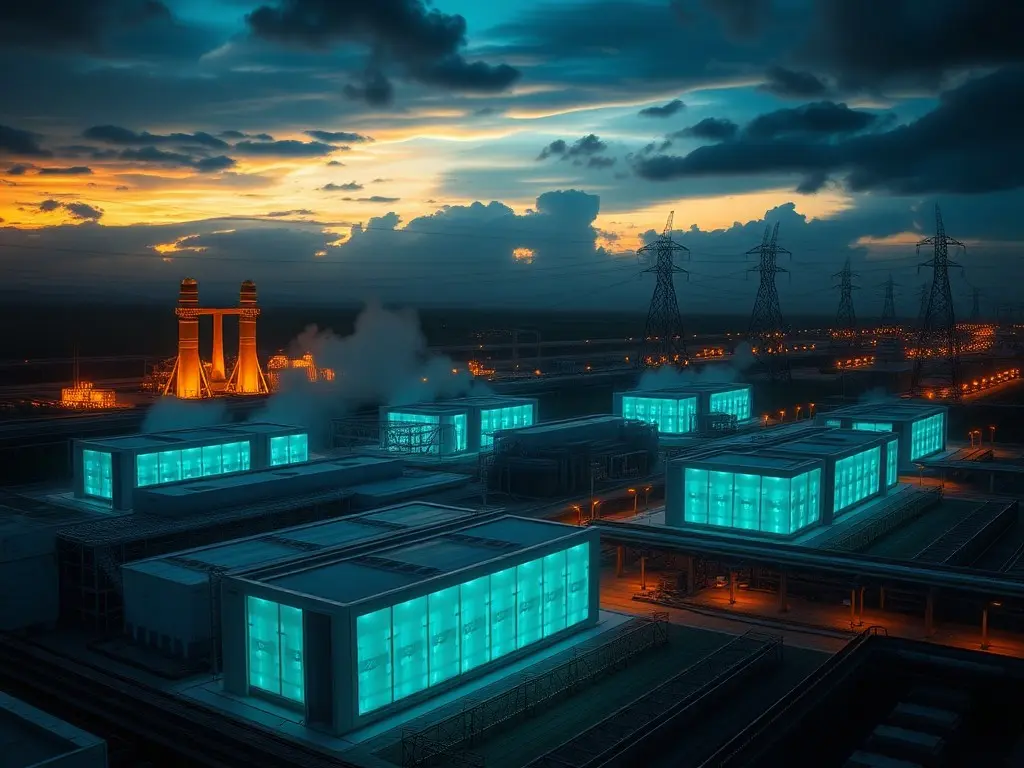
Exelon CEO Calvin Butler announced a $1.1 trillion investment in energy infrastructure over five years to meet surging data center demand, which consumed 1.5% of global electricity in 2024 and is projected to become the fifth-largest energy consumer. Commonwealth Fusion Systems in Massachusetts is developing fusion energy solutions to power data centers, estimating its ARC plant could supply electricity for 280,000 homes annually, though commercial viability remains uncertain until 2100 according to MIT.
Exelon, one of the largest U.S. electric utility companies, plans to invest $1.1 trillion in infrastructure over the next five years to address rising energy demand from data centers. Data centers accounted for 1.5% of global electricity use in 2024 and are projected to become the world’s fifth-largest energy consumer this year, with usage comparable to Japan or Russia. Exelon CEO Calvin Butler emphasized the need for a resilient grid, noting supply costs in the PJM region have surged 645% since 2024, though the company focuses on transmission and distribution rather than generation. To meet AI-driven demand, Commonwealth Fusion Systems in Devens, Massachusetts, is advancing fusion energy—a process replicating the sun’s power by combining light nuclei like hydrogen to release heat convertible to electricity. The company’s ARC fusion plant could produce 50 times more power than it consumes, potentially supplying a small city for a year using fuel equivalent to a pickup truck’s load. Co-authored by 58 scientists from top universities, the technology aims to power 280,000 American homes, though MIT estimates fusion may not contribute significantly to global electricity until 2100. Challenges remain, including system integration and high costs. Commonwealth Fusion Systems’ Brandon Sorbom described the process as a complex ‘dance’ to align components for reliable performance. While fusion holds promise, other companies are opting for alternative solutions, such as relocating data centers to regions with abundant, cheap power like the Nordics. Philippe Sachs of AI infrastructure builder Nscale highlighted the region’s green energy, low industrial competition, and strong regulatory environment as ideal for data center operations. The shift toward sustainable and scalable energy sources reflects the growing tension between AI’s computational needs and global power infrastructure. As data centers expand, innovations like fusion and strategic relocations may determine how industries balance demand with environmental and economic constraints. Exelon’s infrastructure push and Commonwealth Fusion Systems’ advancements signal a pivotal moment in energy technology, though widespread adoption of fusion remains decades away.
This content was automatically generated and/or translated by AI. It may contain inaccuracies. Please refer to the original sources for verification.