AI-driven microscope boosts materials science
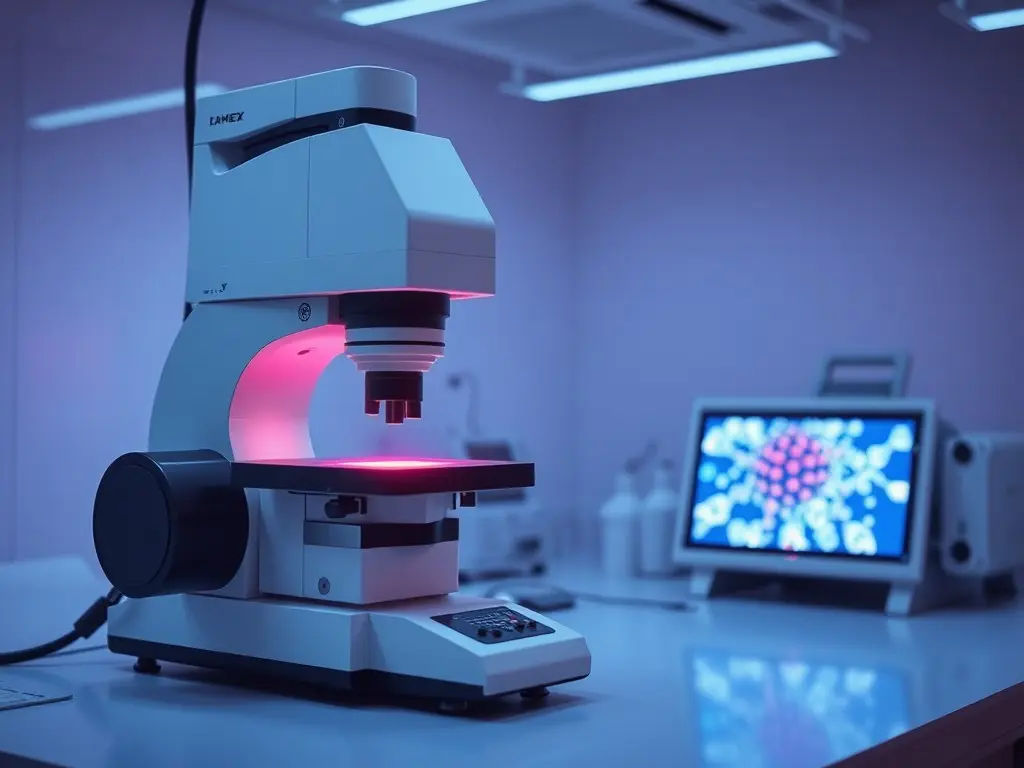
Chinese researchers developed the world’s first AI-driven transmission electron microscope system, named 'Aeye-1,' which achieved fully autonomous operation and 300 times faster image analysis than manual methods. The system, validated by experts in Beijing, marks a global first and could revolutionize materials science, clean energy, and life sciences research.
Chinese researchers from the Chinese Academy of Sciences’ Dalian Institute of Chemical Physics and Shenyang Institute of Automation unveiled the world’s first AI-driven transmission electron microscope (TEM) system, called 'Aeye-1.' The system, officially validated on May 24 by the China Petroleum and Chemical Industry Federation in Beijing, operates entirely autonomously, eliminating manual bottlenecks in TEM workflows. The 'Aeye-1' integrates AI and hardware advancements to address five key technical challenges: high-vacuum sample transfer, autonomous electron optics alignment, nanoscale precision localization, AI-driven imaging, and intelligent system scheduling. This allows the microscope to function as a 'smart eye,' processing 168 samples and 4,000 images daily—300 times faster than manual methods. In testing with molecular sieves, the system matched an entire year’s manual workload in just two weeks while generating automated analytical reports. The breakthrough could accelerate materials genomics, green energy research, and life sciences by enabling large-scale, high-speed data collection. Traditional TEMs, reliant on manual operation since their invention over a century ago, have struggled with inefficiency and subjectivity. 'Aeye-1' resolves these issues, positioning China as a global leader in advanced scientific instrumentation. Experts confirmed the system’s global-first status, emphasizing its role in enhancing national self-reliance and technological security. Its ability to autonomously handle sample supply, imaging, and data analysis sets a new standard for microscopic research, potentially reshaping industries dependent on material characterization.
This content was automatically generated and/or translated by AI. It may contain inaccuracies. Please refer to the original sources for verification.