AI in Aviation Faces Rising Stakes
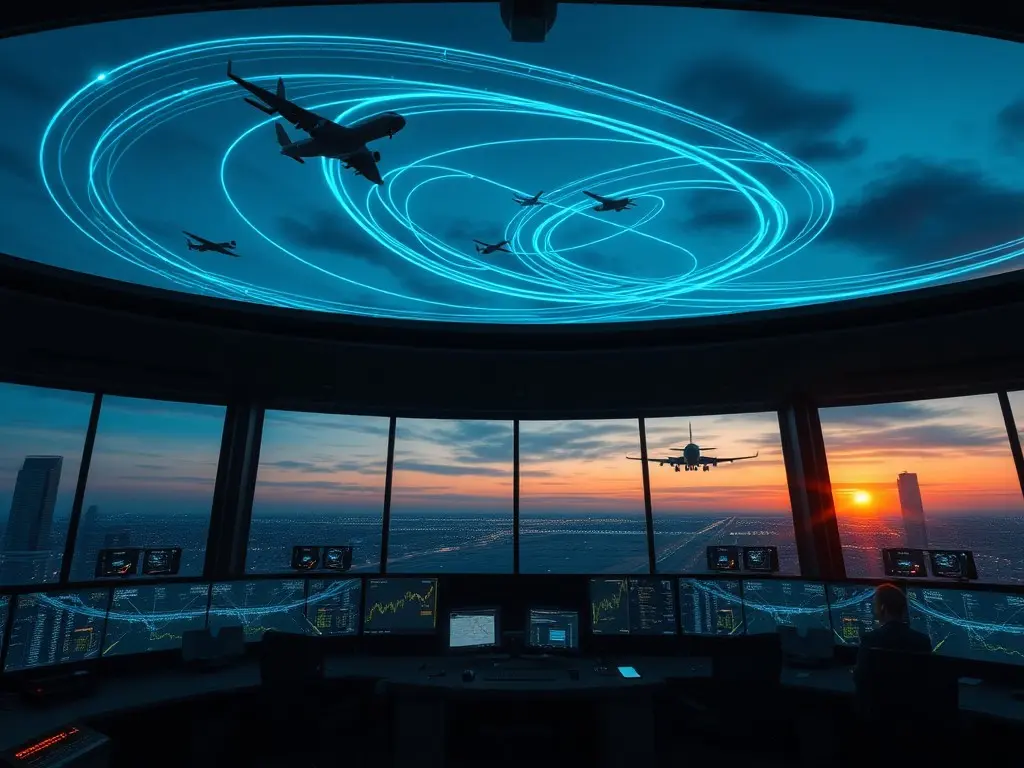
A Fortune Business Insights report projects the global AI aviation market will grow from $7.45 billion in 2024 to $36.68 billion by 2034, driven by adoption in aircraft design, maintenance, routing, and autonomous systems. Meanwhile, Pope Leo XIV warned of AI risks in aviation, contrasting with rapid industry investment by firms like SpaceX, Boeing, and Intel in AI-powered technologies for flight operations and air traffic management.
A new report from Fortune Business Insights highlights the accelerating integration of artificial intelligence in aviation, with the global market expected to expand from $7.45 billion in 2024 to $36.68 billion by 2034, growing at nearly 20% annually. North America leads the sector, accounting for nearly half of current AI aviation applications, as companies embed machine learning into aircraft design, predictive maintenance, and real-time flight optimization. AI is transforming core aviation functions, from passenger check-ins and baggage screening to dynamic pricing and route adjustments based on weather and fuel efficiency. Behind the scenes, machine learning analyzes sensor data to detect maintenance issues before failures occur, reducing downtime and enhancing safety amid ongoing backlogs. Airlines also deploy AI-driven recommendation systems to personalize travel options and improve communication during disruptions. Major aerospace and tech firms are racing to dominate this space, with Intel, NVIDIA, IBM, Microsoft, Amazon, Airbus, Boeing, General Electric, Thales, and Lockheed Martin investing heavily in AI-enabled aviation technologies. These systems aim to create smarter skies by improving efficiency, safety, and responsiveness to challenges like climate-related weather disruptions. The debate over AI’s role in aviation has intensified, with Pope Leo XIV recently issuing an encyclical warning of moral and economic risks from unchecked AI development. His call for stronger oversight contrasts with the industry’s rapid adoption, exemplified by Elon Musk’s rebranding of SpaceX as an AI-powered technology platform ahead of its planned June public offering. Despite the Vatican’s caution, AI is becoming integral to aviation’s future, from autonomous flight systems to real-time air traffic management. The shift reflects broader industry pressures to operate more efficiently, economically, and safely in an era of increasing complexity and climate-related challenges.
This content was automatically generated and/or translated by AI. It may contain inaccuracies. Please refer to the original sources for verification.