AI use tailored to creative-industry programmes requires institution-wide support
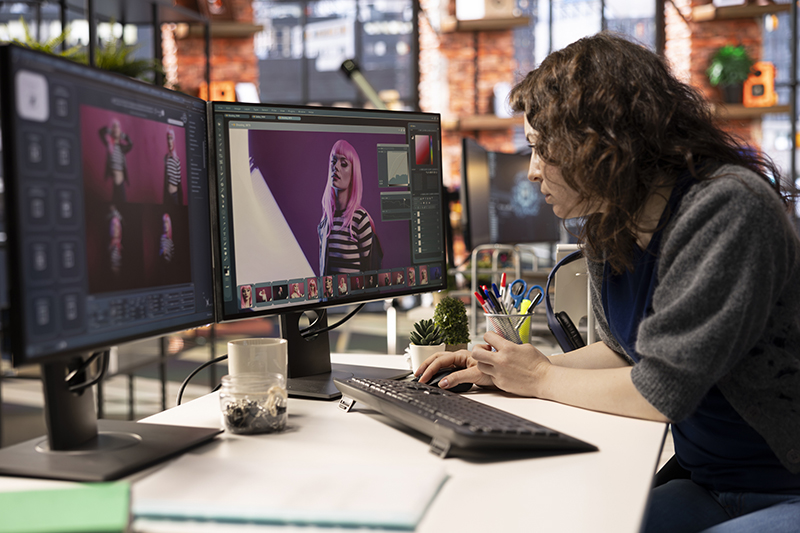
A report highlights contradictions in AI adoption among creative-industry students and staff, with some rejecting generative AI due to ethical concerns or job displacement fears, while others recognize its growing role in industry practice. De Montfort University’s School of Design Innovation integrates AI into assessments, requiring students to reference tools and prompts to ensure originality and critical evaluation of AI-generated work, aiming to prepare them for an evolving sector." "article": "De Montfort University (DMU) is adapting its creative-industry programmes to address the growing influence of artificial intelligence (AI) in design and fashion, despite student and staff resistance. Some students oppose AI due to ethical concerns or fears of job displacement, while a Gallup study suggests creative roles are reorganizing rather than disappearing. The university’s School of Design Innovation treats AI as a tool akin to pencils or scissors, requiring students to reference prompts and tools to maintain authorship and avoid homogenization of work. Alan Beattie, head of education in the School of Design Innovation, emphasizes that AI must be used with design fundamentals to ensure critical and creative processes remain intact. Students now document their use of AI, distinguishing their contributions from generated content. This approach mitigates risks like uncritical AI reliance, which can produce generic outputs, and aligns with industry demands for adaptability. Thom Corah, lead for digital pedagogy and AI in the School of Creative Industries and Culture, is advancing AI literacy through research and curriculum integration. The university’s strategy balances AI’s role in creative workflows with the need for students to develop judgment and originality. By embedding AI literacy, DMU aims to equip graduates for a sector where AI is increasingly embedded in design software and iterative processes. A joint report by the Association of Photographers and other creative organizations acknowledges job losses linked to generative AI, but Gallup’s analysis indicates creative fields are evolving rather than vanishing. The university’s focus on AI as a supplementary tool—rather than a replacement—reflects this shift, ensuring students gain industry-relevant skills while preserving creative integrity.
De Montfort University (DMU) is adapting its creative-industry programmes to address the growing influence of artificial intelligence (AI) in design and fashion, despite student and staff resistance. Some students oppose AI due to ethical concerns or fears of job displacement, while a Gallup study suggests creative roles are reorganizing rather than disappearing. The university’s School of Design Innovation treats AI as a tool akin to pencils or scissors, requiring students to reference prompts and tools to maintain authorship and avoid homogenization of work. Alan Beattie, head of education in the School of Design Innovation, emphasizes that AI must be used with design fundamentals to ensure critical and creative processes remain intact. Students now document their use of AI, distinguishing their contributions from generated content. This approach mitigates risks like uncritical AI reliance, which can produce generic outputs, and aligns with industry demands for adaptability. Thom Corah, lead for digital pedagogy and AI in the School of Creative Industries and Culture, is advancing AI literacy through research and curriculum integration. The university’s strategy balances AI’s role in creative workflows with the need for students to develop judgment and originality. By embedding AI literacy, DMU aims to equip graduates for a sector where AI is increasingly embedded in design software and iterative processes. A joint report by the Association of Photographers and other creative organizations acknowledges job losses linked to generative AI, but Gallup’s analysis indicates creative fields are evolving rather than vanishing. The university’s focus on AI as a supplementary tool—rather than a replacement—reflects this shift, ensuring students gain industry-relevant skills while preserving creative integrity.
This content was automatically generated and/or translated by AI. It may contain inaccuracies. Please refer to the original sources for verification.