AI will consume as much water in 2030 as 1.3 billion people
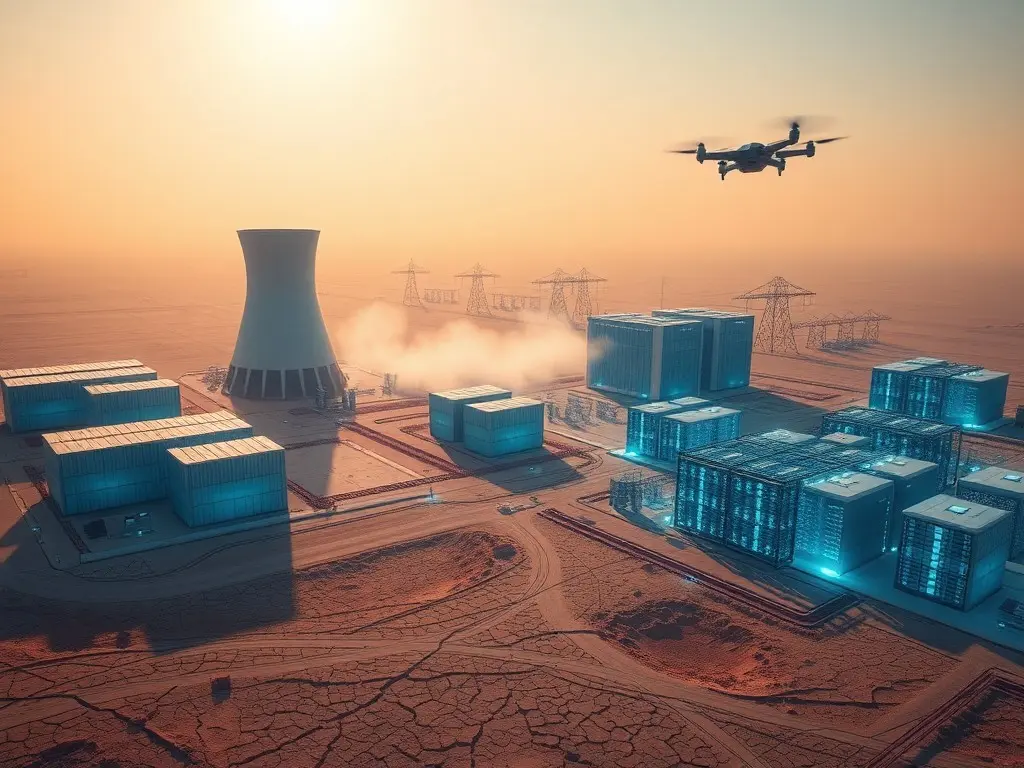
A UN report warns AI’s water consumption could equal that of 1.3 billion people by 2030, requiring energy equivalent to Pakistan, Bangladesh, and Nigeria combined, while emitting 400 million tonnes of CO₂ annually. Researchers highlight underestimation of AI’s environmental impact, including land use, water, and carbon footprints tied to data centers and energy sources.
A report by the United Nations University Institute for Water, Environment and Health (UNU-INWEH) projects that by 2030, artificial intelligence will consume water equivalent to the needs of 1.3 billion people in sub-Saharan Africa. The technology’s energy demands will also surpass the combined annual consumption of Pakistan, Bangladesh, and Nigeria—countries with a population of 650 million—while generating 400 million tonnes of CO₂, comparable to the UK’s total emissions. The study emphasizes that AI’s environmental footprint extends beyond carbon emissions, requiring 14,500 square kilometers of land—an area twice the size of Jakarta’s metropolitan region. Current AI-powered data centers already consume 448 terawatt-hours of electricity annually, matching France’s national usage. Researchers note that most analyses focus solely on carbon emissions from AI model training, overlooking water use in cooling systems and electricity generation. For example, shifting from coal to bioenergy could reduce emissions by 70% but increase water consumption thirtyfold and land use a hundredfold. Professor Kaveh Madani, director of UNU-INWEH, stressed the report is not anti-AI but calls for responsible adoption. Shaolei Ren, an AI sustainability specialist at the University of California, Riverside, supported the findings, stating AI’s physical impact—data centers, energy, and supply chains—must be addressed for sustainable development. The study warns of a narrow window to align AI growth with planetary limits, urging proactive measures to mitigate its environmental toll.
This content was automatically generated and/or translated by AI. It may contain inaccuracies. Please refer to the original sources for verification.