AI’s growing thirst: Data centres may use 9.3 trillion litres of water by 2030
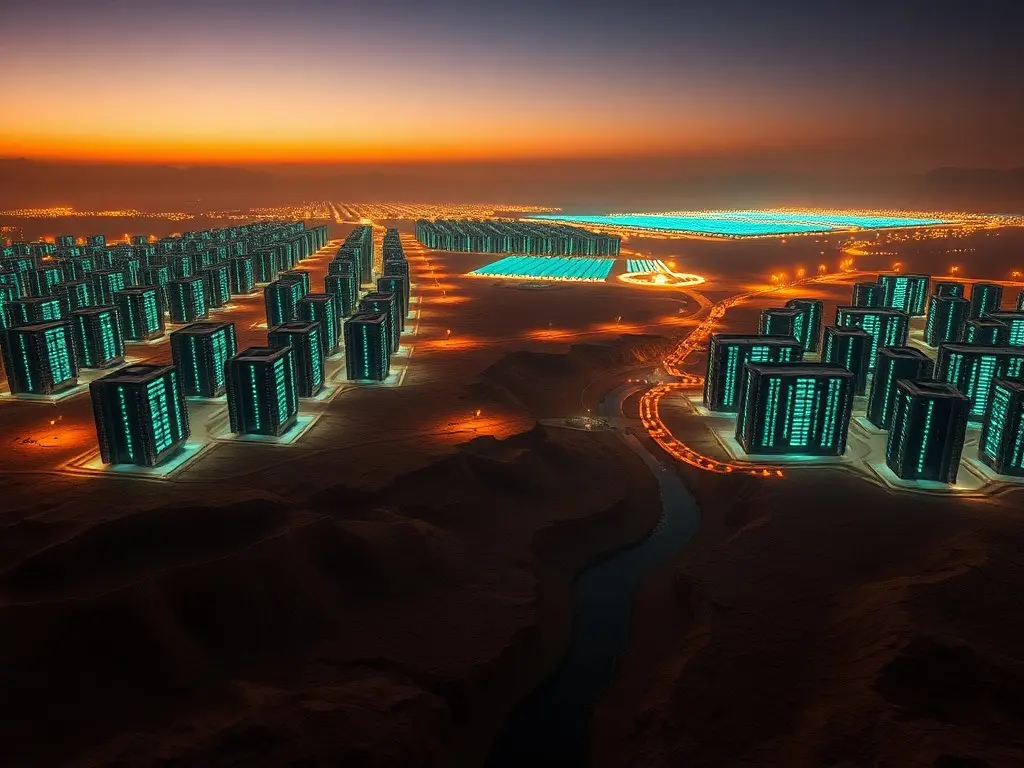
A UN University report projects AI-driven data centers will consume 945 TWh of electricity, 9.3 trillion liters of water, and occupy 14,500 sq km of land by 2030, with 80-90% of energy use coming from daily AI operations like ChatGPT’s 2.5 billion prompts. The study warns of growing disparities in AI infrastructure, with 90% of specialized computing capacity concentrated in the U.S. and China, and calls for urgent integration of AI into global energy, water, and land policies to mitigate environmental harm.
A new report by the United Nations University Institute for Water, Environment and Health (UNU-INWEH) highlights the alarming environmental footprint of AI-driven data centers, which are projected to consume 945 terawatt-hours (TWh) of electricity, 9.3 trillion liters of water, and occupy over 14,500 square kilometers of land by 2030. The electricity demand alone would nearly triple the combined annual consumption of Pakistan, Bangladesh, and Nigeria, accounting for nearly 3% of global electricity use. The water consumption is equally staggering, with AI data centers expected to use enough water to meet the basic annual domestic needs of 1.3 billion people in Sub-Saharan Africa. The land footprint would be roughly twice the size of Jakarta’s metropolitan region, home to over 32 million people. The report emphasizes that daily AI operations, such as inference tasks, now account for 80-90% of energy consumption. ChatGPT alone processes around 2.5 billion prompts daily, consuming approximately 383 gigawatt-hours (GWh) of electricity annually. This equates to emissions requiring 2.6 million tree seedlings to offset over a decade, covering an area similar to Manhattan. AI-generated content also demands significantly more energy: a single AI-generated image consumes 1,450 times more energy than a basic text-classification task, while a short AI-generated video uses as much electricity as classifying 200,000 spam messages. The study warns that efficiency improvements may not curb overall consumption due to the Jevons Paradox, where cheaper and more efficient AI systems drive increased demand. Over 90% of AI-specialized computing capacity is concentrated in the U.S. and China, leaving 150 countries with little or no sovereign AI infrastructure. The report urges governments to integrate AI planning into energy, water, and land policies to address these unintended environmental impacts responsibly. Dr. Miriam Aczel, lead author of the report, noted that solutions perceived as environmentally friendly in one area—such as carbon reduction—often worsen water or land use challenges. Professor Kaveh Madani, Director of UNU-INWEH, stressed that the report is not anti-AI but calls for proactive measures to manage its growing environmental strain.
This content was automatically generated and/or translated by AI. It may contain inaccuracies. Please refer to the original sources for verification.