Alameda County voters to decide interim, full-term replacement for ex-Rep. Swalwell
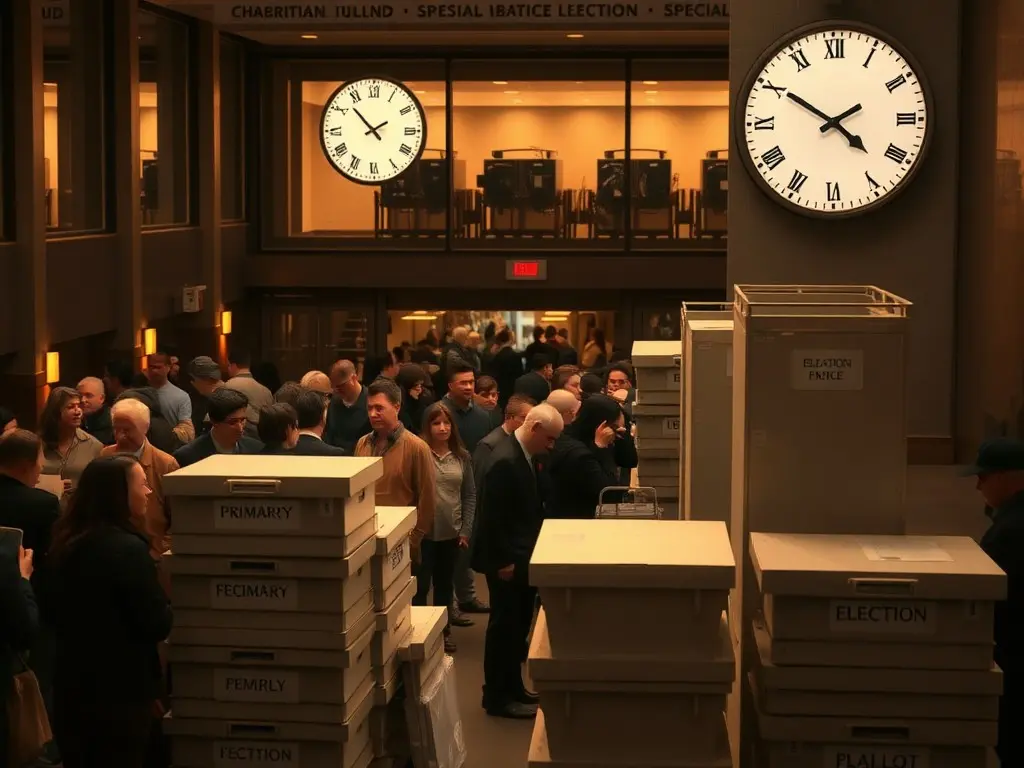
Alameda County voters face two elections in June 2026—one primary on June 2 and a special election on June 16—to replace Rep. Eric Swalwell, who resigned in April amid sexual assault allegations. The unusual setup, requiring separate ballots for a full-term and interim replacement, has caused voter confusion, with officials spending $10 million to manage the dual elections.
Alameda County voters are navigating an unusual election cycle after Rep. Eric Swalwell resigned in April amid sexual assault allegations, which he denied. His departure triggered two separate elections: a statewide primary on June 2 to determine the top two candidates for a full two-year term, and a special election on June 16 to fill the remainder of Swalwell’s current term through January. The overlapping ballots—one for the primary and another for the special election—have confused some voters, particularly those receiving multiple voter guides and ballots in quick succession. Officials clarified the distinction by designing the ballots differently: the June 2 primary features longer ballot cards with multiple races, while the June 16 special election ballot is a single 8.5-by-11-inch card. Alameda County election officials also included explanatory letters to clarify the purpose of each election. Cynthia Cornejo, interim registrar of voters, said the timing of Swalwell’s resignation and the existing election calendar necessitated the special election. ‘We already had the materials out for the June 2 primary, so it had to be a special election,’ she explained. To address confusion, officials used targeted messaging and differentiated voter guides, though some voters, like first-time voter Frank Ho, appreciated receiving materials in their native language. As of June 3, primary turnout stood at 19%, with officials expecting higher participation closer to Election Day. The special election will cost taxpayers approximately $10 million, with a per-voter cost of $23 to $25 across over 422,000 registered voters in the 14th Congressional District. Despite the challenges, officials say voters are adjusting, though many are delaying ballot submission until later in the process.
This content was automatically generated and/or translated by AI. It may contain inaccuracies. Please refer to the original sources for verification.