Also Expected to Take the Field at the World Cup: Hazardous Heat
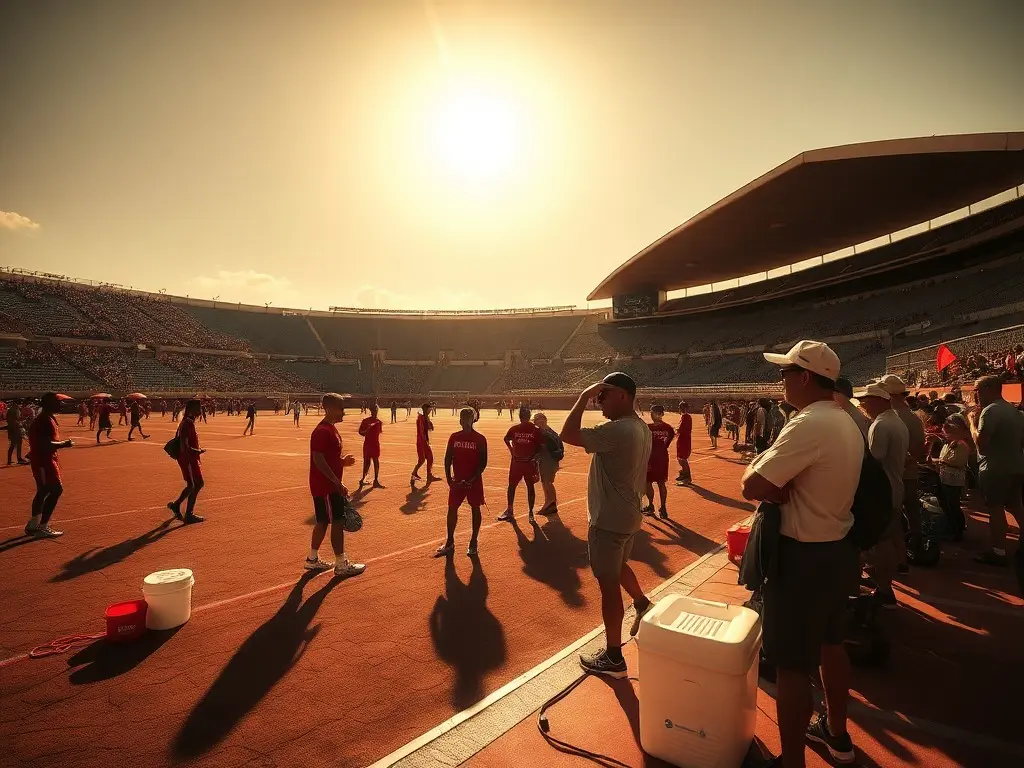
The 2026 World Cup in North America faces extreme heat risks, with host cities experiencing tripled frequency of dangerous temperatures since 1994, threatening player and fan safety. A group of scientists warned FIFA that current heat safety guidelines are inadequate and urged stricter measures like longer breaks and cooler locker rooms.
The 2026 FIFA World Cup, set to begin in North America, is expected to confront hazardous heat levels across its host cities. Since the last World Cup in North America in 1994, global temperatures have risen by about 1.3 degrees Fahrenheit, and extreme heat in June and July has tripled on average across the 10 host cities. This raises concerns about player and fan safety, as well as the readiness of international football to adapt to rising temperatures caused by fossil fuel use. England’s national team has already begun practicing in Miami’s heat to acclimatize players for what could be the hottest World Cup on record. Meanwhile, 21 scientists, including physiologists and climate experts, wrote to FIFA last month, calling its current heat safety guidelines insufficient and 'impossible to justify.' They recommended longer breaks, aggressive locker-room cooling, and other measures to mitigate risks. Unlike the 2022 tournament in Qatar, which was scheduled for winter to avoid extreme heat, a quarter of this year’s 104 matches—40 more than any previous World Cup—are likely to be played under conditions posing heat stress risks. World Weather Attribution, a climate science research group, noted that the tournament’s scale and timing increase exposure to dangerous temperatures. The warnings highlight a broader challenge for global sports: preparing for an ever-warmer climate. With rising heat a persistent threat, FIFA and other governing bodies may need to rethink scheduling and safety protocols to protect athletes and spectators.
This content was automatically generated and/or translated by AI. It may contain inaccuracies. Please refer to the original sources for verification.