Amazon’s AI Warehouse Robot Fuels Job Fears
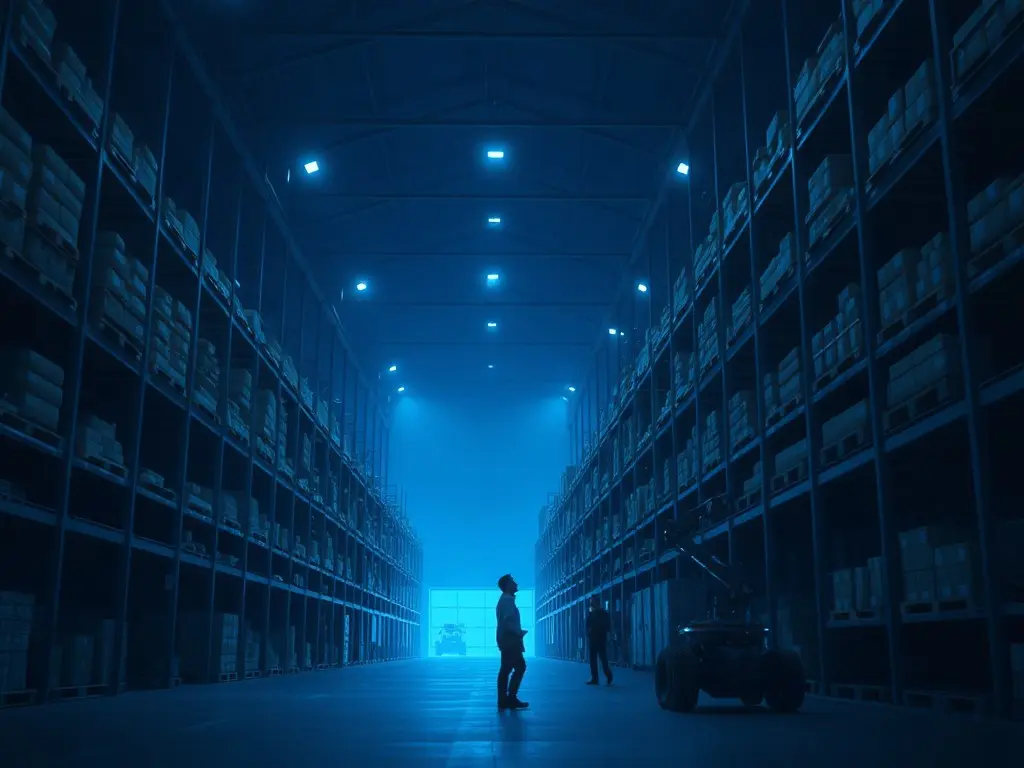
Amazon unveiled an upgraded AI-powered Proteus warehouse robot at its Dartford fulfillment center, capable of conversational prompts, task prioritization, and autonomous route planning as part of a €10 billion European logistics investment. The rollout raises concerns about job displacement amid rising AI-driven layoffs in the tech sector, with 38,242 U.S. tech job cuts announced in May 2026, partly attributed to automation." "article": "Amazon introduced an advanced version of its Proteus warehouse robot at its Dartford fulfillment center near London, marking a key step in its €10 billion European logistics expansion. Unlike earlier models limited to dock areas, the upgraded Proteus uses AI to interpret natural language instructions, prioritize tasks, and navigate warehouse spaces independently. This shift moves automation beyond fixed roles, allowing workers to issue general commands while the robot determines execution steps. The new system integrates with Amazon’s existing robotic infrastructure, including STARK, a tote-handling robot tested in Barcelona, and Vulcan, a tactile-sensitive robot. These tools collectively aim to streamline warehouse operations by automating repetitive tasks like heavy cart movement and inventory handling. Amazon’s timing coincides with a surge in tech layoffs, with U.S. companies cutting 38,242 jobs in May 2026—the highest monthly total in nearly two years. AI was cited as the primary reason for 40% of those layoffs, reflecting broader concerns about automation’s impact on employment. While Amazon argues robots create jobs, critics highlight how companies often use automation to restructure workforces. The Proteus upgrade builds on its earlier deployment at 25 U.S. sites, demonstrating Amazon’s push toward AI-driven efficiency. However, its conversational capabilities and adaptive planning raise questions about long-term job security in logistics, where automation is increasingly reshaping labor demands. Despite assurances from Amazon that technology enhances productivity, industry trends suggest workers may face reduced roles as companies prioritize cost-saving automation. The Dartford reveal underscores a global shift where AI transitions from digital tools to physical labor replacements, altering traditional warehouse operations.
Amazon introduced an advanced version of its Proteus warehouse robot at its Dartford fulfillment center near London, marking a key step in its €10 billion European logistics expansion. Unlike earlier models limited to dock areas, the upgraded Proteus uses AI to interpret natural language instructions, prioritize tasks, and navigate warehouse spaces independently. This shift moves automation beyond fixed roles, allowing workers to issue general commands while the robot determines execution steps. The new system integrates with Amazon’s existing robotic infrastructure, including STARK, a tote-handling robot tested in Barcelona, and Vulcan, a tactile-sensitive robot. These tools collectively aim to streamline warehouse operations by automating repetitive tasks like heavy cart movement and inventory handling. Amazon’s timing coincides with a surge in tech layoffs, with U.S. companies cutting 38,242 jobs in May 2026—the highest monthly total in nearly two years. AI was cited as the primary reason for 40% of those layoffs, reflecting broader concerns about automation’s impact on employment. While Amazon argues robots create jobs, critics highlight how companies often use automation to restructure workforces. The Proteus upgrade builds on its earlier deployment at 25 U.S. sites, demonstrating Amazon’s push toward AI-driven efficiency. However, its conversational capabilities and adaptive planning raise questions about long-term job security in logistics, where automation is increasingly reshaping labor demands. Despite assurances from Amazon that technology enhances productivity, industry trends suggest workers may face reduced roles as companies prioritize cost-saving automation. The Dartford reveal underscores a global shift where AI transitions from digital tools to physical labor replacements, altering traditional warehouse operations.
This content was automatically generated and/or translated by AI. It may contain inaccuracies. Please refer to the original sources for verification.