An Autonomous Near-Future? ‘AI’ Think So
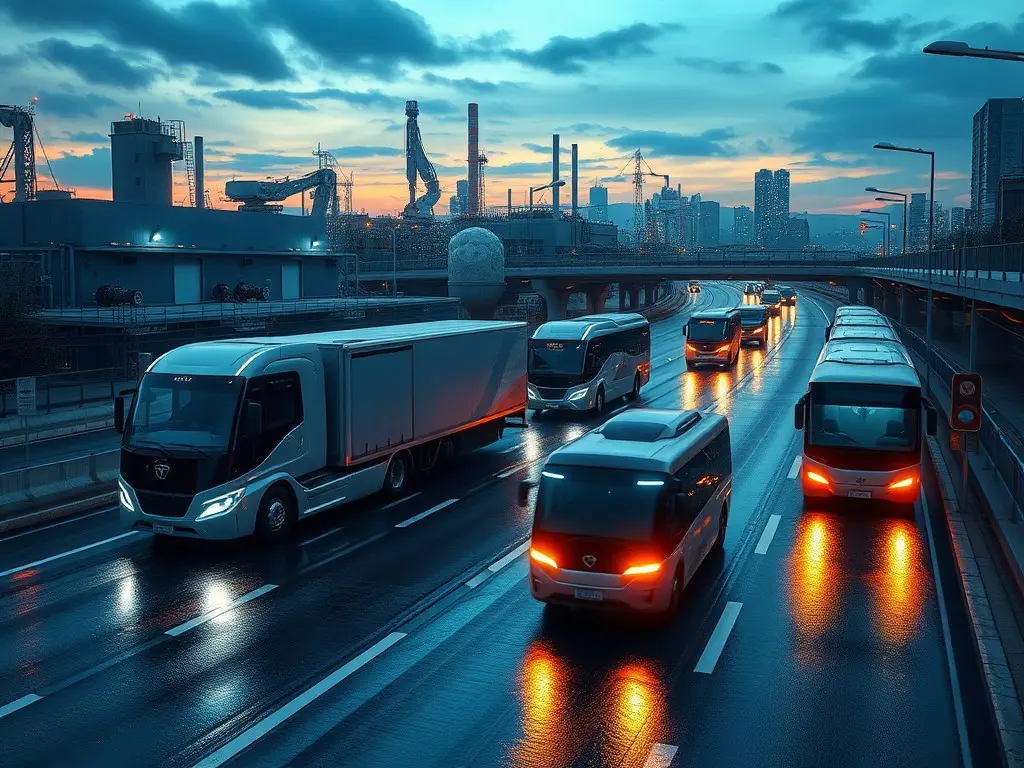
Rivian CEO R.J. Scaringe predicted AI-driven autonomous vehicles will dominate commercial and consumer markets by 2035, warning manufacturers without self-driving capabilities will struggle to retain market share. The ACT Expo in Las Vegas highlighted advancements in autonomous trucks, school buses, and industrial robotics, while also discussing electric vehicle innovations like vehicle-to-grid (V2G) technology.
Rivian CEO and founder R.J. Scaringe emphasized during a keynote at the ACT Expo in Las Vegas that autonomous vehicles will become a defining industry shift within the next decade. Speaking at the commercial truck and bus industry event, Scaringe argued that AI-powered self-driving trucks and buses will handle a significant portion of tasks currently performed by humans, freeing up labor for higher-value roles. He warned that by 2035, vehicle manufacturers without connected, intelligent, and autonomous platforms risk losing market share, particularly in commercial and consumer sectors. The discussion at ACT Expo underscored the growing potential for autonomous school buses, with industry leaders suggesting innovations in trucking could eventually apply to school transportation. While fully autonomous school buses are unlikely to operate without supervision, Scaringe proposed redeploying drivers as safety monitors—a solution to the chronic driver shortage exacerbated by student behavior issues. The event also revealed increased fleet adoption of data-driven technologies to improve efficiency, as highlighted in the *State of Sustainable Fleets* report. Scaringe introduced Rivian’s new robotics division, Mind Robotics, which focuses on AI-powered industrial automation using factory data to develop human-like robotic capabilities. Speculation arose about future applications, such as robotic safety aides on school buses or autonomous systems managing traffic for student pickups. Meanwhile, electric vehicle discussions at ACT Expo shifted toward vehicle-to-grid (V2G) technology, with projects in California, Oregon, New Jersey, and New England demonstrating progress despite ongoing charge management challenges. Industry experts at the event agreed that autonomous technology will first impact heavy-duty trucking and last-mile delivery before expanding to other sectors. Challenges remain in scaling V2G infrastructure, as noted by presenters from OpConnect, The Mobility House, and the New Jersey Department of Environmental Quality. The ACT Expo reinforced the trend toward electrification and automation, positioning these technologies as critical to the future of transportation and logistics.
This content was automatically generated and/or translated by AI. It may contain inaccuracies. Please refer to the original sources for verification.