Analysis-SpaceX playbook set to fuel China's IPO ambitions but tech gap persists
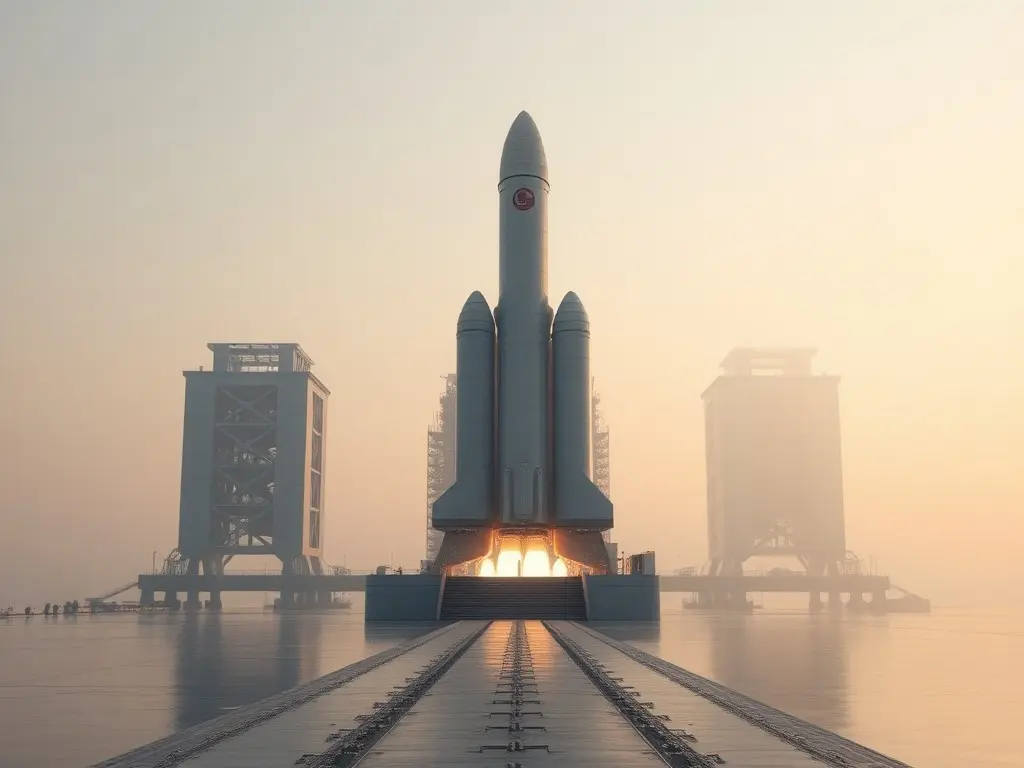
SpaceX’s $75 billion IPO is inspiring Chinese space startups like LandSpace and CAS Space to pursue public listings, but their lack of reusable rocket technology and minimal revenue—such as LandSpace’s $5.2 million first-half 2025 earnings—limits their ability to compete with SpaceX’s $19 billion annual revenue, driven by Starlink and Starship advancements. Analysts warn China’s fragmented sector and reliance on state-backed projects will hinder progress, with a Chinese executive estimating Starlink’s scale could take until 2033 to match, if at all.
SpaceX’s record $75 billion valuation is accelerating China’s push for space startups to go public, with at least seven firms—including LandSpace and CAS Space—advancing IPO plans. Yet unlike SpaceX, which leverages reusable rockets and Starlink’s broadband network for revenue, Chinese companies lack proven technology and meaningful earnings. LandSpace, China’s closest rival, reported just $5.2 million in first-half 2025 revenue, while SpaceX’s revenue hit nearly $19 billion, with Starlink contributing two-thirds of that. The gap extends to infrastructure: SpaceX’s Starship could launch three times as many satellites as its Falcon 9, while China’s Guowang and Qianfan (Spacesail) constellations have only a few hundred satellites in orbit compared to Starlink’s 10,400. LandSpace’s Zhuque-3 rocket failed a reusable landing test in December, underscoring China’s reliance on unproven technology. Analysts cite SpaceX’s vertical integration—using Starlink to drive launch demand—as a model China lacks, with its sector fragmented and dependent on state-backed projects. A Chinese space executive estimated China could match Starlink’s scale by 2033 at best, assuming breakthroughs in booster recovery. Investors like Lantern Capital’s Huang Yan, who saw a 100x return on his 2016 LandSpace stake, bet on long-term potential despite skepticism. Soochow Securities forecasts China’s commercial space market could exceed $1 trillion by 2030, but experts warn SpaceX’s advancements—like Starship—will widen the gap exponentially. The rush to IPOs reflects ambition but masks deeper challenges: revenue gaps, technological hurdles, and a lack of self-sustaining business models. Without reusable rockets or scalable broadband networks, Chinese firms risk valuations that don’t reflect their true potential.
This content was automatically generated and/or translated by AI. It may contain inaccuracies. Please refer to the original sources for verification.