Andrew Giuliani-led task force readies for 'zero-fail' World Cup mission
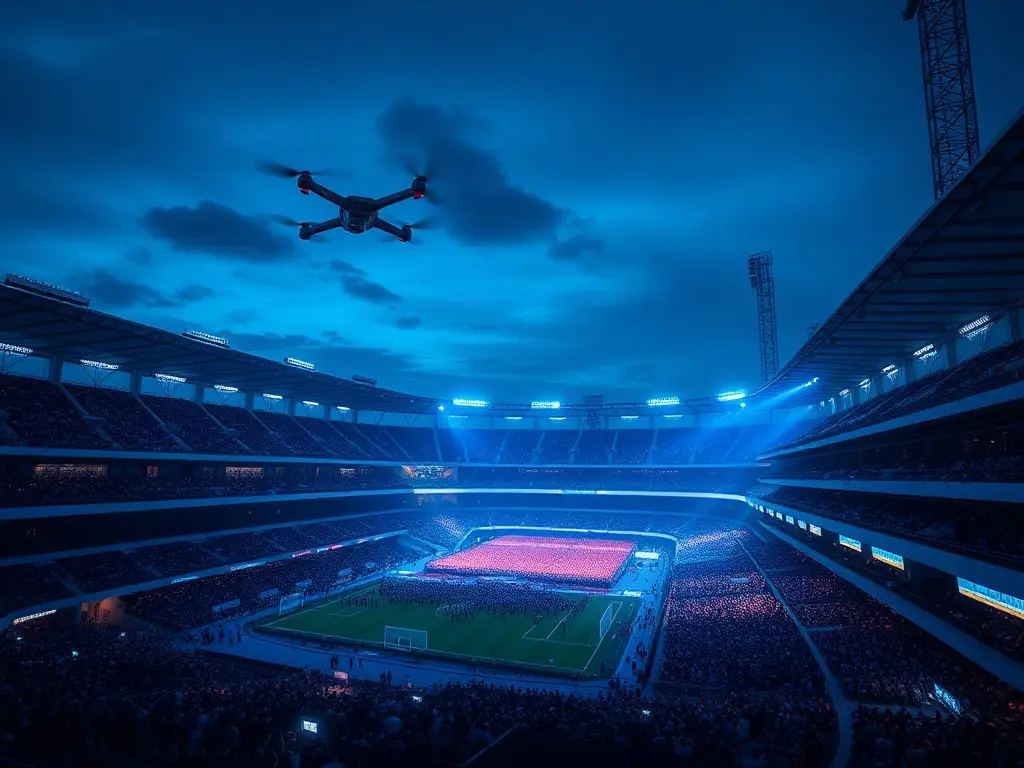
The U.S.-led World Cup security task force, directed by Andrew Giuliani, is preparing for an unprecedented 'zero-fail' mission amid heightened threats from geopolitical tensions and AI risks. Federal agencies, including the DHS and FBI, are deploying advanced tools like AI cameras, drone nets, and robot dogs across 16 host cities in the U.S., Mexico, and Canada to secure stadiums, fan zones, and dignitaries during the 104-match tournament starting next week." "article": "A multiagency task force led by Andrew Giuliani, executive director of Trump’s World Cup security initiative, is overseeing a historic security operation for the 2026 FIFA World Cup, the largest in history with 48 teams and 104 matches across 16 cities in the U.S., Mexico, and Canada. The event coincides with heightened risks, including U.S.-Israel tensions with Iran, political violence concerns, and AI-driven disruptions, prompting authorities to deploy advanced tools such as hunter drones, bag-scanning robot dogs, and thousands of AI-powered surveillance cameras. Giuliani, son of former NYC Mayor Rudy Giuliani, described the effort as equivalent to securing '78 Super Bowls over 39 days,' emphasizing its scale. Federal agencies, state police, and private contractors are coordinating under a security designation matching the Super Bowl, just below presidential inauguration-level protection. Despite recent funding delays, the Department of Homeland Security (DHS) estimates 7 million visitors will travel to the U.S. for the tournament, with the Secret Service tasked with protecting world leaders, including President Trump if he attends. The FBI has spent two years refining its security plan, incorporating lessons from past events like the Macy’s Thanksgiving Day Parade and testing protocols at smaller gatherings, including last week’s Israel Day parade. Federal Emergency Management Agency (FEMA) funds—$625 million for host cities and $250 million for drone countermeasures—were delayed due to budget disputes, though officials insist preparations remain robust. Homeland Security Secretary Markwayne Mullin told Congress the mission is 'zero-fail,' though staffing shortages (860 missing Secret Service agents) and logistical gaps have raised concerns. Critics, including former DHS official John Cohen, argue the federal government’s late involvement missed opportunities for earlier collaboration with host regions. Giuliani’s task force insists no credible threats have emerged, but the layered security—integrating Trump’s personal protection into broader plans—reflects the event’s unprecedented complexity. With matches set to begin next week, authorities are prioritizing AI-driven threat detection and rapid-response capabilities to mitigate risks across the tournament’s vast footprint.
A multiagency task force led by Andrew Giuliani, executive director of Trump’s World Cup security initiative, is overseeing a historic security operation for the 2026 FIFA World Cup, the largest in history with 48 teams and 104 matches across 16 cities in the U.S., Mexico, and Canada. The event coincides with heightened risks, including U.S.-Israel tensions with Iran, political violence concerns, and AI-driven disruptions, prompting authorities to deploy advanced tools such as hunter drones, bag-scanning robot dogs, and thousands of AI-powered surveillance cameras. Giuliani, son of former NYC Mayor Rudy Giuliani, described the effort as equivalent to securing '78 Super Bowls over 39 days,' emphasizing its scale. Federal agencies, state police, and private contractors are coordinating under a security designation matching the Super Bowl, just below presidential inauguration-level protection. Despite recent funding delays, the Department of Homeland Security (DHS) estimates 7 million visitors will travel to the U.S. for the tournament, with the Secret Service tasked with protecting world leaders, including President Trump if he attends. The FBI has spent two years refining its security plan, incorporating lessons from past events like the Macy’s Thanksgiving Day Parade and testing protocols at smaller gatherings, including last week’s Israel Day parade. Federal Emergency Management Agency (FEMA) funds—$625 million for host cities and $250 million for drone countermeasures—were delayed due to budget disputes, though officials insist preparations remain robust. Homeland Security Secretary Markwayne Mullin told Congress the mission is 'zero-fail,' though staffing shortages (860 missing Secret Service agents) and logistical gaps have raised concerns. Critics, including former DHS official John Cohen, argue the federal government’s late involvement missed opportunities for earlier collaboration with host regions. Giuliani’s task force insists no credible threats have emerged, but the layered security—integrating Trump’s personal protection into broader plans—reflects the event’s unprecedented complexity. With matches set to begin next week, authorities are prioritizing AI-driven threat detection and rapid-response capabilities to mitigate risks across the tournament’s vast footprint.
This content was automatically generated and/or translated by AI. It may contain inaccuracies. Please refer to the original sources for verification.