Anthropic’s alliance with pope on AI harms: all in good faith or ‘Vatican-washing?’
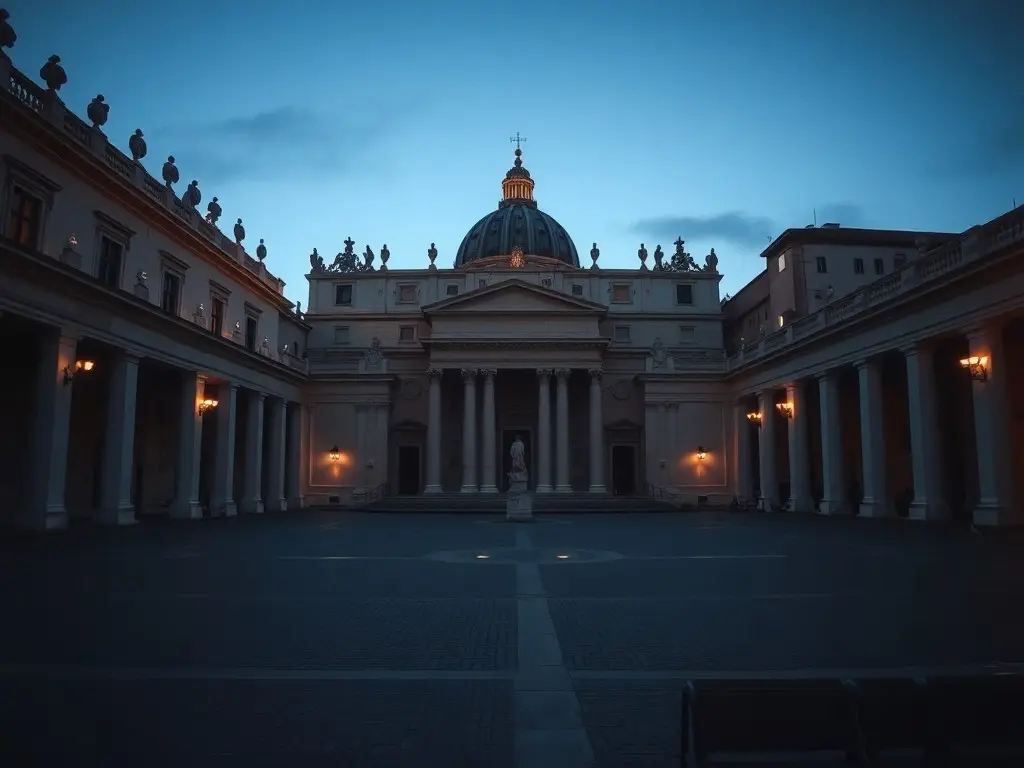
Pope Leo XIV issued his first major AI-focused encyclical warning about job displacement, war acceleration, and environmental harm, while Anthropic co-founder Chris Olah spoke at the Vatican event, raising questions about the alignment between the company’s goals and the pope’s concerns. Critics argue Anthropic’s presence risks superficial engagement, or 'Vatican-washing,' while others see potential for meaningful dialogue despite conflicting priorities.
Pope Leo XIV released his first major written teaching on artificial intelligence, an encyclical titled *Magnifica Humanitas*, warning of AI’s threats to human dignity, labor, and the environment. The document highlights risks such as job displacement, escalation of conflict, and environmental degradation, urging ethical safeguards. At a Vatican ceremony marking the encyclical’s release, Pope Leo was joined by Chris Olah, co-founder of Anthropic, the world’s most valuable AI startup, raising questions about the company’s alignment with the pope’s concerns. Anthropic’s technology, including its labor market analysis, has identified professions like coding, customer service, and data entry as vulnerable to automation. A recent survey by Epoch AI found that 20% of U.S. full-time workers report AI already handling parts of their jobs, while Anthropic CEO Dario Amodei has warned of potential mass job losses in white-collar sectors. The pope’s encyclical emphasizes preserving human labor dignity, a stance at odds with Anthropic’s business model, which relies on automation and efficiency gains. Critics, including Pete Furlong of the Center for Humane Technology, argue that AI companies prioritize profit-driven automation over ethical labor protections. Furlong noted that Anthropic’s engagement with the Vatican risks being performative, or 'Vatican-washing,' without substantive changes to its practices. Paolo Carozza, a law professor at Notre Dame, expressed similar skepticism, suggesting the partnership may serve Anthropic’s brand image rather than address core ethical conflicts. Despite concerns, Carozza acknowledged the need for dialogue among AI developers, policymakers, and religious leaders. Furlong cautiously welcomed Anthropic’s participation, emphasizing the importance of engagement while monitoring whether financial pressures—such as potential public offerings—could shift the company’s stance on safety and ethics. Olah acknowledged in his remarks that AI labs operate within conflicting incentives, where ethical intentions may clash with business realities. The Vatican event underscored tensions between technological progress and moral responsibility, leaving unresolved whether Anthropic’s collaboration with the pope signals genuine reform or superficial alignment.
This content was automatically generated and/or translated by AI. It may contain inaccuracies. Please refer to the original sources for verification.