Appeals court hears Anthropic’s Pentagon AI suit
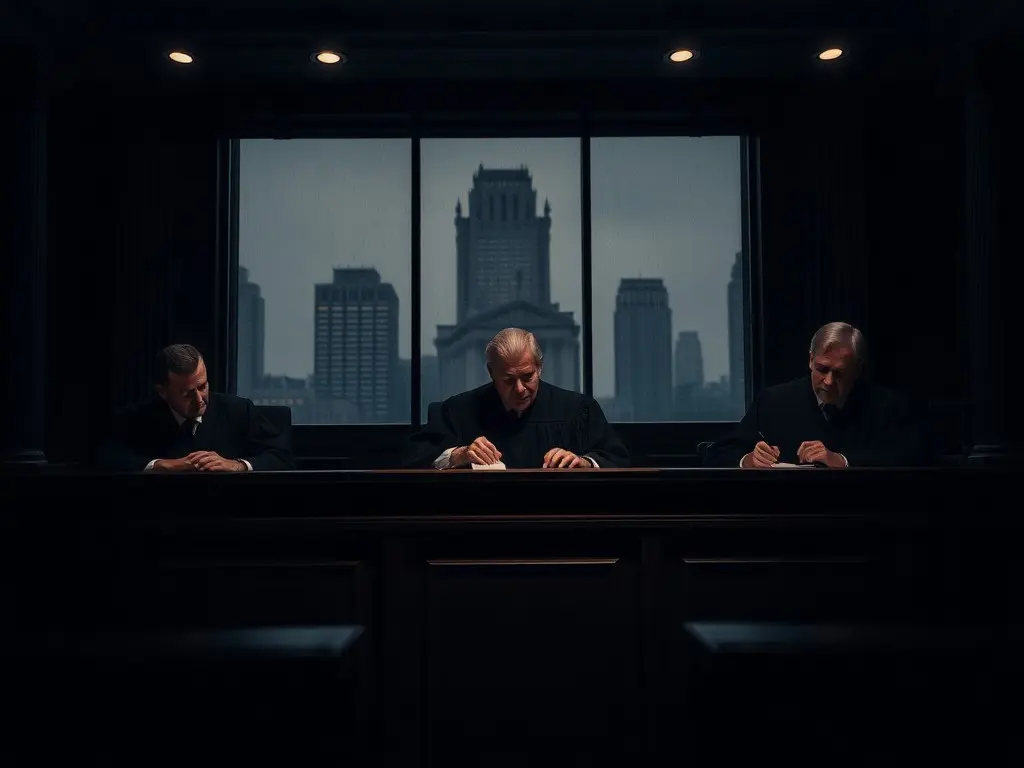
Anthropic challenged the Pentagon’s supply chain risk designation in a federal appeals court, arguing Secretary Pete Hegseth’s move violated the law by targeting an American company in a contract dispute. Judges questioned the shifting rationale behind the designation, with one judge expressing skepticism toward the Pentagon’s reasoning while another appeared supportive of Anthropic’s claims.
Anthropic and the Pentagon faced off in a federal appeals court in Washington, D.C., on Tuesday, where the AI company sought to overturn Secretary Pete Hegseth’s March 3 supply chain risk designation. The designation, typically reserved for foreign adversaries, was applied to Anthropic after contract negotiations collapsed over safety guardrails in February. Anthropic’s lawyers argued the move was unlawful, citing a shift in the Pentagon’s justification from post-deployment model manipulation concerns to pre-deployment risks. The three-judge panel, including Trump-appointed Judges Neomi Rao and Gregory Kastas, grilled Anthropic attorney Kelly Dunbar for nearly an hour, far exceeding the allotted 15 minutes. Dunbar emphasized the Pentagon’s inconsistent reasoning, noting the designation was initially based on claims of technical capability to manipulate models after deployment, later pivoted to pre-deployment concerns. She argued the government’s own evidence contradicted its case, calling the designation a misuse of national security authority to pressure Anthropic in contract talks. Judge Karen LeCraft Henderson, appointed by George H.W. Bush, appeared more receptive, questioning the Pentagon’s lack of evidence for allegations of ‘mal intent’ against Anthropic’s leadership. The court previously rejected Anthropic’s request to temporarily halt the designation, leaving the company’s broader lawsuit pending in both D.C. and California courts. The case hinges on whether Hegseth’s directive—requiring the Pentagon to remove Anthropic’s AI products within 180 days—complies with legal standards for supply chain risk designations. Anthropic’s lawsuit also challenges President Trump’s directive for civilian agencies to halt use of its products, citing demands to exclude its AI from lethal autonomous weapons and mass surveillance. The Pentagon had insisted on allowing ‘all lawful uses’ of Anthropic’s Claude AI, a stance Anthropic’s legal team framed as a key point of contention. The appeals court’s decision could set a precedent for how the government regulates AI in defense contracts, with implications for tech companies and federal procurement processes.
This content was automatically generated and/or translated by AI. It may contain inaccuracies. Please refer to the original sources for verification.