Archaeologists use AI to generate image of Pompeii victim
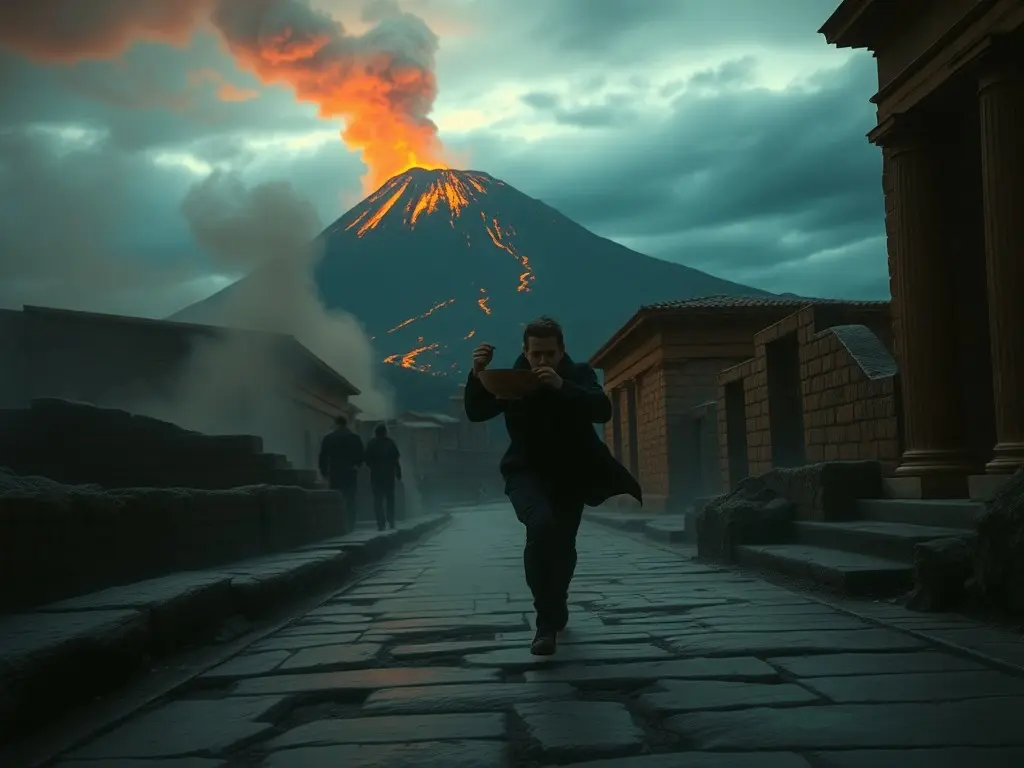
Archaeologists at Pompeii used AI for the first time to reconstruct the appearance of a male victim of Mount Vesuvius’ eruption in AD 79, based on skeletal remains found near a terracotta mortar. The AI-generated image depicts the man shielding himself with the bowl while fleeing volcanic rocks, with Vesuvius burning in the background.
Archaeologists at Italy’s Pompeii Archaeological Park have applied artificial intelligence to create a visual reconstruction of a victim killed during Mount Vesuvius’ catastrophic AD 79 eruption. The AI-generated image, released Monday, shows a man crouching under a large terracotta bowl, likely used as protection, while volcanic debris rains down and Vesuvius burns in the distance. The remains were discovered near Pompeii’s southern gate, alongside a lamp and 10 bronze coins, suggesting he was attempting to escape toward the sea during the eruption’s second day. The victim, identified as a male adult, was likely struck by volcanic rocks, according to the park’s findings. The reconstruction is based on skeletal remains found beside the terracotta mortar, which archaeologists believe he used to shield himself. Gabriel Zuchtriegel, head of the Pompeii Archaeological Park, stated that AI could enhance classical studies by offering more immersive depictions of ancient life. Pompeii, located 25 kilometers southeast of Naples, was buried under meters of ash during Vesuvius’ eruption, preserving buildings, artifacts, and graffiti. Rediscovered in the 18th century, the site attracts over 4.3 million visitors annually, making it one of Italy’s most significant archaeological and tourist destinations. This AI reconstruction marks a new approach to interpreting the city’s tragic final moments, blending modern technology with historical preservation.
This content was automatically generated and/or translated by AI. It may contain inaccuracies. Please refer to the original sources for verification.