Are Construction Sites the Next Big Market for Humanoid Robots?
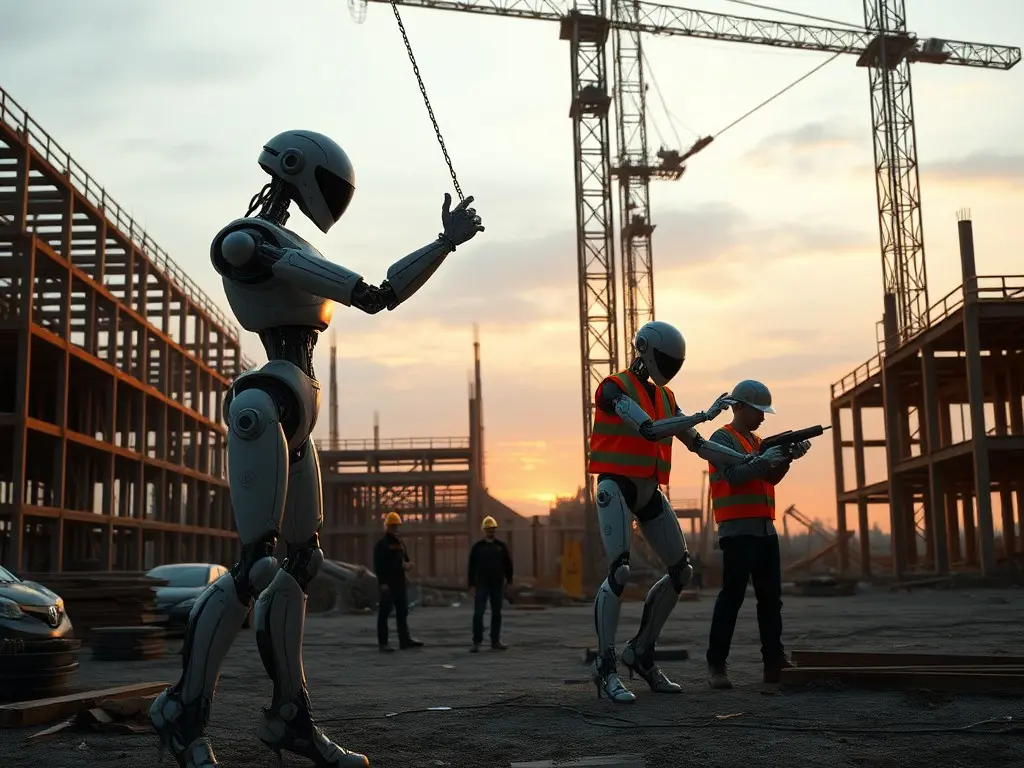
Humanoid robots are being explored as a solution to labor shortages and safety risks in the construction industry, where automation has lagged due to complex, dynamic environments. Studies highlight their advantage in navigating uneven terrain, using human tools, and adapting to existing infrastructure, though technical and regulatory hurdles remain.
The construction industry, one of the least automated sectors globally, is facing persistent labor shortages, hazardous conditions, and stagnant productivity. Unlike manufacturing, where robotic arms are widespread, construction sites feature shifting layouts and variable tasks that conventional robots struggle to handle. A study in *Scientific Reports* underscores these challenges, suggesting humanoid robots—designed with human-like movement and dexterity—could address them by operating in environments built for people. Humanoid robots, with their bipedal design, can climb stairs, navigate scaffolding, and use tools designed for human hands, outperforming wheeled or tracked alternatives. Their anthropomorphic structure allows them to adapt to existing infrastructure without costly modifications, as noted by research from the University of Florida. Tasks like walking on uneven surfaces or maneuvering in tight spaces remain difficult for non-humanoid robots, making them a potential game-changer for the industry. Before deployment, simulations using virtual reality (VR) and augmented reality (AR) are critical for testing robots in digital replicas of construction sites. These environments replicate real-world conditions—dust, shifting structures, and worker movement—to refine adaptability and precision. Researchers emphasize that such simulations bridge the gap between lab capabilities and field readiness, ensuring robots can handle unpredictable job-site variables. Key applications already in view include hazardous material handling, repetitive tasks like bricklaying, and scaffolding assembly. Early prototypes demonstrate promise, though technical barriers like durability in harsh conditions and real-time decision-making persist. Collaboration with human workers also requires seamless integration, as robots must operate safely alongside teams without disrupting workflows. Regulatory and workforce considerations further complicate adoption. Construction sites operate under strict safety standards, and integrating robots may require new protocols for oversight and liability. Additionally, labor unions and workers may resist automation due to concerns over job displacement, necessitating clear policies on human-robot collaboration. While humanoid robots are not yet widely deployed in construction, pilot programs and research initiatives signal growing momentum. Companies and academic institutions are investing in developing robots that can handle the industry’s most demanding tasks, potentially transforming one of the world’s most dangerous professions.
This content was automatically generated and/or translated by AI. It may contain inaccuracies. Please refer to the original sources for verification.