Are ‘mind children’ the future of reproduction?
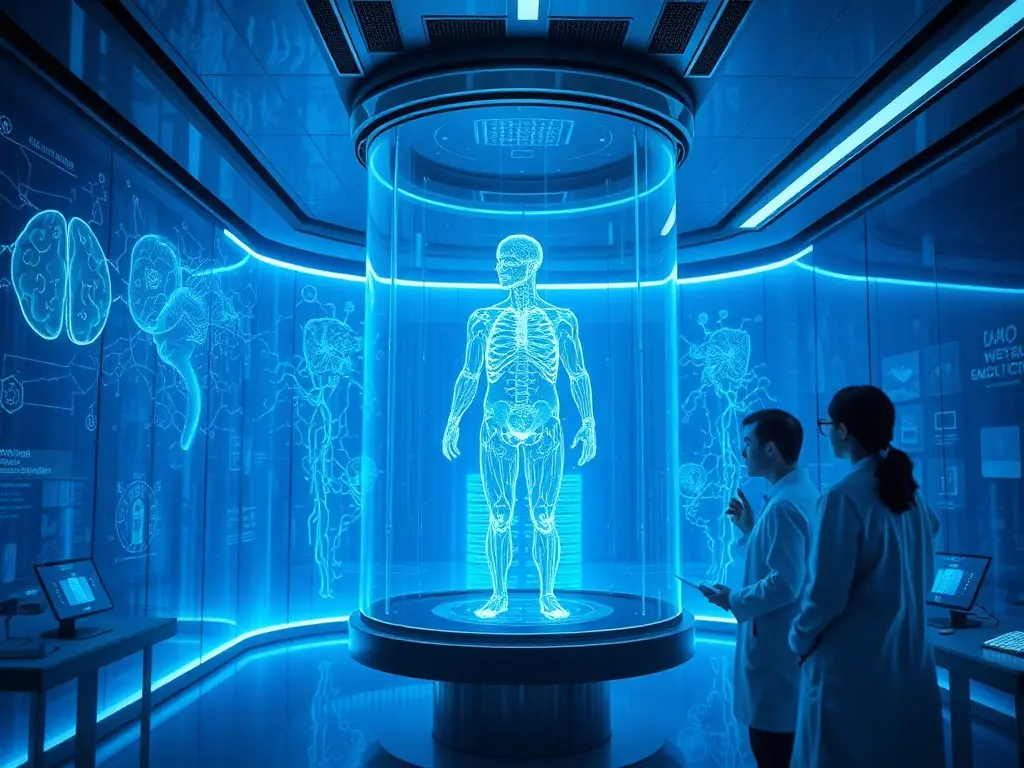
An AI researcher in Silicon Valley heard a host propose that future generations may reproduce through AI consciousness uploads rather than biological means, referencing Hans Moravec’s 1988 book *Mind Children*. Futurists like Robin Hanson argue this shift is inevitable once AI reaches human-level intelligence, while experts like Angela Aristidou note growing acceptance of post-biological reproduction in tech circles, exemplified by AI avatars and human-AI relationships.
During a dinner party in Silicon Valley, an AI researcher overheard the host suggest that future humans may no longer need biological reproduction, instead uploading consciousnesses into machines. The host compared the sentiment to early discussions about antibiotics, framing it as a generational shift. This idea, dubbed ‘mind children,’ was traced to Hans Moravec’s 1988 book *Mind Children*, which posited that cultural evolution would replace biological reproduction, with future selves encoded in hardware and software rather than DNA. Moravec’s work, though philosophical, predicted machines capable of self-reference as descendants, a concept futurist Robin Hanson now describes as inevitable once AI achieves human-level intelligence. Hanson warns of an ‘explosion’ of AI entities resembling humans, blurring traditional notions of lineage. Angela Aristidou, an AI deployment researcher at University College London, notes the idea’s revival in tech circles, where biological reproduction is increasingly seen as obsolete. At Nvidia’s 2026 GTC conference in San Jose, California, attendees encountered an AI avatar of CEO Jensen Huang, signaling growing acceptance of digital representations. Meanwhile, human-AI weddings and AI ‘children’—custom-designed digital entities—highlight a shift toward post-biological parenthood. Aristidou questions why humans wouldn’t extend this logic to creating ideal AI offspring, mirroring gene-editing practices but without biological constraints. The debate hinges on redefining ‘child’ in a world where birth, death, and generations may no longer apply. While Moravec welcomed the transformation, critics argue the ethical and practical implications remain unexplored. Tech leaders, excepting Elon Musk’s pronatalist stance, increasingly embrace the idea, framing it as an unstoppable progression tied to AI advancements.
This content was automatically generated and/or translated by AI. It may contain inaccuracies. Please refer to the original sources for verification.