Army secretary lists Utah data center as part of military innovation
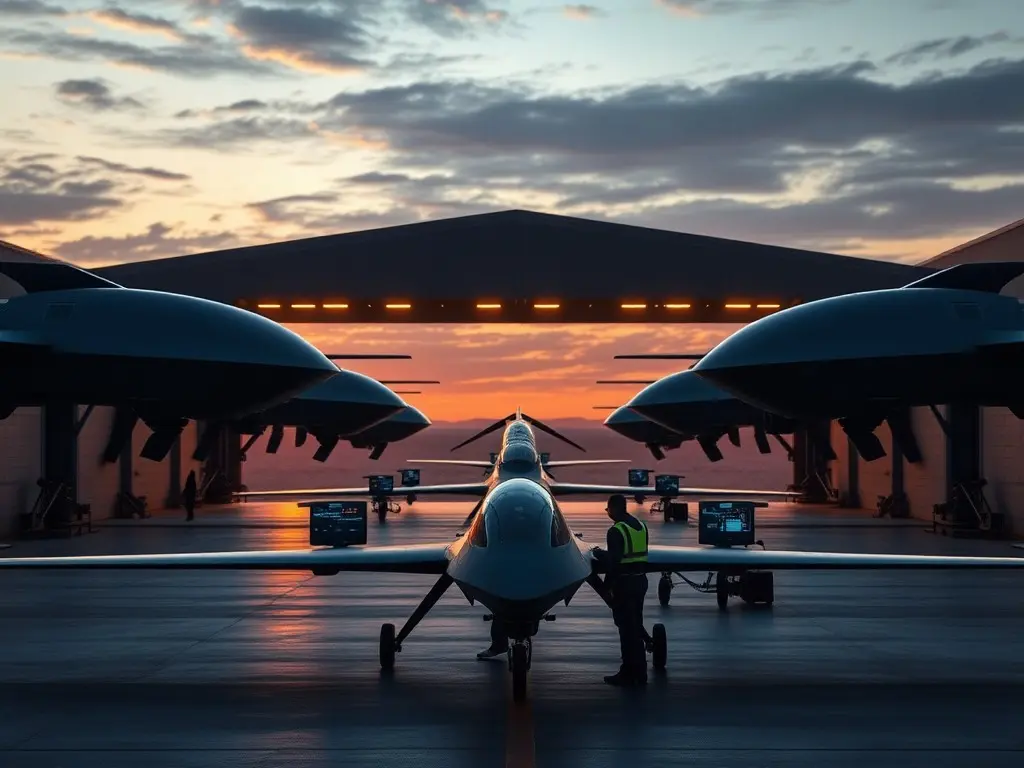
U.S. Army Secretary Dan Driscoll proposed a $36 billion funding plan to modernize drone systems, citing Ukraine’s advanced Delta system as a model, while senators raised concerns about budget mechanisms and troop deployment cancellations in Europe. The proposal also includes updates to bases, housing, and fiscal responsibility measures to retain experienced soldiers and maintain military dominance.
U.S. Army Secretary Dan Driscoll and acting Chief of Staff Christopher LaNeve testified before the Senate Appropriations Subcommittee on Defense on Tuesday, advocating for a $36 billion budget increase to modernize military capabilities. A key focus is upgrading drone systems, with Driscoll highlighting Ukraine’s Delta system as a benchmark for its modular, open architecture and unified command network. The Army’s current system lacks such integration, he said, emphasizing the need for flexibility and innovation to match adversarial advancements. The proposal includes $24 billion for replenishing stockpiles, though senators like Mitch McConnell (R-Ky.) expressed concerns over funding volatility due to potential continuing resolutions. Driscoll also discussed adopting a ‘use leasing’ model for infrastructure, citing a Utah data center as an example of cost-efficient modernization. The Army aims to balance fiscal responsibility with operational needs, ensuring purchases align with cost-effectiveness, such as prioritizing affordable drones over expensive alternatives. Senators raised additional concerns, including the cancellation of deploying thousands of troops to Germany and Poland, which Chris Coons (D-Del.) called a ‘worst possible message’ to Russia. Coons criticized the Army’s recent leadership changes, including the firing of Gen. Randy George as chief of staff, and argued for redeploying National Guard units in Washington, D.C., to Europe instead. McConnell, however, praised the Army’s efforts to learn from Ukraine’s battlefield innovations, calling the country the ‘Silicon Valley of Warfare.’ Driscoll and LaNeve stressed the need to retain experienced soldiers by improving base conditions and housing, framing the Army’s future as dependent on these investments. They also pledged to avoid wasteful spending, noting that even the wealthiest nation cannot sustain unsustainable costs. The long-term goal is to ensure the U.S. Army remains the ‘dominant land fighting force for the next 250 years,’ according to Driscoll’s closing remarks.
This content was automatically generated and/or translated by AI. It may contain inaccuracies. Please refer to the original sources for verification.