As Obama Presidential Center opens, neighborhoods await the fiscal return
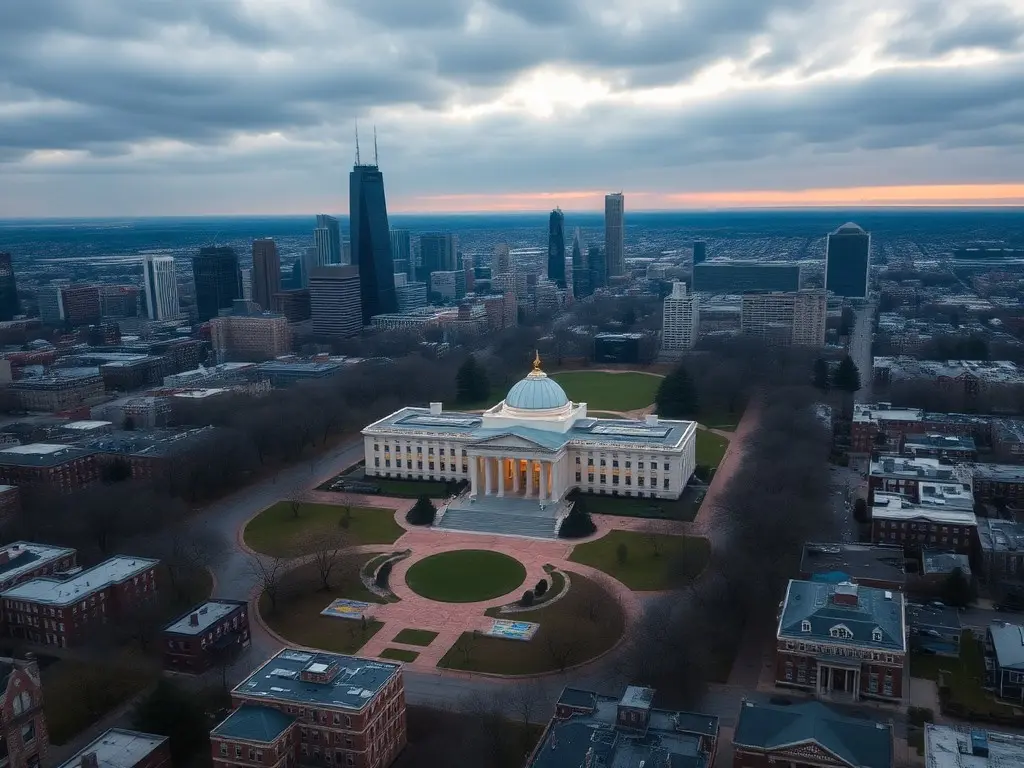
The $850 million Obama Presidential Center opened in Chicago’s Jackson Park, sparking debates over economic impact and displacement risks in neighboring South Side communities like Woodlawn and South Shore. Local business owners report increased activity and investment, while critics warn of rising rents and evictions, despite the center’s projected 600,000 annual visitors and 5,000 construction jobs created during its development.
The Obama Presidential Center officially opened on the western edge of Chicago’s Jackson Park, marking the culmination of an $850 million project that added green space and a 20-story granite-clad tower to the area. While architectural opinions vary, residents and business owners on Chicago’s South Side are closely watching its economic effects, particularly in struggling neighborhoods like Woodlawn and South Shore. The center’s opening has already drawn national and international attention, with daily crowds of 1,700 to 2,000 during its soft launch. Malki Brown, owner of MGE Property Solutions, noted a surge in business as property owners improve vacant lots, attributing the boost to a ‘trifecta’ of local developments: the Obama Center, a planned Advocate Health Care hospital, and the Illinois Quantum and Microelectronics Park. Brown, who previously worked as a Realtor, dismissed concerns about widespread displacement, stating that South Shore’s population remains stable. Tonya Trice, executive director of the South Shore Chamber of Commerce, emphasized the center’s role as a community anchor, with its restaurant, library, gardens, and athletic facilities designed to encourage visitors to explore the neighborhood. Unlike the nearby Museum of Science and Industry, which draws crowds that bypass local businesses, the Obama Center’s amenities aim to foster longer stays and economic benefits for nearby shops and services. The Obama Foundation’s CEO, Valerie Jarrett, predicted a ‘tremendous impact’ but cautioned against overestimating short-term effects, preferring to assess progress a year after the opening. The project has already generated nearly 5,000 construction jobs and hired 150 museum staff, alongside the 325 employees of the foundation. Despite optimism, some residents fear rising rents could displace long-term locals, though Jarrett and others argue the center’s influence will be additive rather than disruptive. Critics point to the University of Chicago’s history of urban renewal in the area, raising concerns about gentrification. However, supporters like Brown argue that the South Side has seen steady improvement since 2006, the year Barack Obama became a U.S. senator. The debate over the center’s long-term effects continues as it becomes a landmark in Chicago’s evolving landscape.
This content was automatically generated and/or translated by AI. It may contain inaccuracies. Please refer to the original sources for verification.