As the Pentagon pushes for battlefield AI, some military leaders urge caution
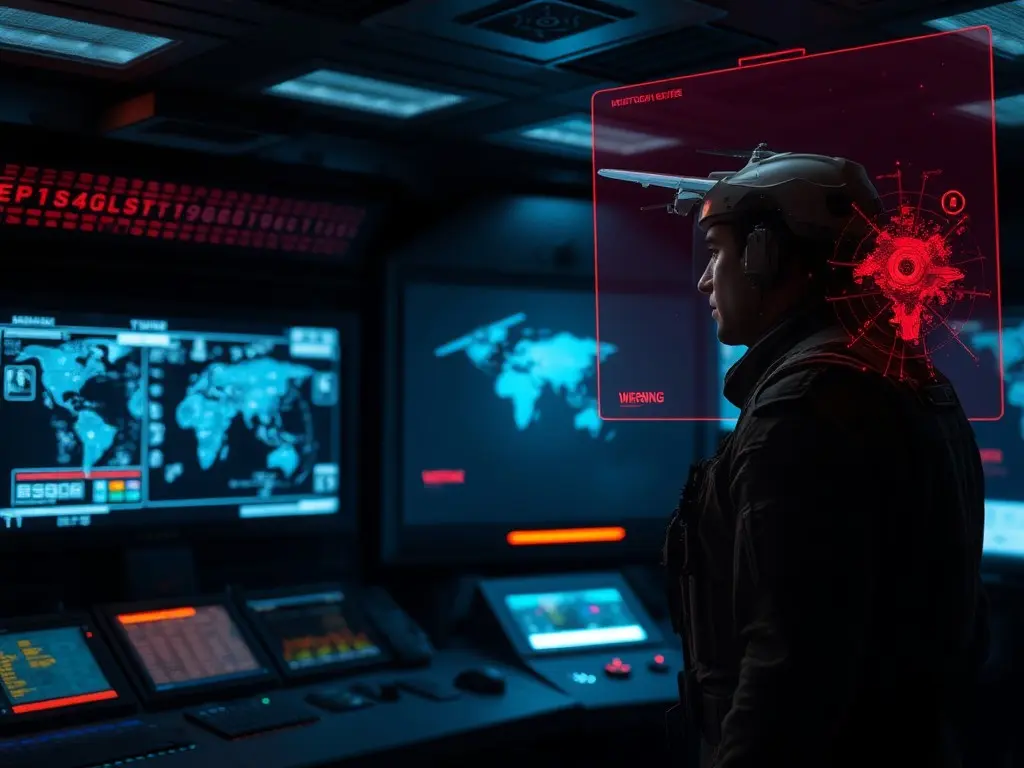
U.S. Defense Secretary Pete Hegseth is accelerating AI integration into military operations, including lethal applications, while some military leaders like Admiral Frank Bradley warn about risks of unintended violence and urge caution. Meanwhile, President Donald Trump canceled plans for a new AI executive order, citing concerns it could hinder America’s AI advantage over China.
The Pentagon under the Trump administration is advancing artificial intelligence for military use, sparking debates over safeguards and ethical concerns. Defense Secretary Pete Hegseth has pushed for rapid AI adoption, rejecting constraints that limit lawful applications, including lethal operations. He stated in January that AI systems should operate without ideological limits, emphasizing their role in maintaining U.S. military superiority. Admiral Frank Bradley, head of U.S. Special Operations Command, expressed caution at a Tampa conference, warning that AI must be carefully controlled to ensure it delivers violence only as intended. Bradley acknowledged potential for AI to identify targets but stressed human oversight remains critical. His remarks contrast with Hegseth’s push, which has created tensions with tech companies wary of safety risks. President Trump abruptly canceled a planned AI executive order hours before a White House ceremony, citing fears it could weaken America’s AI lead over China. “We’re leading China, we’re leading everybody,” Trump said, emphasizing the need to avoid actions that hinder technological dominance. Within the military, AI’s role varies by unit. U.S. Special Operations Command focuses on using AI for administrative tasks and intelligence processing, such as converting top-secret intelligence to lower classifications in seconds. Sgt. Maj. Andrew Krogman and Melissa Johnson, top officials at the command, emphasized AI’s role in reducing cognitive workload rather than replacing human judgment. Lt. Gen. Michael Conley of Air Force Special Operations Command detailed how AI ‘bots’ assisted in intelligence sharing during operations, though the broader military sees AI as both a tool for efficiency and a potential force multiplier in targeting. Georgetown University’s Center for Security and Emerging Technology noted the dual applications—bureaucratic efficiency and combat enhancement—highlighting the technology’s expanding but contentious role in modern warfare.
This content was automatically generated and/or translated by AI. It may contain inaccuracies. Please refer to the original sources for verification.