Astrobotic Unveils Griffin-1 Lunar Lander for NASA's Moon Base II Mission
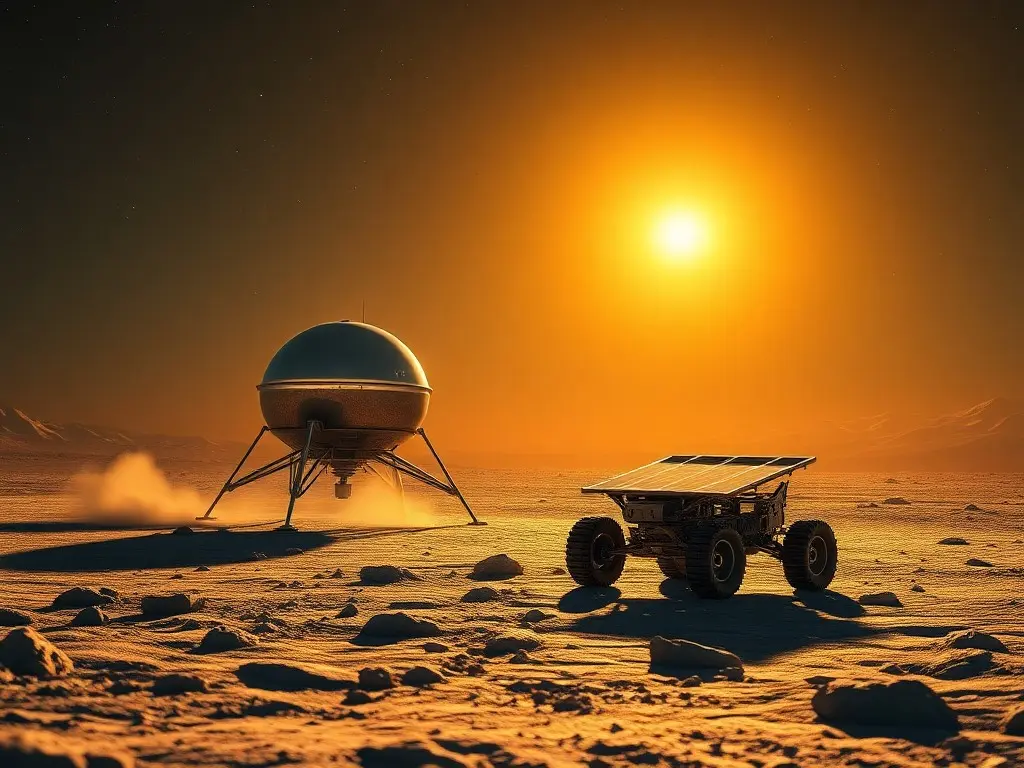
Pittsburgh-based Astrobotic unveiled its Griffin-1 lunar lander, selected by NASA for the Moon Base II mission under the Commercial Lunar Payload Services program, set to launch in late 2026 aboard a SpaceX Falcon Heavy rocket. The lander, designed to deliver research payloads including Astrolab’s FLIP rover, incorporates lessons learned from the failed 2024 Peregrine mission and features a dual redundant valve system to prevent similar issues.
Astrobotic, a Pittsburgh-based company, unveiled its Griffin-1 lunar lander on Monday, marking its selection by NASA for the Moon Base II mission. The mission, part of NASA’s Commercial Lunar Payload Services program, aims to establish a long-term lunar presence and is scheduled to launch in the fourth quarter of 2026 using a SpaceX Falcon Heavy rocket. Griffin-1 will transport multiple research and technology demonstrations, including California-based Astrolab’s FLIP rover, to the moon’s surface. The Griffin-1 lander is described as the first infrastructure-class lander headed to the lunar surface, serving as a foundation for future moon base construction. With a payload capacity of 650 kilograms, the lander has already been integrated with most payloads at Astrobotic’s Pittsburgh facility, except for Astrolab’s FLIP rover, which will be added at Cape Canaveral before launch. Griffin-1 follows Astrobotic’s first lunar attempt, the Peregrine Mission One, which failed to reach the moon in 2024 due to a helium valve issue. CEO John Thornton emphasized that the Griffin lander incorporates lessons learned from the failure, including a dual redundant valve system to prevent similar issues. The lander’s design has been in development for nearly two decades, with Thornton stating that the company has addressed potential risks to ensure mission success. Griffin-1 is significantly larger than its predecessor, Peregrine, measuring nearly 15 feet across compared to Peregrine’s 6 feet. The lander will carry 10 payloads from six nations, including NASA’s own payloads aboard FLIP, alongside smaller items like a plaque from the Nippon Travel Agency and the Galactic Library. Integrated payloads already on the lander include Astrobotic’s BEACON CubeRover and the European Space Agency’s LandCam-X, which aims to improve lunar landing precision. NASA’s Program Executive for Moon Base, Carlos García-Galán, attended the unveiling event, calling the mission a critical step for the agency’s long-term lunar plans. The mission underscores NASA’s strategy to leverage commercial partnerships for sustainable lunar exploration, building on the infrastructure and technology demonstrated by Griffin-1.
This content was automatically generated and/or translated by AI. It may contain inaccuracies. Please refer to the original sources for verification.