At 250, the Declaration of Independence still sparks hard questions in class
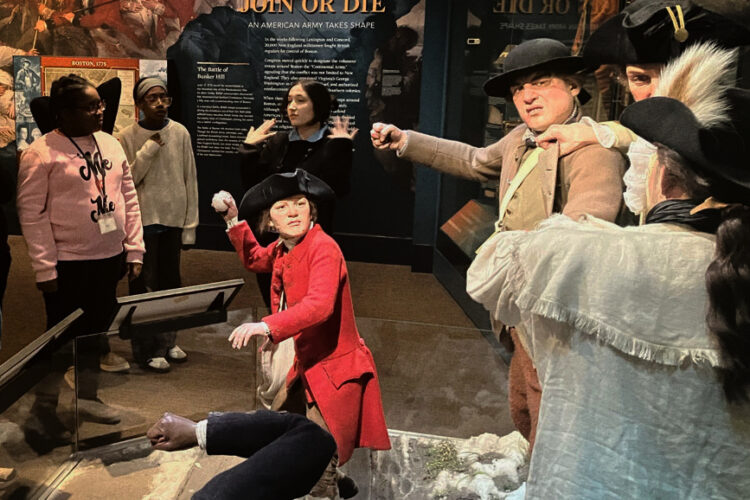
History teachers like Karalee Wong Nakatsuka and Matthew Vriesman are grappling with how to teach the Declaration of Independence’s 250th anniversary amid political divisions and student confusion over its original intent and modern relevance. A recent survey reveals declining civic knowledge, with 47% of adults unable to explain the 1776 independence cause and Gen Z showing alarming detachment from democracy, while teachers face backlash and self-censorship in lessons.
History teachers across the U.S. are navigating complex challenges as the Declaration of Independence’s 250th anniversary approaches, particularly in reconciling its ideals with modern realities. Karalee Wong Nakatsuka, an eighth-grade teacher at First Avenue Middle School in Arcadia, California, uses two T-shirts—one celebrating the 1776 signing and another marking Abraham Lincoln’s assassination—to illustrate the gap between the Declaration’s promise of equality and the nation’s delayed fulfillment of that promise. Her mostly Asian students, exposed to news about ICE arrests and deportations near Los Angeles, question the document’s relevance today. ‘From the beginning,’ Nakatsuka says, ‘we talk about the Declaration,’ pushing students to examine who the founding principles were originally for and who they apply to now. At East Kentwood High School in Western Michigan, Matthew Vriesman adopts a similar approach, urging students to challenge preconceptions and ask critical questions about the Declaration’s vision of ‘all men created equal.’ He frames the 250th anniversary as an opportunity to assess how well the experiment has succeeded, emphasizing that high school history class may be the last time students are forced to engage deeply with these values. ‘This is the last time where people in this country are forced to sit and think and write about the founding values,’ Vriesman states. The urgency of these discussions is underscored by declining civic knowledge. A recent survey found only 47% of adults could correctly identify why the 13 Colonies declared independence in 1776, while research on Gen Z—now in high school—revealed troubling attitudes: nearly one-third displayed ‘dismissive detachment’ toward democracy, with low confidence in the government and higher support for authoritarianism. Nearly two-thirds showed only ‘passive appreciation,’ trusting the system but lacking engagement. Teachers report growing pressure and uncertainty in their roles. Over half describe teaching basic civics as ‘difficult,’ with 60% fearing backlash for perceived missteps in lessons. About 20% have faced actual backlash, and one-third have altered or removed lessons due to school or community climate. Emma Humphries, chief education officer of iCivics, calls the situation ‘awful’ given the anniversary’s significance, noting that civics teachers are ‘not OK’ in an era demanding both critical analysis and patriotic education. The debate over how to teach the Declaration reflects broader tensions in American society, where the Founding Fathers are simultaneously criticized as slaveholders and capitalists while being idealized as near-divine figures. Teachers like Nakatsuka and Vriesman emphasize the need to present an accurate account—not just of what happened in 1776, but of how the nation’s founding documents continue to shape, and challenge, its identity.
This content was automatically generated and/or translated by AI. It may contain inaccuracies. Please refer to the original sources for verification.