Attacks from suspicious residents complicate the fight against a rare type of Ebola
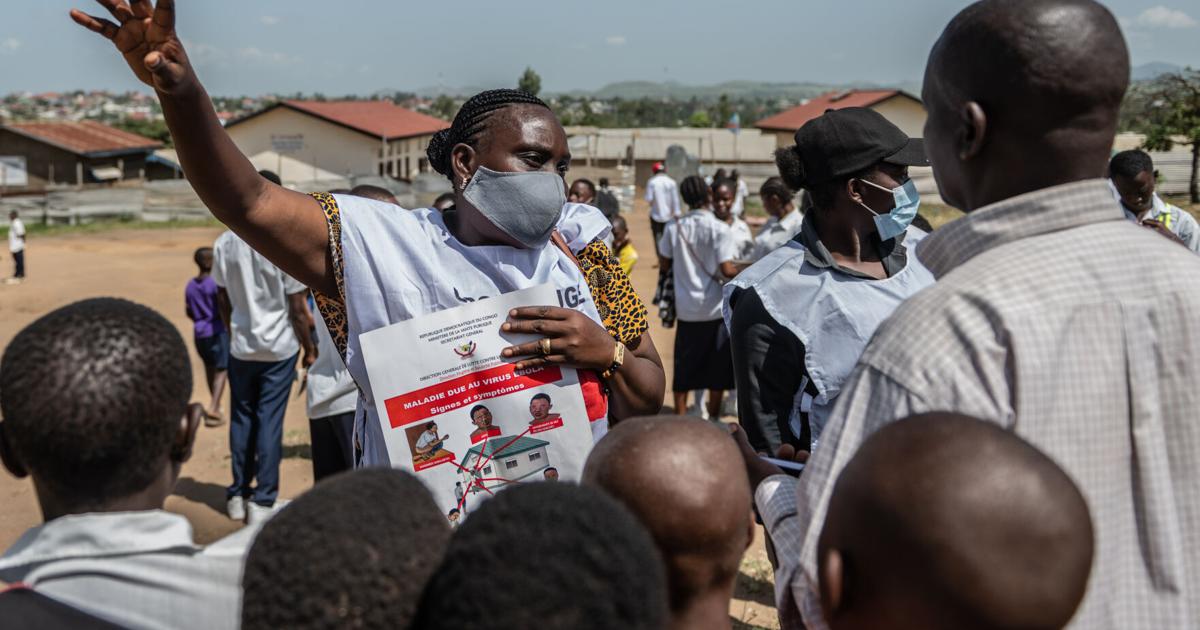
Red Cross volunteer Vanny Birungi faces hostility and violence while raising awareness about the Bundibugyo Ebola outbreak in eastern Congo, where cases are nearing 1,000 and distrust among residents has led to attacks on health centers. The World Health Organization warns the outbreak is spreading rapidly, with over 220 suspected deaths, while aid workers struggle to operate amid armed conflict and weakened surveillance due to aid cuts.
Red Cross volunteer Vanny Birungi is battling a dual crisis in eastern Congo’s Bunia city, where a rare Bundibugugyo Ebola strain has infected nearly 1,000 people without available vaccines or treatments. Residents, including Birungi, face violent attacks—stoning, verbal abuse, and arson—from suspicious locals who accuse aid workers of exploiting the outbreak for profit. Pierre Basola, a 56-year-old resident, dismissed the virus as a ‘white man’s invention’ and demanded workers leave, reflecting deep distrust fueled by years of armed conflict and trauma. Three health facilities were attacked last week: a hospital in Mongbwalu was stormed by armed men forcing evacuations, a Doctors Without Borders tent was burned, and an Ebola center in Rwampara was destroyed after relatives protested burial restrictions. The WHO reports over 900 suspected cases and 220 deaths, with Director-General Tedros Adhanom Ghebreyesus warning the outbreak is spreading faster than containment efforts. Surveillance gaps, worsened by U.S. and international aid cuts, delayed early detection, complicating response efforts. Aid workers risk violence even traveling between outbreak zones, with Ituri province’s capital, Bunia, over 1,000 km from Kinshasa. Mado Nditamba, a 70-year-old resident, described students fleeing aid teams, comparing the current epidemic to past outbreaks but noting its unprecedented scale. Experts emphasize trust as critical to controlling the virus, as families and communities refuse to use health centers amid fear and misinformation. The Ebola strain’s transmission through bodily fluids heightens risks for healthcare workers and families caring for patients. Prevention measures, like restricted burials, have exacerbated tensions, with some residents accusing authorities of hiding deaths. International Rescue Committee’s Heather Kerr highlighted the paradox: without community trust, even medical interventions fail. The outbreak’s rapid spread underscores the fragility of public health systems in conflict zones, where armed groups and resource shortages further hinder responses.
This content was automatically generated and/or translated by AI. It may contain inaccuracies. Please refer to the original sources for verification.