Attacks on Ebola treatment centers are one of several problems affecting Congo's outbreak response
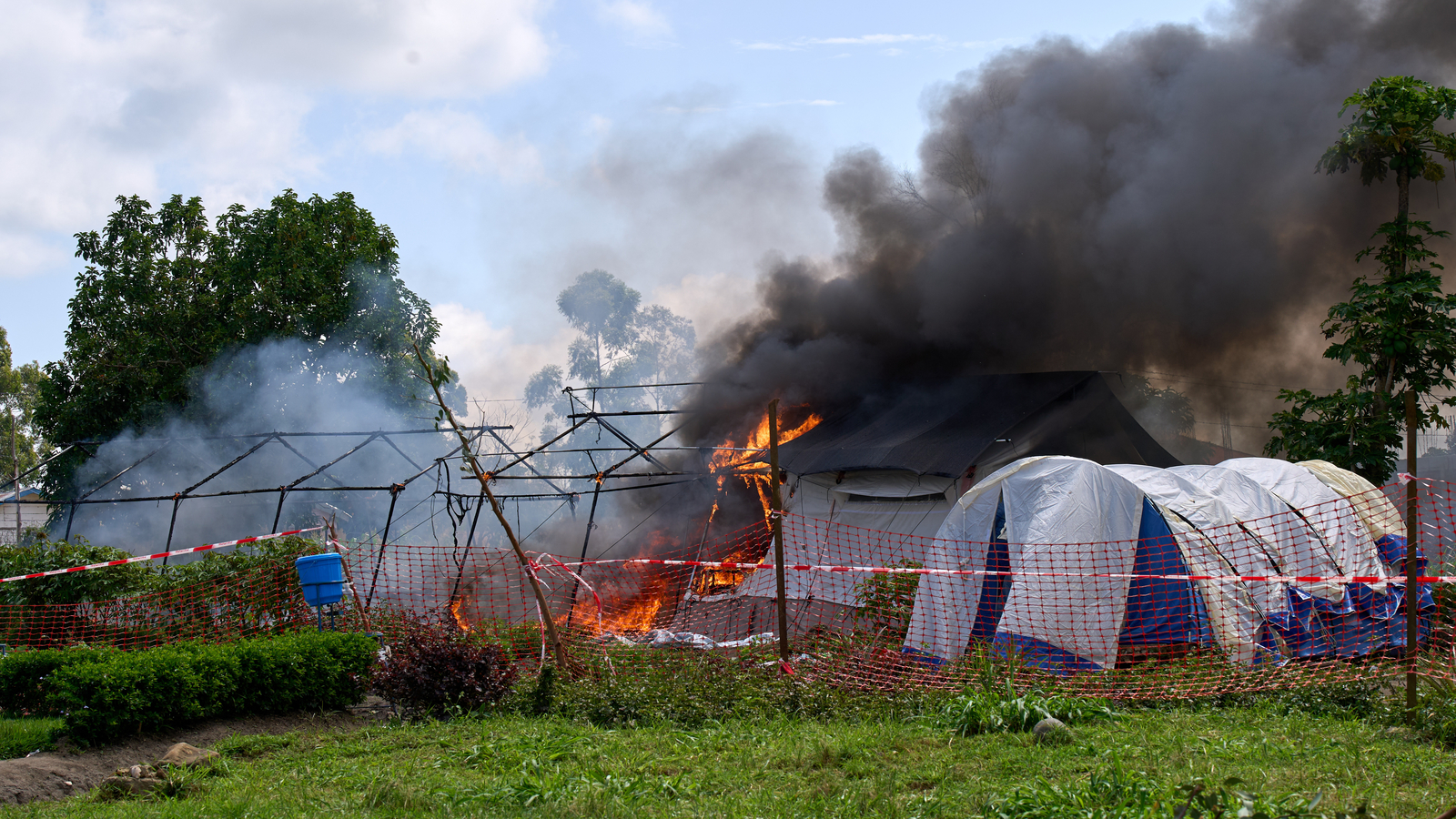
Arson attacks on Ebola treatment centers in eastern Congo’s Ituri Province have worsened the response to a Bundibugyo-type Ebola outbreak, declared a global health emergency, amid violence, displacement, and aid shortages. Over 700 suspected cases and 170 deaths have been reported across Ituri, North Kivu, and South Kivu, with cases also spreading to Uganda, while rebel groups like M23 and Allied Democratic Forces complicate efforts." "article": "Eastern Congo’s Ebola outbreak has been declared a global health emergency, but response efforts are hindered by violence, displacement, and aid cuts. Arson attacks destroyed two treatment centers in Rwampara and Mongbwalu, areas with the highest case counts, reflecting local anger amid ongoing conflict. Rebel groups, including the Rwanda-backed M23 and the Allied Democratic Forces (linked to Islamic State), control parts of the region, forcing health workers to flee and leaving facilities overwhelmed. The outbreak is unfolding in Ituri Province, where nearly 1 million people have been displaced by conflict, straining fragile healthcare systems. Over 700 suspected Ebola cases and 170 deaths have been reported, with infections spreading to neighboring North Kivu, South Kivu, and Uganda. The Bundibugyo strain of Ebola has no approved vaccine or treatment, complicating containment. International aid cuts last year reduced Congo’s capacity to detect and respond to outbreaks, according to Physicians for Human Rights. Aid groups report severe shortages of protective gear, testing kits, and burial supplies, with one hospital near Bunia receiving only hand sanitizer and masks. Julienne Lusenge, president of Women’s Solidarity for Inclusive Peace and Development, said requests for critical equipment remain unfulfilled. The crisis is compounded by tenuous government control in Ituri and rebel-held areas, where aid agencies operate under difficult conditions. The International Federation of Red Cross and Red Crescent Societies warns the disease risks spreading further in displacement camps near Bunia, where the first cases were reported. Experts describe a ‘devastating set of emergencies’ converging in eastern Congo, threatening to escalate the outbreak.
Eastern Congo’s Ebola outbreak has been declared a global health emergency, but response efforts are hindered by violence, displacement, and aid cuts. Arson attacks destroyed two treatment centers in Rwampara and Mongbwalu, areas with the highest case counts, reflecting local anger amid ongoing conflict. Rebel groups, including the Rwanda-backed M23 and the Allied Democratic Forces (linked to Islamic State), control parts of the region, forcing health workers to flee and leaving facilities overwhelmed. The outbreak is unfolding in Ituri Province, where nearly 1 million people have been displaced by conflict, straining fragile healthcare systems. Over 700 suspected Ebola cases and 170 deaths have been reported, with infections spreading to neighboring North Kivu, South Kivu, and Uganda. The Bundibugyo strain of Ebola has no approved vaccine or treatment, complicating containment. International aid cuts last year reduced Congo’s capacity to detect and respond to outbreaks, according to Physicians for Human Rights. Aid groups report severe shortages of protective gear, testing kits, and burial supplies, with one hospital near Bunia receiving only hand sanitizer and masks. Julienne Lusenge, president of Women’s Solidarity for Inclusive Peace and Development, said requests for critical equipment remain unfulfilled. The crisis is compounded by tenuous government control in Ituri and rebel-held areas, where aid agencies operate under difficult conditions. The International Federation of Red Cross and Red Crescent Societies warns the disease risks spreading further in displacement camps near Bunia, where the first cases were reported. Experts describe a ‘devastating set of emergencies’ converging in eastern Congo, threatening to escalate the outbreak.
This content was automatically generated and/or translated by AI. It may contain inaccuracies. Please refer to the original sources for verification.