Balancing acts
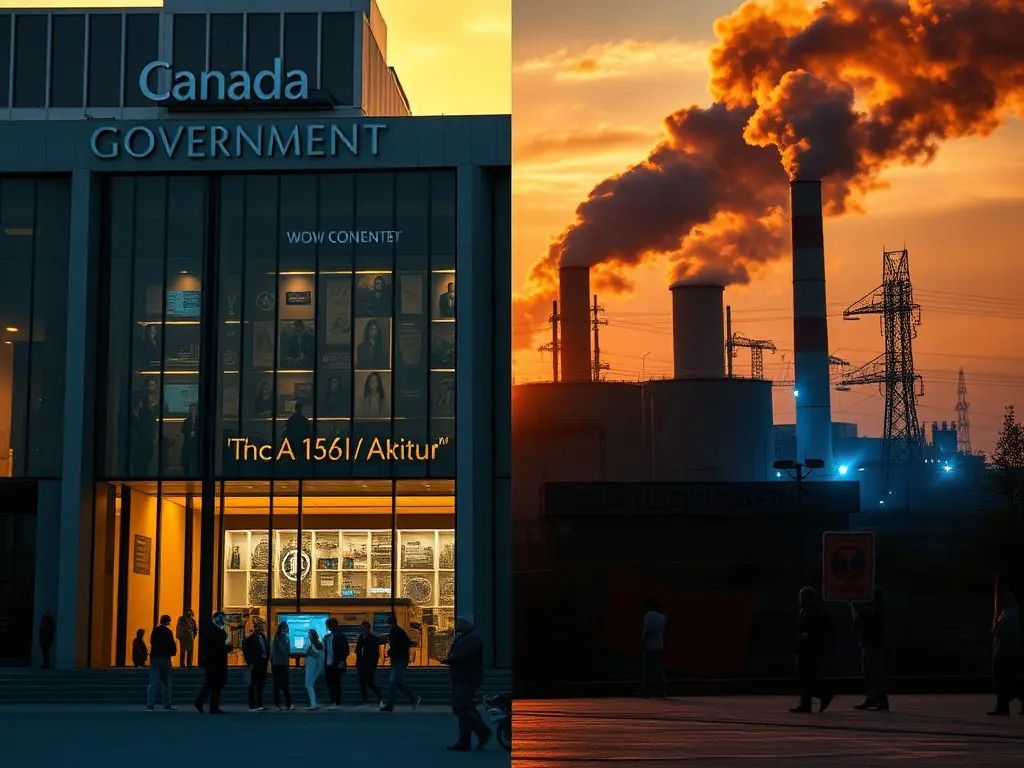
Canada’s federal government released its long-awaited AI strategy on June 4, 2026, promising job creation and public trust measures while avoiding discussions on workforce displacement or energy demands, despite warnings of potential job losses. The strategy includes a $500 million tech fund and extended consultations on project assessment reforms amid Indigenous and environmental group pushback.
Canada’s federal government unveiled its artificial intelligence strategy on June 4, 2026, in Toronto, positioning it as a ‘pro-worker’ framework to foster trust in AI technology. Prime Minister Mark Carney emphasized a ‘pragmatic approach’ to address Canada’s adoption gap, with plans for AI literacy training, federally verified trusted AI agents, and a $500 million Canadian Tech Growth Fund to invest in domestic AI firms. The strategy projects up to 90,000 new tech jobs for youth and a net 250,000 job increase by 2031, though it omits details on potential workforce displacement, which the Conference Board of Canada estimates could eliminate 555,000 jobs by 2030. The government allocated $50 million to Statistics Canada to monitor job displacement in real time but did not address energy challenges, despite Alberta’s growing role as a data center hub relying on natural gas. Meanwhile, Ottawa extended public consultations on its federal project assessment overhaul to July 22, 2026, following criticism from Indigenous and environmental groups over rushed timelines. Intergovernmental Affairs Minister Dominic LeBlanc confirmed the delay, signaling legislation will be introduced in the fall. In a separate move, Carney distanced himself from Ontario Premier Doug Ford’s claims of federal support for expanding Billy Bishop Toronto City Airport, stating he has not yet formed an opinion. The AI strategy’s focus on education and public trust contrasts with its silence on broader economic and environmental impacts, leaving key concerns unresolved.
This content was automatically generated and/or translated by AI. It may contain inaccuracies. Please refer to the original sources for verification.