Bangladesh puts AI in driving seat to tackle terrible traffic
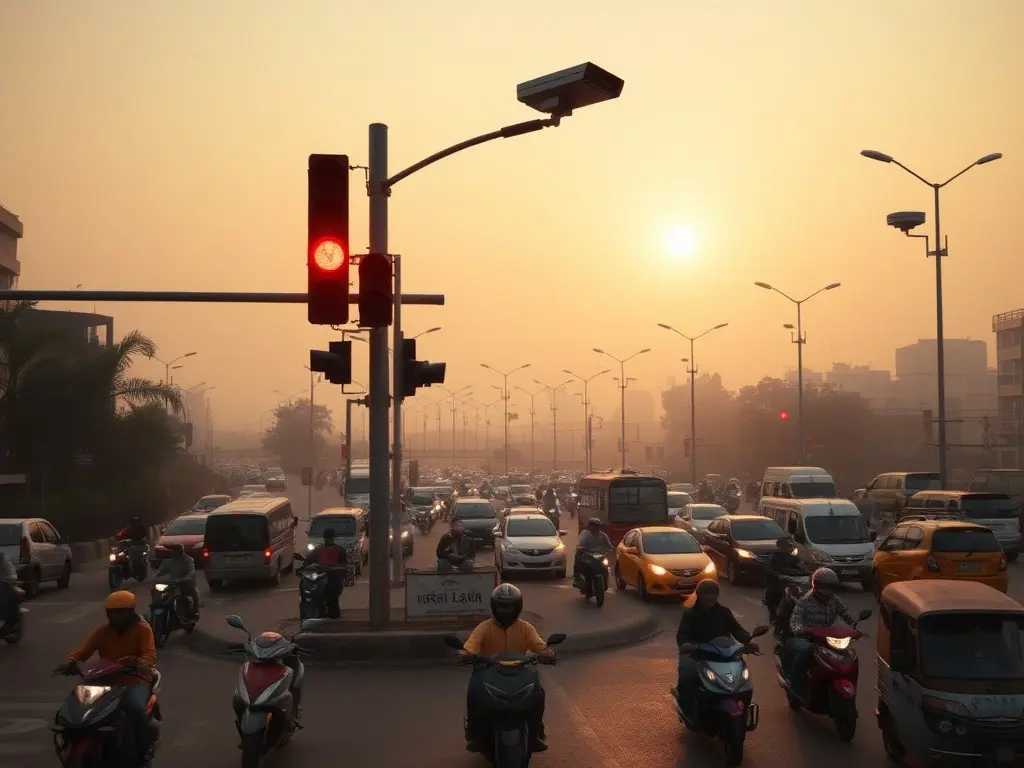
Bangladesh’s capital Dhaka has launched its first AI-powered traffic enforcement system in April to combat severe congestion, automatically detecting violations and issuing fines like a 2,000 taka penalty for motorist Hannan Rahman Jibon after he ran a red light. Police report early success with over 300 prosecutions and 800 violations flagged daily, though challenges like blurred number plates and inconsistent enforcement persist, particularly for non-motorized vehicles like pedal rickshaws.
Dhaka, Bangladesh’s densely populated capital, has deployed its first AI-driven traffic enforcement system to address chronic gridlock, where average speeds drop to just 4.8 km/h, slower than walking. The system, launched in April, uses traffic cameras linked to AI software to automatically detect violations such as red-light running, lane breaches, and illegal parking, sending fines like a 2,000 taka penalty to vehicle owners via text message. Motorist Hannan Rahman Jibon, 28, became one of the first to receive an automatic fine after running a red light. Police spokesman N.M. Nasiruddin said the system has already recorded nearly 800 violations daily and prosecuted at least 300 vehicles, though coverage remains partial. Inside a control room at police headquarters, analyst Sharmin Afroze monitors live feeds where AI flags violations for human review, reducing manual enforcement over time. Challenges include blurred or unreadable number plates, which police are addressing with the road transport authority. The system currently targets motor vehicles, but officials are still deciding how to regulate Dhaka’s dominant pedal rickshaws. Professor Hasib Mohammed Ahsan of Bangladesh University of Engineering and Technology warned that long-term success depends on consistent rule enforcement, noting past failures in sustaining traffic management upgrades. For now, police are fining only the worst offenders while issuing warnings to others. The AI system marks a shift from manual traffic control, where officers often faced confrontations and physical danger from disobedient drivers. Despite hurdles, early results suggest the technology is improving compliance, though broader adoption and sustained enforcement remain critical.
This content was automatically generated and/or translated by AI. It may contain inaccuracies. Please refer to the original sources for verification.