Bangladesh unveils AI-driven traffic system
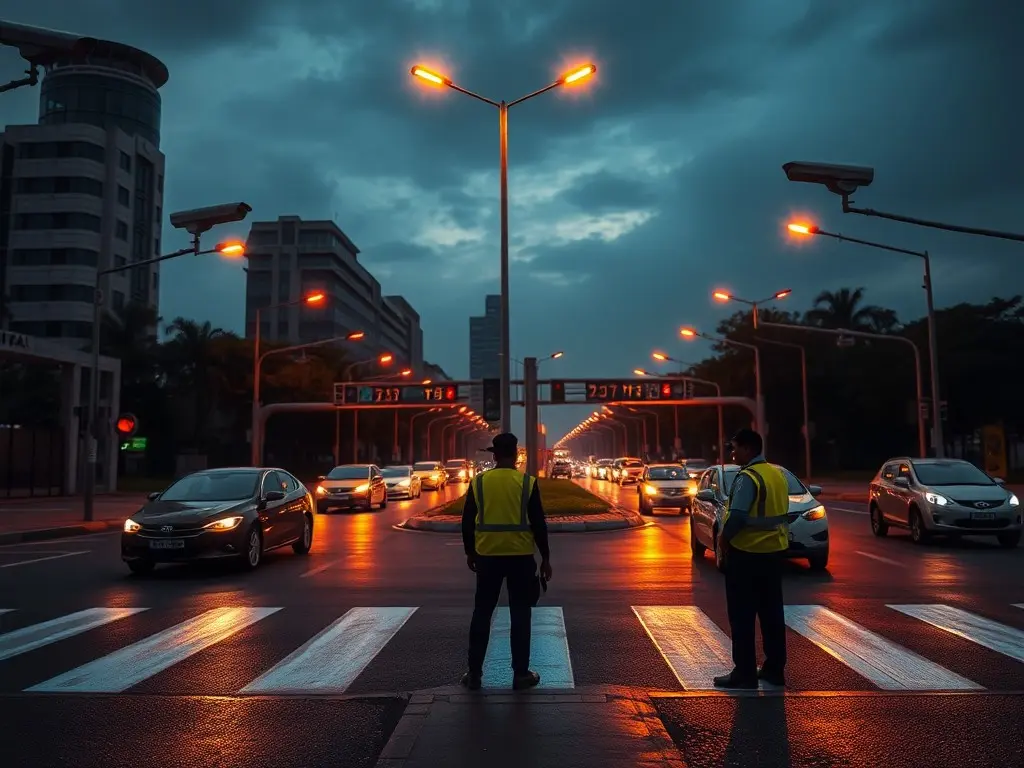
Bangladesh’s capital Dhaka launched its first AI-powered traffic enforcement system in April, using cameras and software to detect violations like signal and lane breaches, issuing fines to over 300 vehicles so far. Officials acknowledge challenges like blurred license plates but say the system is already improving compliance and reducing confrontations between drivers and police.
Dhaka, Bangladesh’s densely populated capital known for severe traffic congestion, has deployed an AI-driven traffic enforcement system to address its notorious gridlock. The system, launched in April, uses existing traffic cameras linked to AI software to automatically identify violations such as ignoring signals, lane violations, and illegal parking. Police spokesman N.M. Nasiruddin confirmed that over 300 vehicles have been fined under the new system, which currently operates in select areas while warnings are issued to lesser offenders. The initiative follows decades of reliance on manual traffic control, where officers struggled to manage the chaotic mix of buses, cars, motorcycles, and pedal rickshaws. Traffic sergeant SM Nazim Uddin noted that AI has reduced arguments and confrontations, as drivers now comply with traffic rules more consistently. Studies have ranked Dhaka as the world’s slowest city, with average speeds as low as 4.8 km/h, slower than walking. Despite early success, the system faces challenges, including blurred or unreadable license plates, which police are working to resolve with the road transport authority. Additional features, such as detecting vehicles on footpaths, will be added soon. However, officials emphasize that long-term success depends on sustained enforcement, as past investments in traffic signals were often unsupported. For now, the AI system focuses on motor vehicles, leaving the regulation of Dhaka’s vast fleet of pedal rickshaws unresolved. Experts like Hasib Mohammed Ahsan, a professor at Bangladesh University of Engineering and Technology, stress that technology alone won’t solve the problem unless authorities consistently enforce traffic rules.
This content was automatically generated and/or translated by AI. It may contain inaccuracies. Please refer to the original sources for verification.