Better China ties can help regional peace, security, Vietnam's top leader says
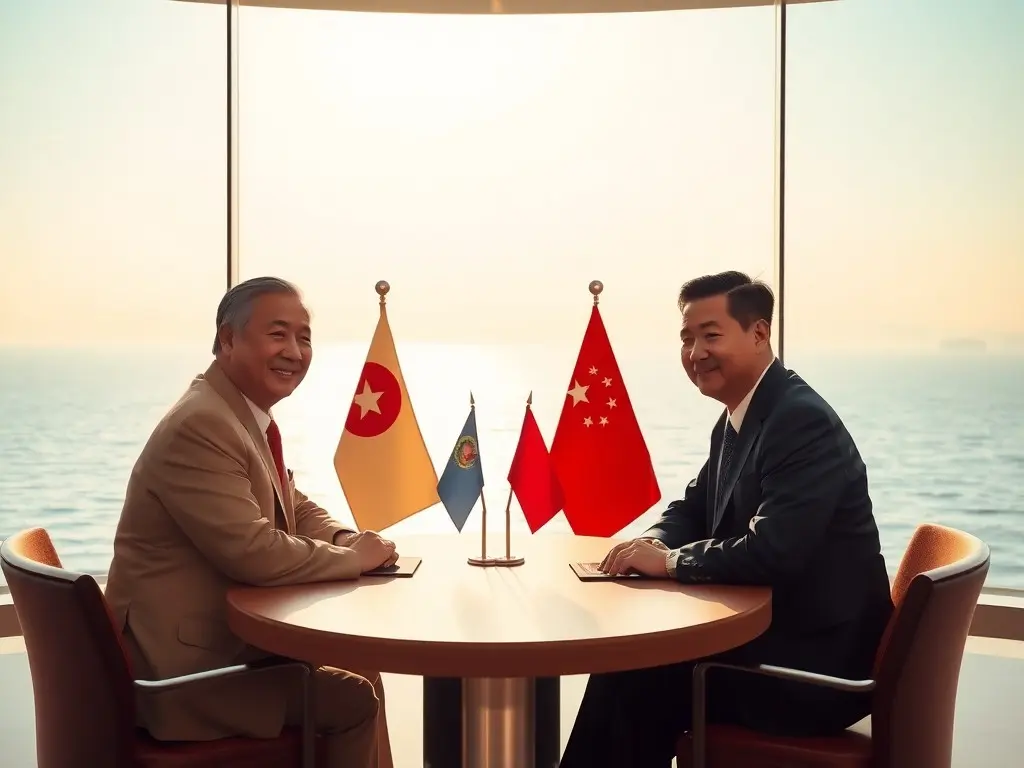
Vietnam’s leader, Communist Party General Secretary and President To Lam, stated in a Singapore interview that stronger ties with China could support regional peace despite territorial disputes in the South China Sea, while emphasizing Vietnam’s neutral stance and adherence to international law. Lam also addressed global challenges like erosion of international rules and climate change during the Shangri-La Dialogue, highlighting Vietnam’s diplomatic flexibility and economic ambitions.
Vietnam’s top leader, Communist Party General Secretary and President To Lam, said in his first international media interview that robust relations with China would contribute to regional peace and security, despite long-standing territorial disputes in the South China Sea. Speaking to Reuters in Singapore on May 29, Lam reiterated Vietnam’s position of not taking sides in geopolitical competition, stating that maintaining dialogue with China could resolve disagreements while safeguarding Vietnam’s sovereignty. He emphasized that good relations with China and addressing disputes in the East Sea—Vietnam’s term for the South China Sea—are complementary, not conflicting. Lam’s remarks align with Vietnam’s long-standing approach of balancing ties with major powers, including the U.S., while pursuing economic growth. He described U.S.-China competition as an ‘objective reality’ and stressed Vietnam’s need for strong relations with both to address global challenges. Vietnam aims to achieve fully developed, high-income status, setting ambitious economic targets under Lam’s leadership. During the Shangri-La Dialogue in Singapore, Lam delivered a keynote speech warning of three global crises: erosion of international law, economic slowdown, and declining trust among nations. He called for reinforcing legal frameworks, fostering inclusive growth, and promoting transparency through dialogue. His speech marked the first time a Vietnamese party chief addressed the defense forum, signaling Vietnam’s heightened diplomatic engagement. Lam, 68, a former internal security official, has consolidated power as both party chief and president, enabling faster decision-making. Analysts note his leadership could shift Vietnam’s traditionally cautious diplomacy toward a more proactive stance. His background in security suggests a pragmatic approach to balancing Vietnam’s territorial claims with economic and strategic interests. The South China Sea remains a flashpoint, with Vietnam, China, the Philippines, Malaysia, Brunei, and Taiwan all claiming overlapping territories. Lam’s emphasis on international law reflects Vietnam’s stance against China’s expansive claims, particularly over the Paracel and Spratly islands. His remarks underscore Vietnam’s strategy of leveraging diplomacy to navigate tensions while pursuing economic and security objectives.
This content was automatically generated and/or translated by AI. It may contain inaccuracies. Please refer to the original sources for verification.