Bezos’ Blue Origin rocket explosion throws NASA Moon plans into doubt
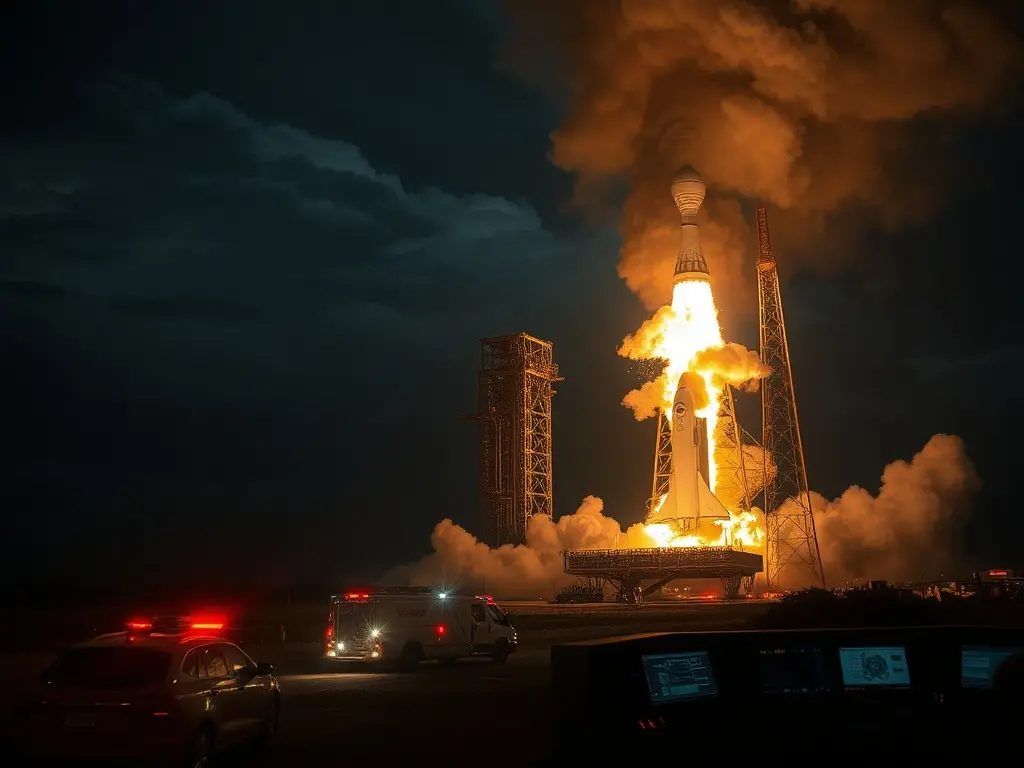
Blue Origin’s New Glenn rocket exploded during an engine test at NASA’s Kennedy Space Center in Florida, destroying the only launch facility for the rocket and threatening NASA’s Moon landing plans. The incident delays Blue Origin’s lunar lander missions, including the 2026 Moon Base 1 launch and NASA’s Artemis program timeline, while also jeopardizing Amazon’s Leo satellite constellation deployment." "article": "Blue Origin’s New Glenn rocket suffered a catastrophic explosion during a routine engine test at Space Launch Complex 36 in Florida on Thursday night. The 98-meter rocket was preparing for a June 4 launch of 48 satellites for Amazon’s Project Kuiper, but the test ended in a fireball that severely damaged the launch facility, including a collapsed lightning tower. No injuries were reported, though Jeff Bezos confirmed personnel were safe and vowed to rebuild. The incident has crippled Blue Origin’s operations, as the destroyed launch pad is the only facility capable of launching New Glenn. Industry analysts warn repairs and safety certifications could take months, leaving the company unable to meet critical deadlines for NASA’s Artemis program. The explosion threatens the 2026 Moon Base 1 mission, which relies on Blue Origin’s Blue Moon Mark 1 lander to deliver scientific equipment to the Moon’s south pole. NASA’s broader lunar strategy is now at risk, including a $468 million contract for Blue Origin to deliver two lunar rovers by 2028. Delays could push back the agency’s goal of returning astronauts to the Moon by 2028 and establishing a permanent lunar base. The setback also complicates Amazon’s satellite ambitions, as the destroyed rocket was meant to deploy part of its Leo constellation, which trails Elon Musk’s Starlink in deployment. With New Glenn grounded, Amazon may need to rely more on competitors like SpaceX to meet its FCC-mandated deadline of launching half of its 3,236-satellite network by July 30, 2026. The company is already behind schedule, with only 300 satellites in orbit as of late May. The explosion underscores the challenges facing Blue Origin as it competes in NASA’s lunar race and Amazon’s broadband expansion.
Blue Origin’s New Glenn rocket suffered a catastrophic explosion during a routine engine test at Space Launch Complex 36 in Florida on Thursday night. The 98-meter rocket was preparing for a June 4 launch of 48 satellites for Amazon’s Project Kuiper, but the test ended in a fireball that severely damaged the launch facility, including a collapsed lightning tower. No injuries were reported, though Jeff Bezos confirmed personnel were safe and vowed to rebuild. The incident has crippled Blue Origin’s operations, as the destroyed launch pad is the only facility capable of launching New Glenn. Industry analysts warn repairs and safety certifications could take months, leaving the company unable to meet critical deadlines for NASA’s Artemis program. The explosion threatens the 2026 Moon Base 1 mission, which relies on Blue Origin’s Blue Moon Mark 1 lander to deliver scientific equipment to the Moon’s south pole. NASA’s broader lunar strategy is now at risk, including a $468 million contract for Blue Origin to deliver two lunar rovers by 2028. Delays could push back the agency’s goal of returning astronauts to the Moon by 2028 and establishing a permanent lunar base. The setback also complicates Amazon’s satellite ambitions, as the destroyed rocket was meant to deploy part of its Leo constellation, which trails Elon Musk’s Starlink in deployment. With New Glenn grounded, Amazon may need to rely more on competitors like SpaceX to meet its FCC-mandated deadline of launching half of its 3,236-satellite network by July 30, 2026. The company is already behind schedule, with only 300 satellites in orbit as of late May. The explosion underscores the challenges facing Blue Origin as it competes in NASA’s lunar race and Amazon’s broadband expansion.
This content was automatically generated and/or translated by AI. It may contain inaccuracies. Please refer to the original sources for verification.