Big Bend border security: $1.7B project to bring 200+ miles of roads, cameras, and more
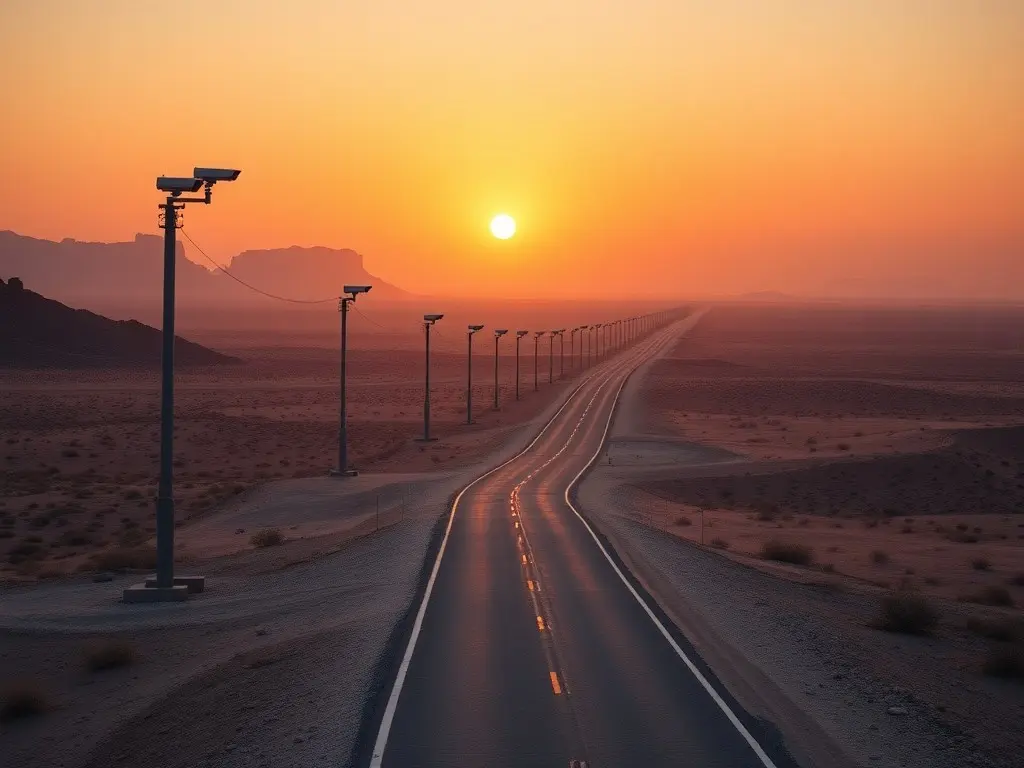
The U.S. Customs and Border Protection (CBP) awarded a $1.72 billion contract to Southwest Valley Constructors for a Big Bend border security project, including 205 miles of patrol roads, cameras, sensors, and low-profile barriers, despite no traditional wall being built. The project, set to begin in May 2026, has raised environmental concerns, as recent regulatory waivers bypassed key protections like the Endangered Species Act and National Environmental Policy Act.
The U.S. Customs and Border Protection (CBP) has awarded a $1.72 billion contract to Southwest Valley Constructors, an Albuquerque-based firm, for a border security project in the Big Bend region of Texas. The contract, announced without plans for a traditional wall, includes construction of 205 miles of patrol roads, cameras, sensors, and limited, low-profile post-on-rail barriers to restrict vehicle access. The project also leverages natural barriers like cliffs and rugged terrain along the Rio Grande. The funding, allocated for the segment identified as BBT-4, covers 17 miles of vehicle barrier systems and additional technology-based infrastructure. The work is scheduled to begin May 11, 2026, with a potential completion date of December 7, 2028. Southwest Valley Constructors, which specializes in federal government projects, has secured over $2 billion in contracts since 2019. Environmental groups, including the Center for Biological Diversity, have criticized the project, calling it destructive to protected lands. In February, former Department of Homeland Security Secretary Kristi Noem waived 28 environmental and cultural resource laws, including the Endangered Species Act and the National Environmental Policy Act, to expedite construction. Conservationists plan to continue legal challenges to block the project. The CBP emphasized that the barriers will not resemble the 30-foot-tall steel walls previously proposed, instead using low-profile designs to minimize visual and environmental impact. However, critics argue the construction still poses significant risks to wildlife and ecosystems within Big Bend National Park.
This content was automatically generated and/or translated by AI. It may contain inaccuracies. Please refer to the original sources for verification.