Big Chinese Bet Pays Off in Iran War
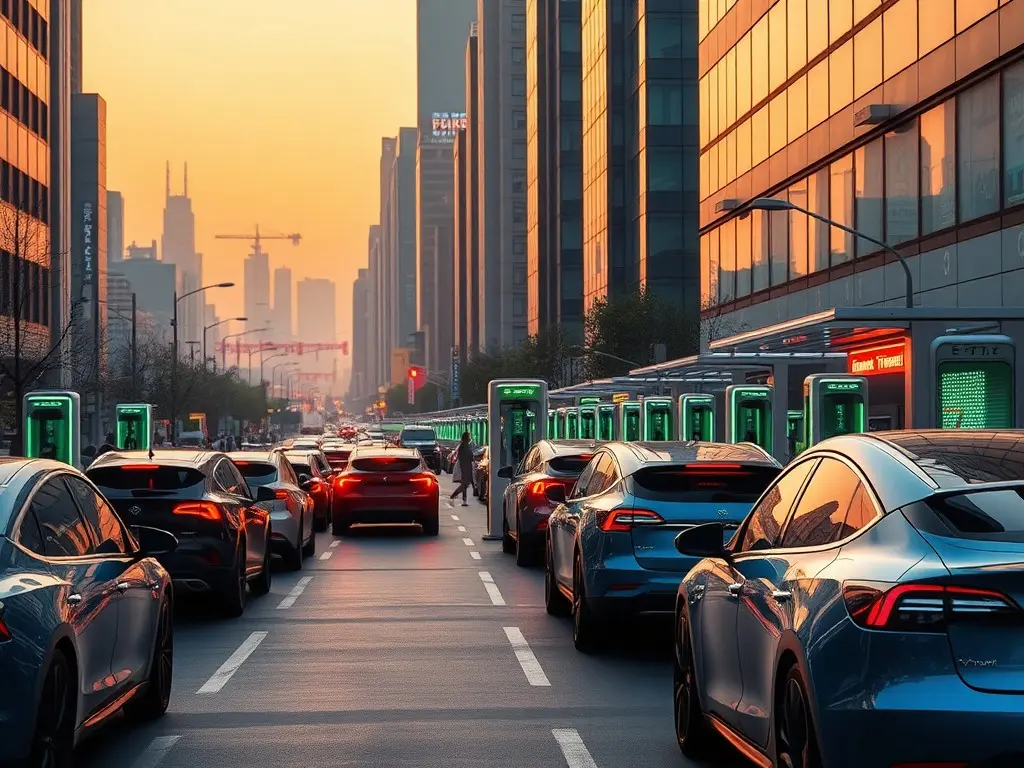
China’s two-decade investment in electric vehicles is mitigating economic fallout from the U.S.-led Iran war, as rising global gas prices accelerate EV adoption, pushing China’s new energy vehicle sales to 62.8% of total car sales in April. The shift has positioned China as the world’s largest EV market, with BYD surpassing Tesla as the top global electric carmaker last year, while fossil fuel dependence remains lower than in other major economies.
China’s long-term push into electric vehicles (EVs) is proving beneficial amid the economic disruptions caused by the U.S.-led conflict in Iran. Rising global gas prices—triggered by oil shipment blockades in the Strait of Hormuz—have made EVs more attractive for Chinese drivers like Liu Zhou, a DiDi ride-hailing driver in Changsha. Zhou noted that while EVs remain pricier upfront, soaring fuel costs make them the practical choice for frequent drivers, with gasoline prices in China spiking nearly 20% before settling around $5 per gallon. The Iran war has intensified global energy volatility, threatening a severe crisis as the Strait of Hormuz handles a fifth of the world’s seaborne oil and gas exports, including Iranian crude and Gulf supplies critical to China. However, China’s dominance in renewable energy—solar, wind, hydro, and nuclear—has softened the blow, reducing reliance on fossil fuels. Analysts like Manuel C. Menendez, a U.S. businessman based in China since 1979, argue the country’s transition to EVs and clean energy will leave it in a stronger position than other major economies post-crisis. China’s EV market has surged, with new energy vehicles accounting for 62.8% of total car sales in April, according to the China Passenger Car Association. Persistently high oil prices are accelerating consumer shifts away from internal combustion engines, despite intense competition and slim profit margins. The trend has made China the world’s largest EV market, with BYD overtaking Tesla as the top global electric carmaker last year. Domestic adoption is evident in China’s cities, where green EV plates and quieter roads reflect the decline of traditional cars. While congestion persists, the shift underscores China’s strategic pivot away from fossil fuels, supported by decades of state investment and subsidies. Experts predict the country’s early adoption of EVs will help it weather the Iran war’s economic shocks better than nations still dependent on gasoline-powered vehicles.
This content was automatically generated and/or translated by AI. It may contain inaccuracies. Please refer to the original sources for verification.