BIOS On Bermuda Waters, Research & More
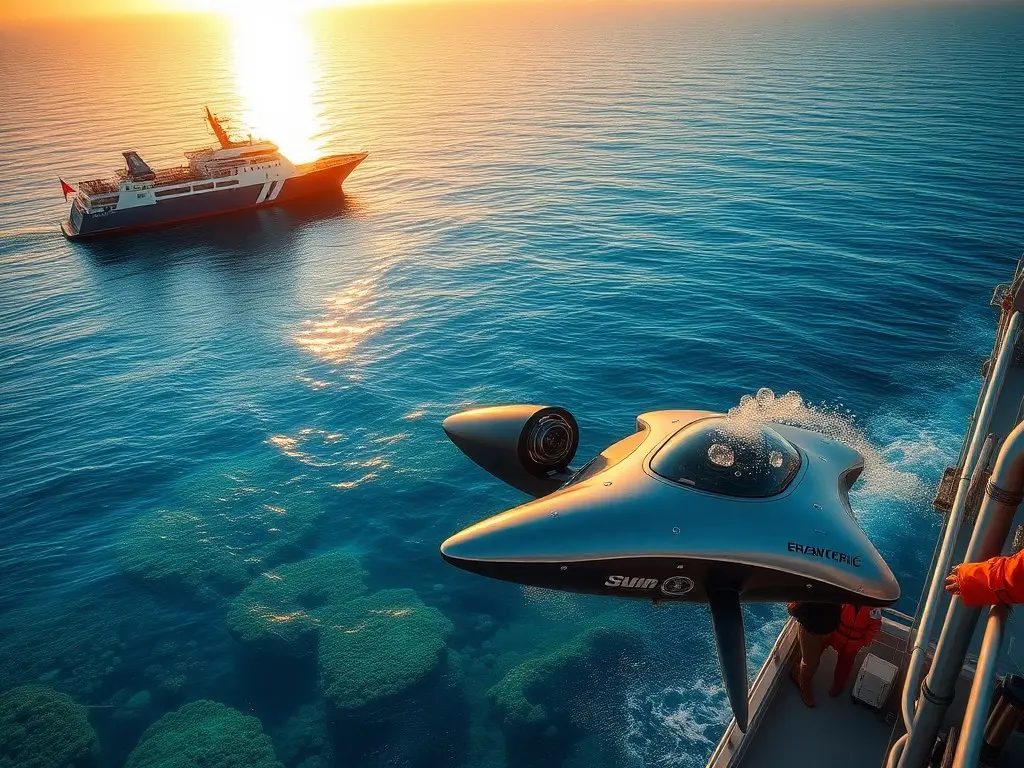
Bermuda hosts global ocean research this June, with vessels like R/V Atlantic Explorer and R/V Atlantis studying climate change and marine ecosystems, supported by U.S. federal funding and international partnerships. The Bermuda Institute of Ocean Sciences (ASU BIOS) leads efforts, including testing new underwater tech like DeepVenture and analyzing iron-carbon interactions in the Atlantic Ocean.
Bermuda is serving as a key hub for global ocean research this June, coinciding with World Ocean Day. Multiple research vessels, including the ASU Bermuda Institute of Ocean Sciences’ R/V Atlantic Explorer and the R/V Atlantis, are operating in Bermudian waters to advance understanding of climate change, ocean health, and deep-sea ecosystems. The island’s strategic location in the North Atlantic allows rapid access to deep waters, making it an ideal site for testing technologies and collecting long-term data. The Bermuda Institute of Ocean Sciences (ASU BIOS), part of Arizona State University’s Julie Ann Wrigley Global Futures Laboratory, coordinates much of this research. The institute operates the R/V Atlantic Explorer, a 171-foot floating laboratory that supports around 200 days of scientific operations annually, focusing on biological, chemical, and physical oceanography in the Sargasso Sea and wider Atlantic. The vessel recently returned from an expedition to Cape Verde and is set to arrive in Bermuda on June 11. One ongoing project involves studying how iron and organic carbon interact in the ocean, particularly under changing oxygen conditions. Led by Kristen Buck, Professor at Oregon State University, and Ben Twining, Senior Research Scientist at Bigelow Laboratory for Ocean Sciences, the team combines long-term Bermuda observations with new experiments near Cape Verde. Their work aims to improve predictions of ocean productivity and carbon transport in response to climate change. Bermuda’s research efforts are supported by U.S. federal investments, including National Science Foundation funding and long-term ocean observing systems. The island’s unique position enables scientists to explore deep-sea environments and test innovative technologies, such as the upcoming DeepVenture autonomous underwater vehicle. These initiatives contribute to global climate research, ocean warming studies, and assessments of ecosystem resilience. The collaborative projects highlight Bermuda’s role as a gateway to the deep Atlantic, fostering international scientific partnerships. Data collected here supports broader efforts to understand ocean dynamics and mitigate the impacts of climate change, reinforcing the island’s significance in marine science.
This content was automatically generated and/or translated by AI. It may contain inaccuracies. Please refer to the original sources for verification.