Blue Origin Says Rocket Explosion Spared Fuel Tanks and Key Launch Pad Parts
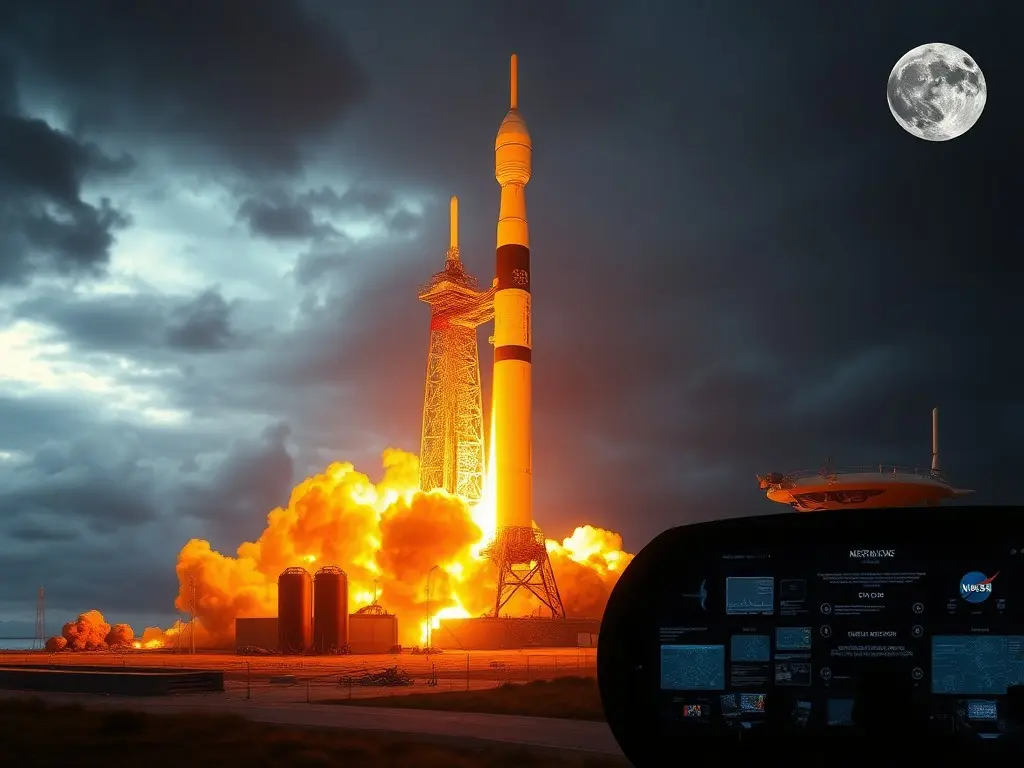
Blue Origin reported that its New Glenn rocket exploded during an engine test at Cape Canaveral Space Force Station, but critical fuel tanks and parts of the launch pad remained intact. The company aims to resume flights by year-end, while NASA seeks to restore the pad quickly to support Artemis moon missions, including launches of Blue Origin’s Blue Moon lander and rovers for lunar exploration.
Blue Origin confirmed Tuesday that its New Glenn rocket suffered an explosion during an engine-firing test at Cape Canaveral Space Force Station last week. The blast destroyed a lightning tower and the transporter-erector used to move the rocket but spared the methane, hydrogen, and oxygen fuel tanks, as well as the water tank and support tower, which can be repaired on-site. CEO Dave Limp stated that the damage was limited, calling it ‘a bit of good news,’ and added that the company plans to resume flights before the end of 2026. The cause of the explosion remains under investigation. The incident occurred just two days before NASA awarded Blue Origin a contract to use New Glenn rockets for launching two lunar rovers ahead of the Artemis moonwalkers’ arrival. New Glenn is also vital for transporting Blue Origin’s Blue Moon lander, which will support future astronaut missions to the lunar surface. NASA aims for the first Artemis moon landing in 2028, nearly five decades after Apollo 17. NASA Administrator Jared Isaacman emphasized the agency’s commitment to restoring the launch pad quickly while advancing the Blue Moon lander program. Despite the setback, Blue Origin’s New Glenn remains a key component of NASA’s Artemis strategy, alongside SpaceX’s Starship, which is also being developed for lunar missions. New Glenn, named after astronaut John Glenn, has completed only three test flights to date and is smaller than SpaceX’s Starship. The rocket’s role in NASA’s Artemis program underscores its importance for future lunar exploration efforts.
This content was automatically generated and/or translated by AI. It may contain inaccuracies. Please refer to the original sources for verification.