California's $33 Million 'Smart Freeway' Makes You Wait Four Minutes to Save Time on Your Commute
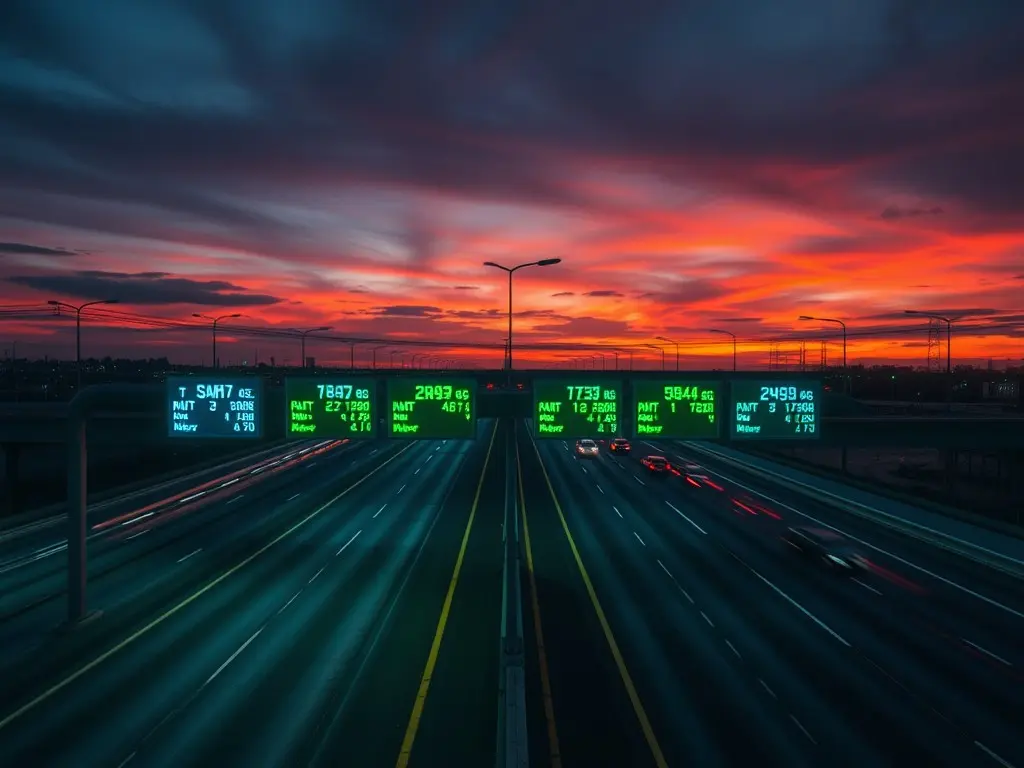
California’s $33 million 'smart freeway' pilot on Interstate 15 uses algorithms and ramp meters to manage traffic flow, but drivers face a four-minute wait on on-ramps, raising questions about time savings. The system, tested in Temecula, claims to reduce travel time by 20% and prevent congestion, though critics question its efficiency given the added delay.
California is testing a $33 million 'smart freeway' pilot project on an 8-mile stretch of Interstate 15 between Temecula and Murrieta, using algorithms and coordinated ramp meters to control traffic flow. The system, managed by the Riverside County Transportation Commission (RCTC) and the California Department of Transportation, replaces traditional lane expansions with real-time sensors and digital speed signs to optimize vehicle entry and maintain smooth traffic momentum. The pilot, set to expand across Riverside County and other areas, enforces a four-minute maximum wait for drivers on on-ramps at Temecula Parkway, Rancho California Road, and Winchester Road. RCTC spokesman David Knudsen stated the goal is to eliminate stop-and-go traffic by ensuring consistent vehicle flow, though some drivers question whether the delay outweighs potential time savings. The system avoids AI, relying instead on pre-programmed traffic-management technology. Data from Denver, where similar tech is operational, suggests a 20% reduction in travel time, though California’s pilot has not yet confirmed whether this accounts for the mandatory wait. Comparable systems in Australia report savings between 35% and 65%, depending on route and traffic conditions. Supporters argue the technology enhances safety and efficiency, while critics highlight the counterintuitive four-minute delay as a potential drawback. The two-year project aims to prove whether algorithm-driven traffic management can outperform traditional infrastructure solutions. If successful, it could reshape California’s approach to congestion, prioritizing tech over costly road expansions. However, skepticism remains about whether the system’s benefits justify the added wait for commuters.
This content was automatically generated and/or translated by AI. It may contain inaccuracies. Please refer to the original sources for verification.