Camera Footage Captures Rare Wild Cat in Andes Mountains, Marking a Breakthrough for Conservation Science
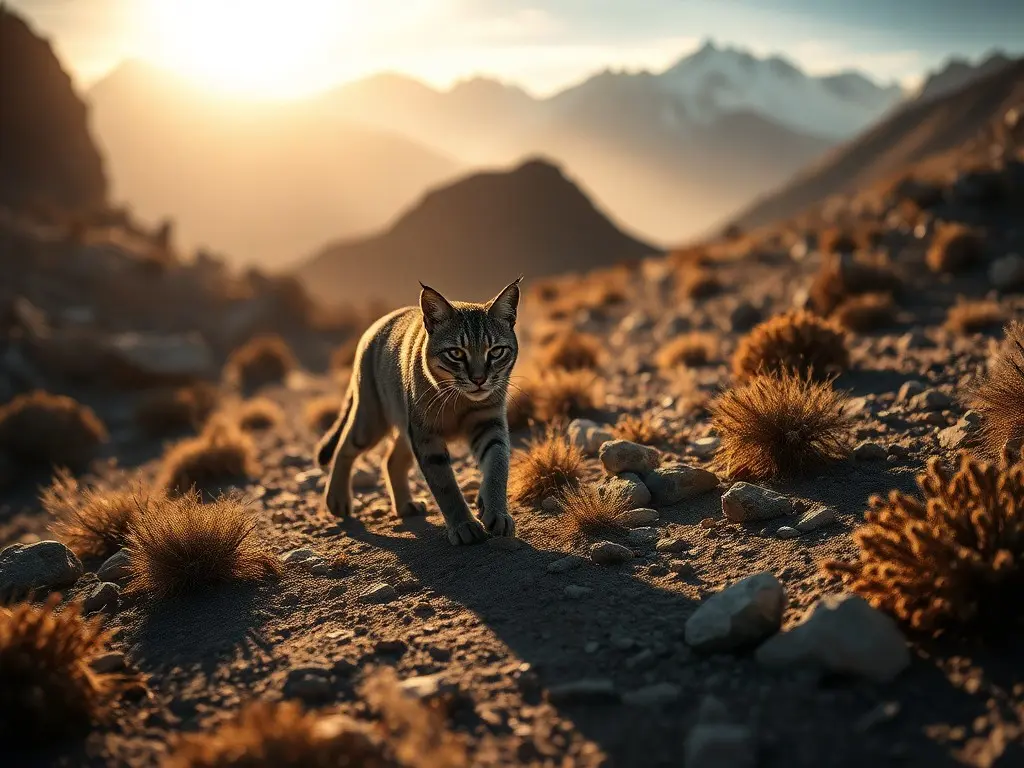
Camera traps in Mendoza’s Malargüe department captured footage of an Andean cat, confirming the endangered species’ presence near La Payunia Protected Natural Area, a critical habitat for biodiversity. The Wildlife Conservation Society Argentina (WCS Argentina) has documented the sighting, reinforcing the importance of camera monitoring for tracking the elusive feline’s survival and informing conservation strategies.
Camera traps in Mendoza’s Malargüe department have recorded an Andean cat, a rare and endangered species also known as the 'ghost of the Andes.' The footage, captured less than ten kilometers from La Payunia Protected Natural Area, marks the third consecutive year of confirmed sightings in the region, offering valuable evidence of the species’ continued presence in southern Mendoza’s rugged terrain. The Andean cat (*Leopardus jacobita*) is classified as endangered by the International Union for Conservation of Nature (IUCN), with fewer than 2,200 individuals estimated across Argentina, Bolivia, Chile, and Peru. Its solitary nature and limited population make sightings critical for conservation efforts, particularly in remote habitats like La Payunia, which spans 665,000 hectares of volcanic landscapes and supports diverse wildlife, including pumas, Andean condors, and guanacos. Wildlife Conservation Society Argentina (WCS Argentina) has monitored the species since 2005, using camera traps and local reports to track its distribution and behavior. The latest sighting, documented in an area previously unconfirmed for Andean cats, validates the effectiveness of long-term monitoring. Dr. María José Bolgeri, a WCS Argentina biologist, emphasized that each confirmed encounter strengthens ecological research and conservation strategies for the threatened feline. The Andean cat’s distinctive features—such as its cylindrical tail with dark rings and black nose—help distinguish it from other wild cats like the pampas cat. Its survival depends on preserving remote mountainous habitats, where its reclusive behavior complicates direct observation but underscores the need for technological tools like camera traps. La Payunia Protected Natural Area serves as a vital sanctuary for Andean wildlife, hosting species like red foxes, rheas, and maras, alongside one of the world’s largest guanaco migrations. Ongoing ecological monitoring in the region provides insights into species interactions and ecosystem health, guiding efforts to protect biodiversity against environmental threats. The recent sighting highlights the success of conservation initiatives while reinforcing the role of protected areas in safeguarding endangered species. Continuous research and monitoring remain essential to ensure the Andean cat’s survival in the face of habitat loss and other challenges.
This content was automatically generated and/or translated by AI. It may contain inaccuracies. Please refer to the original sources for verification.