Can Mullin, DHS keep international fights from ‘sanctuary’ cities?
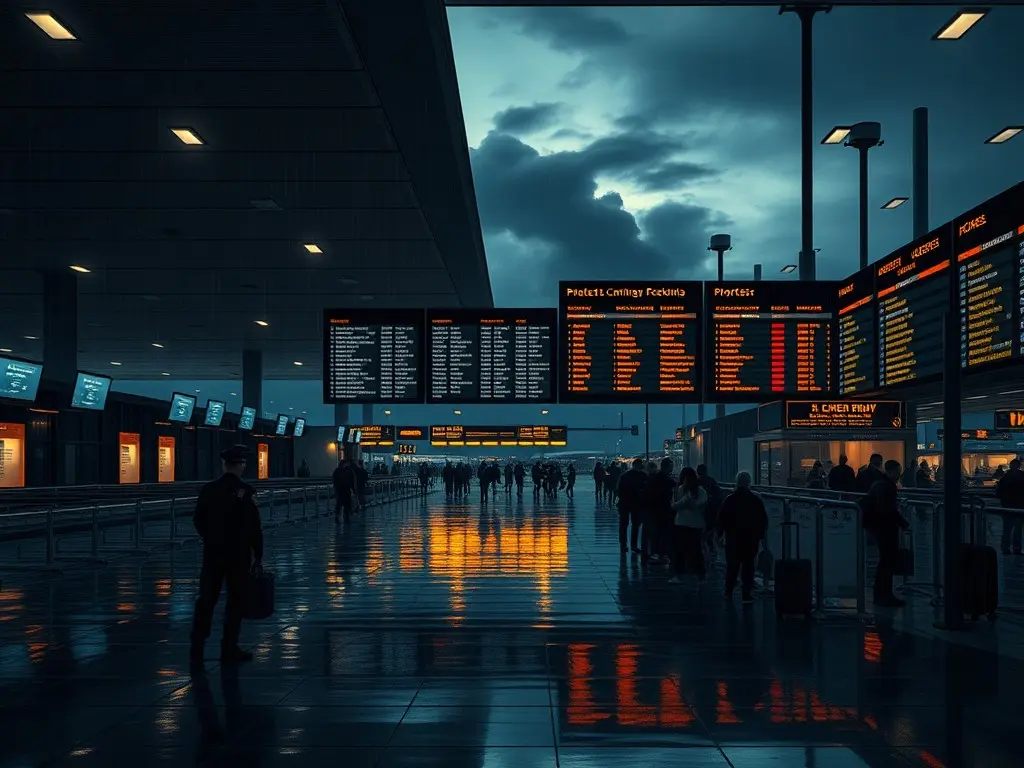
Homeland Security Secretary Markwayne Mullin proposed withdrawing Customs and Border Protection officers from airports in sanctuary cities like Newark, New York, Chicago, and Los Angeles, threatening to disrupt international flights and cause economic losses. Analysts warn this move could paralyze global travel and harm airlines, while Democratic mayors and industry groups oppose the plan, citing its punitive impact on millions of travelers and tourism." "article": "Homeland Security Secretary Markwayne Mullin announced plans to pull Customs and Border Protection officers from nearly a dozen U.S. airports, including Newark Liberty, Kennedy, and Los Angeles International, in response to anti-ICE protests at New Jersey’s Delaney Hall detention center. The move, still in draft form, could block international flights from landing in these hubs, which handled over 70 million passengers last year. Analysts like Henry Harteveldt, CEO of Atmosphere Research Group, warn the plan would cripple global travel, cost airlines $1 billion in losses, and disrupt cargo operations. Newark Liberty processed 24.5 million international travelers in 2025, while Kennedy and LAX saw 17.5 million and 11.5 million respectively. Mullin’s threats follow clashes between protesters and ICE officers at Delaney Hall, prompting backlash from New Jersey lawmakers. Newark Mayor Ras Baraka dismissed any link between the protests and airport operations, calling the flight restrictions ‘punitive’ to travelers. Airlines for America, the industry trade group, condemned the proposal, stating it would cause ‘significant operational disruption’ for carriers, travelers, and cargo. Individual airlines have also expressed opposition, fearing operational chaos and economic harm. The plan’s timing is critical, as it comes weeks before the FIFA World Cup, which relies on major U.S. airports for international arrivals. Democratic mayors in affected cities have rejected Mullin’s approach, arguing it unfairly targets cities with progressive immigration policies. Harteveldt emphasized that alternative airports cannot absorb the displaced flights, risking a near-total halt to international travel. The DHS has not confirmed a start date for the proposed measures, leaving airlines and travelers in uncertainty.
Homeland Security Secretary Markwayne Mullin announced plans to pull Customs and Border Protection officers from nearly a dozen U.S. airports, including Newark Liberty, Kennedy, and Los Angeles International, in response to anti-ICE protests at New Jersey’s Delaney Hall detention center. The move, still in draft form, could block international flights from landing in these hubs, which handled over 70 million passengers last year. Analysts like Henry Harteveldt, CEO of Atmosphere Research Group, warn the plan would cripple global travel, cost airlines $1 billion in losses, and disrupt cargo operations. Newark Liberty processed 24.5 million international travelers in 2025, while Kennedy and LAX saw 17.5 million and 11.5 million respectively. Mullin’s threats follow clashes between protesters and ICE officers at Delaney Hall, prompting backlash from New Jersey lawmakers. Newark Mayor Ras Baraka dismissed any link between the protests and airport operations, calling the flight restrictions ‘punitive’ to travelers. Airlines for America, the industry trade group, condemned the proposal, stating it would cause ‘significant operational disruption’ for carriers, travelers, and cargo. Individual airlines have also expressed opposition, fearing operational chaos and economic harm. The plan’s timing is critical, as it comes weeks before the FIFA World Cup, which relies on major U.S. airports for international arrivals. Democratic mayors in affected cities have rejected Mullin’s approach, arguing it unfairly targets cities with progressive immigration policies. Harteveldt emphasized that alternative airports cannot absorb the displaced flights, risking a near-total halt to international travel. The DHS has not confirmed a start date for the proposed measures, leaving airlines and travelers in uncertainty.
This content was automatically generated and/or translated by AI. It may contain inaccuracies. Please refer to the original sources for verification.