Can Pakistan Make Its Space Program Great Again?
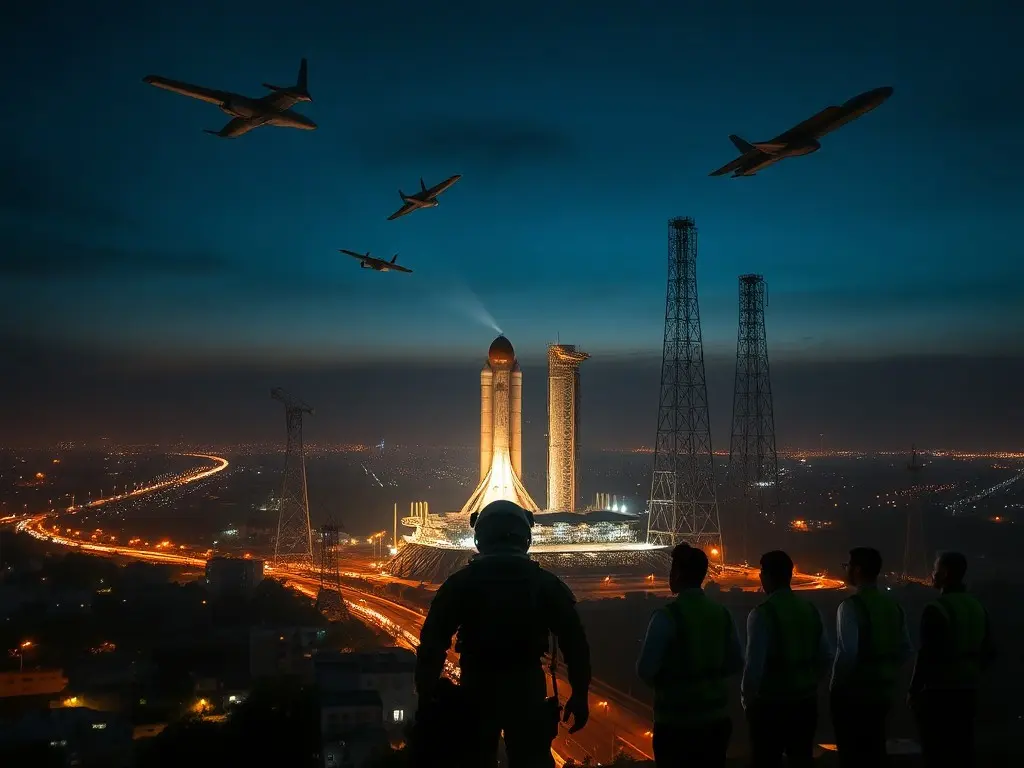
Pakistan’s Space and Upper Atmosphere Research Commission (SUPARCO) has launched five indigenous satellites in 16 months, including AI-powered EO-3 and hyperspectral HS-1, while two Pakistan Air Force pilots are training in China for a 2026 mission to Tiangong Space Station, marking the country’s first astronaut and first foreign national on China’s orbital station. The mission will involve active participation in microgravity experiments, equipment use, and emergency response, despite Pakistan’s ongoing domestic challenges like inflation, insurgencies, and political instability.
Pakistan is advancing its space program with unprecedented momentum. Two Pakistan Air Force pilots, Muhammad Zeeshan Ali and Khurram Daud, are undergoing training in Beijing for a mission to China’s Tiangong Space Station, scheduled for late 2026. One of them will become the first Pakistani astronaut and the first foreign national to board Tiangong, conducting microgravity experiments, operating specialized equipment, and responding to emergencies alongside the crew. The mission follows Pakistan’s rapid satellite development. The Space and Upper Atmosphere Research Commission (SUPARCO) launched five indigenous satellites in the past 16 months, including the PRSC-EO1 in January 2025, the EO-2 in February 2026, and the advanced EO-3 in April 2026. The EO-3 features an AI-powered onboard computer for real-time image processing, a Multi-Geometry Imaging Module, and an in-house energy storage system. Between these launches, Pakistan also deployed its first hyperspectral satellite, HS-1, in October 2025, capable of detecting mineral deposits, crop growth, and climate-induced environmental changes. All satellites were launched from Chinese facilities: PRSC-EO1 and EO-2 from Jiuquan, EO-3 from Taijuan, and the KS-1 remote sensing satellite from Xichang in July 2025. These launches bring Pakistan’s total operational satellites to seven, a significant leap from a decade ago when such achievements seemed unlikely. Despite domestic challenges—including inflation, energy crises, insurgencies in Balochistan and Khyber Pakhtunkhwa, and border conflicts with India and Afghanistan—Pakistan is prioritizing its space ambitions. The country’s space agency, SUPARCO, had long been underfunded and overshadowed by neighbors like India’s ISRO. The recent progress contrasts with its past stagnation, signaling a renewed focus on technological advancement. The upcoming astronaut mission and satellite constellation mark a turning point for Pakistan’s space sector. The first Pakistani astronaut will not be a passive passenger but an active participant in Tiangong’s operations, aligning with China’s broader strategy to collaborate with international partners while maintaining independence from the U.S.-led ISS.
This content was automatically generated and/or translated by AI. It may contain inaccuracies. Please refer to the original sources for verification.