Can Protecting Walleye Spawning Grounds Help Save the Species?
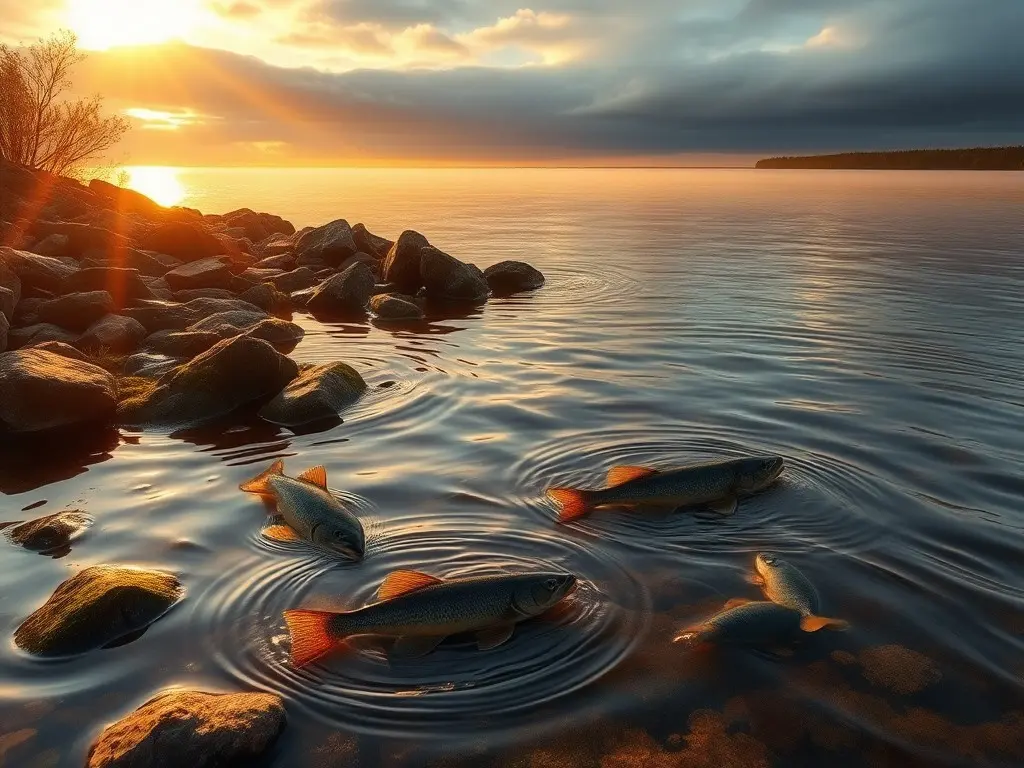
A study identified six critical spawning hotspots in Minnesota’s Mille Lacs Lake, where 96% of tracked walleye return yearly to breed, emphasizing the need to protect these habitats for species recovery. Researchers linked walleye population declines to habitat degradation, climate change, invasive species, and overfishing, urging targeted conservation efforts to sustain Indigenous fisheries and recreational fishing." "article": "A new study reveals that walleye in Minnesota’s Mille Lacs Lake exhibit strong loyalty to spawning grounds, with 96% of tracked fish returning to the same or nearby breeding sites annually. Researchers from the Great Lakes Indian Fish and Wildlife Commission, the Mille Lacs Band of Ojibwe, and the University of Illinois Urbana-Champaign tracked 70 adult walleye between 2019 and 2021, pinpointing six key spawning hotspots near Malmo Bay, Isle Bay, Rainbow Island, and Garrison. These areas share traits like shallow waters, rocky substrates, and proximity to undeveloped shorelines, which likely enhance egg survival. The findings highlight the importance of protecting these habitats to reverse walleye population declines, which reached historic lows between 2014–2016 due to fewer young fish surviving to adulthood. Threats include habitat degradation, shoreline development, warming waters from climate change, overfishing, and invasive species like zebra mussels and spiny water fleas, which disrupt the lake’s food web. Kelly Applegate, Commissioner of Natural Resources for the Mille Lacs Band of Ojibwe, stressed that safeguarding spawning sites is critical for sustaining fisheries vital to Indigenous communities. Researchers used transmitters to monitor fish movements during spring spawning, confirming that 64% returned to exact locations while 32% revisited original sites with minor deviations. The study, published in *Frontiers in Fish Science*, suggests that protecting a small number of breeding areas could significantly support future walleye populations. Walleye are culturally significant to Ojibwe communities and a prized recreational catch, making their recovery a priority for both ecological and cultural reasons.
A new study reveals that walleye in Minnesota’s Mille Lacs Lake exhibit strong loyalty to spawning grounds, with 96% of tracked fish returning to the same or nearby breeding sites annually. Researchers from the Great Lakes Indian Fish and Wildlife Commission, the Mille Lacs Band of Ojibwe, and the University of Illinois Urbana-Champaign tracked 70 adult walleye between 2019 and 2021, pinpointing six key spawning hotspots near Malmo Bay, Isle Bay, Rainbow Island, and Garrison. These areas share traits like shallow waters, rocky substrates, and proximity to undeveloped shorelines, which likely enhance egg survival. The findings highlight the importance of protecting these habitats to reverse walleye population declines, which reached historic lows between 2014–2016 due to fewer young fish surviving to adulthood. Threats include habitat degradation, shoreline development, warming waters from climate change, overfishing, and invasive species like zebra mussels and spiny water fleas, which disrupt the lake’s food web. Kelly Applegate, Commissioner of Natural Resources for the Mille Lacs Band of Ojibwe, stressed that safeguarding spawning sites is critical for sustaining fisheries vital to Indigenous communities. Researchers used transmitters to monitor fish movements during spring spawning, confirming that 64% returned to exact locations while 32% revisited original sites with minor deviations. The study, published in *Frontiers in Fish Science*, suggests that protecting a small number of breeding areas could significantly support future walleye populations. Walleye are culturally significant to Ojibwe communities and a prized recreational catch, making their recovery a priority for both ecological and cultural reasons.
This content was automatically generated and/or translated by AI. It may contain inaccuracies. Please refer to the original sources for verification.