Can This Guy Get People to Live in America’s Emptiest Downtown?
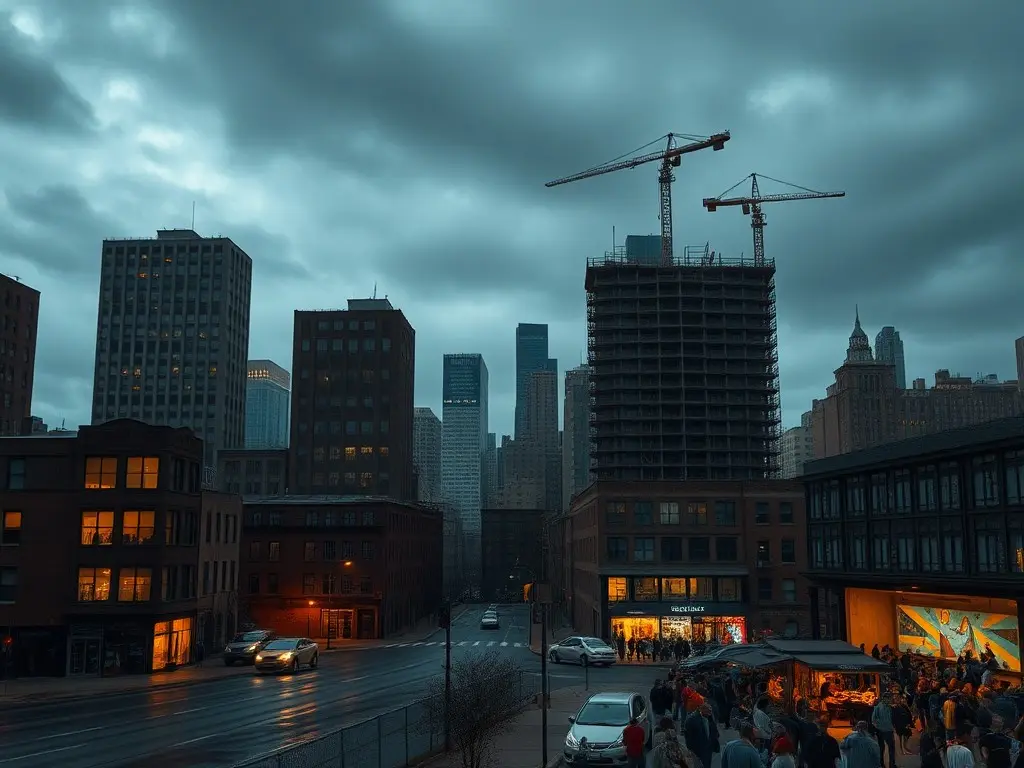
Developer Asher Luzzatto is converting vacant office towers in Denver, including the Energy Center, into 1,100 apartments and community spaces, leveraging ultra-low purchase prices to address the city’s 40% office vacancy rate. His plan faces challenges like high construction costs and skepticism from lenders, but received a $63 million loan from the Downtown Denver Development Authority to proceed.
Developer Asher Luzzatto is transforming Denver’s struggling downtown by converting three office buildings—including the 785,000-square-foot Energy Center—into 1,100 apartments, a bookstore, art gallery, children’s museum, and daycare. Purchased for $5 million (97% below 2013 values), the properties reflect Denver’s 40% office vacancy rate, the highest among the U.S.’s top 50 cities, as remote work and suburban migration hollowed out city centers. Luzzatto’s strategy flips the traditional downtown model, turning empty office spaces into mixed-use residential hubs. His project, which includes two additional buildings, represents over 7% of Denver’s downtown office space. The low acquisition cost makes the conversion financially viable, though high construction expenses and strict building codes pose hurdles. The Downtown Denver Development Authority approved a $63 million loan—its largest ever—to fund the project, signaling confidence in Luzzatto’s vision. However, convincing employees accustomed to suburban offices to relocate downtown remains a key challenge, as does convincing lenders of the viability of such conversions. Luzzatto argues the project fills a demand for affordable housing with scenic views, despite skepticism from competitors who focus on current vacancy rates. His plan aims to create a livable urban core, potentially serving as a model for other struggling downtowns across the U.S. The initiative follows a broader trend of cities like St. Louis, Dallas, and Portland facing similar downtown declines. Luzzatto’s experiment hinges on whether his vision can reverse the decline by blending residential, cultural, and commercial spaces in a once-forgotten urban area.
This content was automatically generated and/or translated by AI. It may contain inaccuracies. Please refer to the original sources for verification.